Istanbul Pipe Unclogging
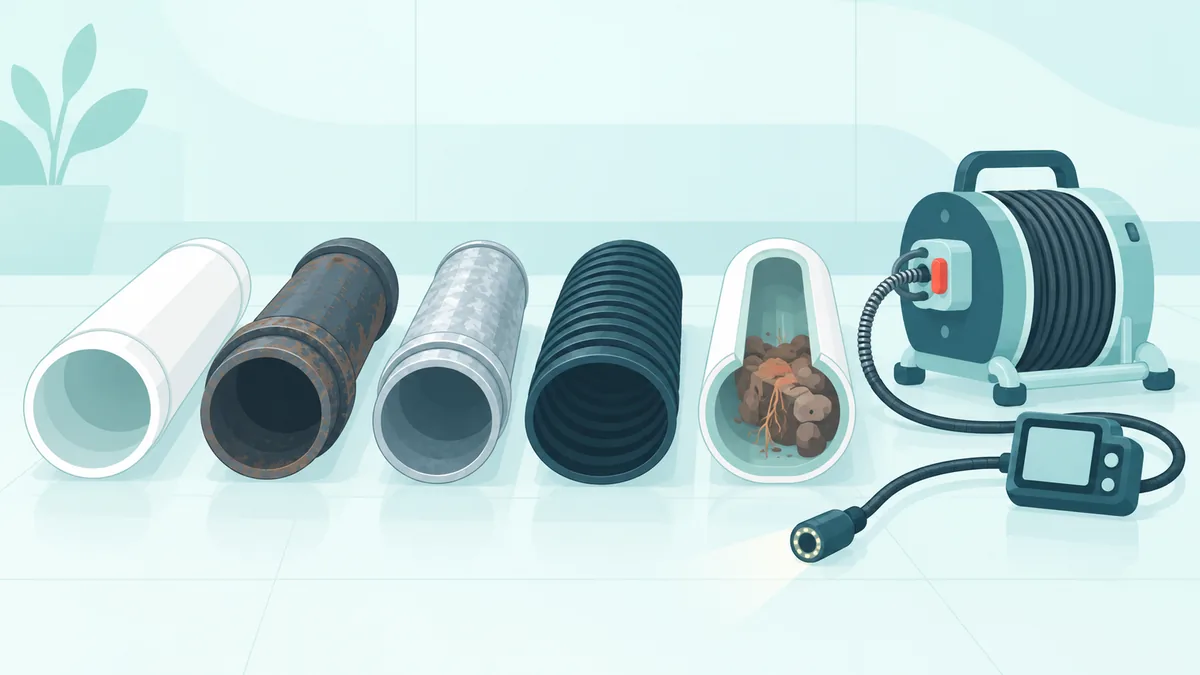
When you need a blocked pipe cleared, the first question is not what the blockage is but what the pipe is made of. In Istanbul buildings, pipes from different eras often sit side by side in the same system: PVC drain pipe in a newly renovated bathroom, rusted cast iron in the old stack that carries it, corrugated pipe in the garden, and concrete pipe in the last section that joins the street. Each material is prone to blockages in its own way and reacts differently to the tool used. The Cantley team starts by identifying the type and diameter of the pipe, then chooses the machine and the head to match.

Our service covers everything from the thin drain pipes inside your home to the building's cast iron stack, from underground garden lines to the greasy kitchen lines of shops and restaurants. We come to your address in all 39 districts of Istanbul, 24/7, and we work without breaking tiles or walls. There is one thing we want to be clear about from the start: not every blocked pipe can be saved by unclogging. The camera shows whether the pipe is simply blocked or whether it is cracked, crushed or collapsed. Clearing a collapsed section gives only short relief, and the lasting fix is to renew that section. We show you this difference on the footage and make the decision together with you.
First signs of a blocked pipe
Pipes are usually hidden under a wall, a floor or the ground. That is why you notice a blockage through the drains connected to it and through what happens at the lowest point of the line.
Water drains a little slower every day
In old metal pipes, a blockage does not happen all at once. Rust and limescale building up on the inner wall narrow the pipe over the years, and the water takes a little longer to go down each week. A drain that finally stops completely often has this long narrowing behind it.
Another drain is gurgling
If a nearby floor drain gurgles and bubbles while you use a sink or toilet, the air in the pipe is hitting the blockage ahead of the water and coming back. This sound also tells you the blockage lies beyond the point where the two drains join.
Water appears at the lowest point of the building
Water collecting in a basement floor drain, in a ground-floor shower tray or around a garden manhole cover shows that the line is blocked further along. Water always looks for the lowest outlet, and in a blocked pipe that outlet is usually the lowest level of the building.
A smell even when the drain is not in use
A smell you can notice even when the drain has not been used may come from waste water sitting in the pipe or from gas leaking out of a cracked pipe. In old concrete and cast iron lines, this smell is often the first warning of a crack and calls for a camera inspection.
Ground in the garden that sinks or stays wet
When an underground concrete or corrugated line breaks, the ground above it sinks in places or stays wet even when it has not rained. Alongside the blockage, this suggests that the pipe itself is damaged.
Causes of blockages by pipe material
Plastic PVC drain pipes are smooth inside, and blockages in them usually start when grease, hair and soap residue build up at the bends. Galvanised steel pipes are still found in older buildings, in sink and bathroom connections. Their protective coating wears away over time, the steel rusts, and flakes of rust combine with grease to close up the narrow pipe step by step. In a narrow galvanised pipe, even a thin layer of scale slows the flow noticeably.
Cast iron pipes were used as stacks and main drain lines in old apartment buildings, and although they look sound from the outside, they wear away from the inside. Rust forms a rough crust on the inner wall, and wet wipes, sanitary pads and grease catch on this crust and gradually narrow the line. After running like this for a long time, the wall of a cast iron pipe gets thinner and cracks or perforates at some points. Pouring a chemical drain opener into these pipes does not dissolve the rust crust. It eats into metal that is already thin and speeds up perforation. That is why chemicals should be strictly avoided in cast iron lines.
Lines outside the building block for other reasons. Corrugated pipes running under gardens and car parks are flexible: when a heavy vehicle passes over them or the ground settles, they get crushed into an oval shape, and mud, sand and waste collect in the narrowed section. The concrete or ceramic pipes used in old gardens and street connections were laid as short lengths joined end to end. Tree roots enter through these joints and grow inside the pipe, and joints that have slipped create a step in front of the water. A concrete pipe blocked by roots can be cleared, but as long as the joint stays open, the roots come back.
Working with the right tool for the material
The same blockage is not tackled with the same tool in every pipe. We plan the method according to the type, diameter and length of the pipe.
We identify the pipe type and diameter
From the visible connections, the inspection covers and the age of the building, we work out what material the line is made of. We ask whether chemicals have been used before. When needed, we send the camera in first, and we do not run the machine without seeing inside the pipe.
Flexible thin snake for narrow lines
In narrow plastic or galvanised pipes such as sink and bathroom outlets, we use a thin drain snake. Because the cable is flexible, it passes through the bends, and the small head on its tip catches the clump of hair and soap and pulls it out. At this stage we avoid hard-tipped tools that could scratch the inside of the pipe.
Controlled motorised snake for cast iron stacks
In old cast iron pipes, we clear the rust crust and hardened build-up with a motorised drain snake. We choose a head that will not put stress on the thinned metal, run the machine at low speed and watch the resistance as it advances. We use cutting heads only when the camera shows that the pipe can take it.
High-pressure water for long and greasy lines
In corrugated and concrete lines running from the garden to the street, and in grease-coated drain pipes of restaurant kitchens, we use high-pressure water jetting. The nozzle, which sprays backwards, pulls itself along inside the line, strips the grease and mud from the wall and carries it in the direction of flow. A long line can be washed from end to end this way.
Final camera check and decision
We send the camera back into the cleared pipe and watch the result together with you. If the pipe is sound, the job ends there. If the footage shows a collapse, a break or a crushed section, we tell you plainly that the unclogging will only be temporary and recommend renewing only the damaged section.
While you wait for the team, do not put more strain on the pipe
- Do not use the drains connected to the blocked line. Every bucket of water poured in collects behind the blockage and overflows at the lowest point.
- Do not pour a chemical opener into the pipe, especially in older buildings. In cast iron and galvanised pipes it eats into the thinned metal.
- If you have used a chemical, tell the team the name of the product, because the liquid sitting in the pipe can splash during the work.
- You can lift the garden manhole cover and check the water level, but never climb down into it. Toxic gas can build up inside.
- Take a photo of the spot where the water collects or of any visible section of the pipe. It helps us understand the material in advance.
Pictures from the field
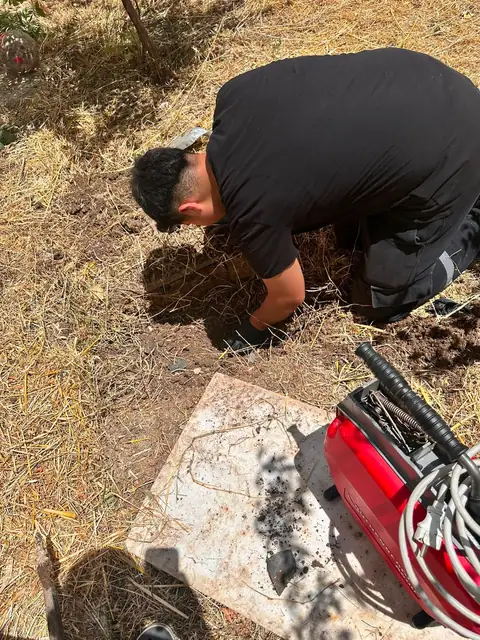
Digging and working with a motorised drain snake on the garden drain line 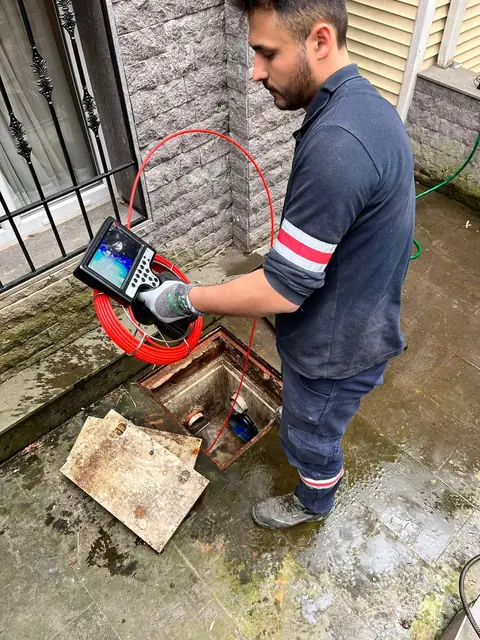
Watching the inside of the pipe on the camera screen at the manhole 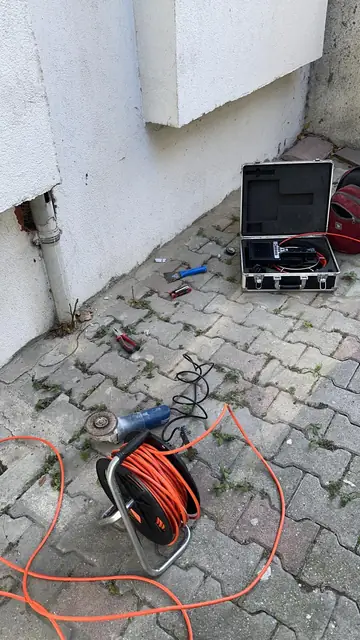
Working on a courtyard drain line with a camera reel
Pipe Unclogging by district
We provide this service in all 39 districts of Istanbul. Choose your district.
Frequently asked questions
How is a blocked pipe unclogged?
A blocked pipe is cleared without breaking anything, using a drain snake machine or high-pressure water suited to its material and diameter. We use a flexible thin snake in narrow plastic pipes, a controlled motorised snake in old cast iron stacks, and pressurised water in long, greasy lines. We decide which method to use after seeing inside the pipe with the camera.
Can old cast iron pipes be damaged during unclogging?
When the work is done with the right head and at low speed, a cast iron pipe is not damaged during unclogging. The risk appears when a hard cutting head or uncontrolled force is used on a thinned pipe. That is why in cast iron lines we first check the condition of the pipe wall with the camera, then choose the head and the speed of the machine accordingly.
How can you tell whether a pipe is blocked or broken?
The most reliable way is to look inside the pipe with a camera. In a blocked pipe, the screen shows built-up waste, and once it is cleared the pipe continues as a regular round tube. In a broken or collapsed pipe, you see a crack, a separated joint or a section that has caved in. Frequently repeating blockages and ground that stays wet in the garden also point to a break.
Can a garden pipe blocked by roots be cleared?
Yes, concrete or ceramic pipes blocked by roots are cleared with the cutting head of a motorised snake. Because the roots enter through the joints, unclogging relieves the line, but unless the joint is repaired, the roots grow back over time. The camera shows which joints the roots are entering through and makes clear which section needs to be renewed.
Can a chemical drain opener be poured into metal pipes?
No, we do not recommend pouring a chemical drain opener into cast iron or galvanised pipes. These products do not dissolve the rust crust, they eat into metal that is already thin, and they damage seals. The chemical sitting in the pipe can also splash during unclogging and harm skin and eyes. If you have used one, be sure to tell the team.
Why does an unclogged pipe block again so soon?
If the blockage comes back quickly, the problem is often in the pipe itself: a cast iron pipe narrowed by a rust crust, a crushed corrugated pipe, or a concrete pipe joint where roots have taken hold. Unclogging clears the blockage of the moment, but as long as the cause of the narrowing remains, waste builds up again at the same point. With the camera we find this cause and show you the section of the line that needs to be renewed.
Our other services
No-Dig Drain Unclogging
We locate the blockage with a camera, then clear it with a drain snake and pressurised water. Your tiles stay where they are.
See detailsToilet Unclogging
From an overflowing toilet to the building's shared stack, we clear the toilet drain.
See detailsWashbasin Unclogging
Whether the blockage is in the trap or in the line inside the wall, we clear it cleanly.
See detailsKitchen Sink Unclogging
We jet the whole kitchen drain line with high-pressure water to remove built-up grease and starch.
See detailsCommercial Kitchen Drain Clearing
In restaurant and cafe kitchens, we clear the floor drain, grease trap and shared line without interrupting service.
See detailsShower and Bathtub Drain Unclogging
We clear the hair and soap that build up in floor drains, shower channels and bathtub drains.
See detailsBalcony Drain Unclogging
We clear balcony drains clogged with leaves, soil and sand before the rain arrives.
See detailsDrain Unclogging
We work out which drain is blocked, then clear the line in your home or workplace.
See detailsBlocked Drain Clearing
Is the blockage in the trap, the shared stack or the building outlet? We find it and show you the cause so it doesn't come back.
See detailsPVC Drain Pipe Unclogging
We clear PVC drain pipes without breaking anything, using heads that won't damage them.
See detailsCCTV Drain Unclogging
We look inside the pipe together on a screen and clear the blockage exactly where it is.
See detailsManhole Unclogging
We clear the inlet and outlet lines of an overflowing manhole and get the flow moving again.
See detailsSewer Line Unclogging
We clear the building's main sewer line all the way to the street connection.
See detailsChannel Drain Unclogging
We use high-pressure water to clear garden lines, ramp and car park grates, and storm drains.
See detailsSewer Cleaning
We regularly clean out sludge, grease and root build-up with high-pressure water jetting.
See detailsSewer Camera Inspection
We find cracks, collapses and root intrusion with a CCTV drain camera and show you the footage.
See detailsSewer Line Renewal
We locate the damaged section with a camera and replace only the part that needs it.
See detailsBackflow Valve Installation
We keep water that comes back up from the street in heavy rain out of your basement and ground floor.
See detailsPVC Drain Pipe Replacement
We replace PVC drain pipes that are cracked, leaking or laid with the wrong fall.
See detailsVacuum Truck Service
24/7 pumping with combination and mini vacuum trucks for septic tanks, manholes, grease traps and flooded basements.
See detailsSeptic Tank Pumping
We empty full or overflowing septic tanks by vacuum and take the waste to an authorised disposal point.
See detailsSeptic Tank Cleaning
We clean the sludge at the bottom, the crust on the walls and the inlet and outlet pipes with high-pressure water.
See detailsCombi Vacuum Jetting Truck
One truck jets the line clean and vacuums out the sludge, for blocked main lines and full manholes.
See detailsMini Vacuum Truck
Our small truck gets into narrow streets, steep hills, courtyards and low garage entrances.
See detailsCar Park Vacuum Truck
We pump out an enclosed car park flooded after rain and clear the grate and ramp channels.
See detailsVacuum Truck Hire
We assign an operator-driven vacuum truck to construction sites, factories and housing complexes for scheduled or regular work.
See detailsPrivate Vacuum Truck Service
A vacuum truck for your own property that comes on your schedule, with no waiting in a queue.
See detailsVacuum Truck Company
A vacuum truck company that asks about the job over the phone, picks the right truck and transports the waste according to the rules.
See detailsLet us clear your pipe with the method that suits it
For a blocked pipe at home, in your building or at your business, call 0212 923 66 85 or write to us on WhatsApp. We come, examine the material and condition of the pipe, explain what we will do, and clear the line without breaking anything. If you add a photo of the place where water collects to your message, we can plan in advance which tools to bring.