
Istanbul Backflow Valve Installation
For backflow valve installation, Cantley fits a backflow preventer on your building's sewer line. It lets waste water flow out only, and closes its flap against water coming back from the main sewer. In heavy rain, when the street sewer fills up, dirty water can travel backwards along the building's line and come out of the lowest drain. A backflow valve cuts off that route and stops your basement, car park, ground-floor shop or garden-level flat from flooding. For buildings on low-lying streets where rainwater collects quickly, this small part offers a great deal of security.

Before installation we inspect the line with a camera and decide with you where the valve should go, because a valve fitted in the wrong place either does nothing or blocks the building's own waste water. When the job is done, we show you how to check the valve and where the service cover is. We work 24/7 across all 39 districts of Istanbul for building and site management, ground-floor businesses and houses with gardens. We also inspect, clean and refit existing backflow valves that are not working. Installation often needs no breaking of floors or walls.
Signs your building needs a backflow valve
Backflow problems usually show themselves during a rainstorm. If any of the following has happened to you, it is likely to happen again in the next downpour.
Water coming out of the basement drain in the rain
If everything is normal in dry weather but dirty water rises from the basement floor drain, the laundry room drain or the car park grate during heavy rain, water from the street line is entering the building in reverse. This is the clearest reason to install a backflow valve.
Water rising in a ground-floor toilet
If the ground-floor toilet bowl fills by itself during rain, gurgles, or foul-smelling water comes out of the shower tray, the line is taking pressure from the wrong direction. Upper floors are not affected, because their drains sit above street level.
A building with drains below street level
In buildings with a basement, a semi-basement flat or a garden-level floor below road level, the lowest drain sits lower than the main sewer. Even if these buildings have never flooded before, they carry a backflow risk in heavy rainfall.
Frequent ponding on your street
If your street has started to pond in the rain more often than before, or many new buildings have gone up nearby, the load on the sewer network may have increased. Buildings that never had trouble can start to suffer backflow after changes like these. In that case, protecting your line with a backflow valve is a sensible move.
An existing backflow valve that is not working
If the building has a backflow valve but water still comes in during rain, the flap may be jammed with sediment, the seal may be worn, or the valve may have been fitted in the wrong place. In that case the valve is cleaned, repaired or refitted in the right spot.
Why does sewage flow back into a building?
The building's line carries waste water by gravity to the main sewer in the street. On normal days the main line runs half full and the building's water drains into it easily. In some neighbourhoods rainwater and waste water share the same network, and in others rainwater gets into the waste water line by various routes. In a sudden, heavy downpour this line fills beyond its capacity and the water inside looks for somewhere to go. This overfilling can last for the whole storm, and the network only recovers once the rain eases.
Water always finds the lowest outlet. When the street line is full, the pressure pushes inwards through the building connection and overflows from the building's lowest drain below street level. This is usually the basement floor drain, the car park grate or a ground-floor toilet. The water that spills out is dirty water from the sewer; it soils belongings, walls and floor coverings. Cleaning it up is laborious and it can leave lasting damage to your possessions.
A backflow valve stops this reverse flow mechanically. The flap inside opens with water coming from the building, and seats itself and shuts the line under pressure coming from the sewer. When fitted in the right place, the building side stays protected even while the street line is overflowing. However, if sediment builds up in front of the flap, the valve will not close fully; that is why it must be fitted somewhere accessible and checked from time to time. A correctly fitted and maintained backflow valve keeps the lowest floor of the building safe on rainy days.
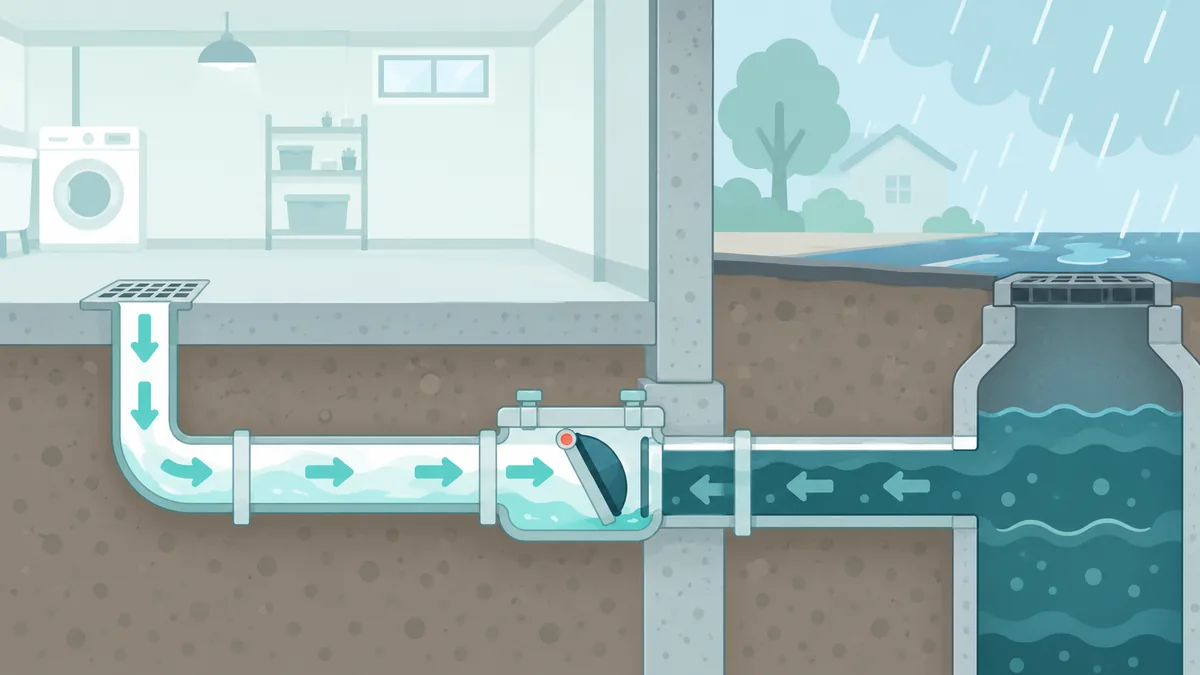
How we install a backflow valve
A backflow valve only works if the right valve is fitted in the right place. That is why we plan the installation only after getting to know your line.
Inspecting the line and the risk point
First we look at which of the building's drains sit below street level and where the line connects to the sewer. The building's line is inspected with a camera, and the main inspection chamber and the connection point are located. We establish which drain the backflow comes from and which lines need protecting. This information decides where the valve goes.
Choosing the valve position and type
A backflow valve is usually fitted on the last section of the building's line before it reaches the sewer, inside an inspection chamber, or on the basement line. When choosing the position, we make sure it is accessible for maintenance and that it will not block waste water from the upper floors. The valve is chosen to suit the pipe diameter.
Installation and sealing
The relevant section of the line is cut, the backflow valve is placed in the correct position for the direction of flow, and it is joined with suitable fittings so that it is watertight. If the installation is done inside an inspection chamber, no floor is broken. If the valve has to go on a buried line in the basement, the work is limited to that one point. When the work is finished, the area is left clean.
Water test and maintenance walkthrough
After installation, water is run into the line from the building and we check that it flows freely; where possible, we also test that the flap closes against reverse flow. We show you the position of the valve and the service cover, and explain to the management when it should be checked for sediment.
If water is coming back during rain
- Stop using the drains in the basement and on the ground floor, and ask neighbours on the upper floors to hold off on heavy water use for a while.
- You can slow the overflow temporarily by placing a sandbag, or a strong bag filled with water, over the floor drain where water is rising.
- Keep away from sockets and cables in the flooded area, and switch off that floor's circuit breaker if necessary.
- Do not open manhole covers or stand over them during rain; the pressurised water and sewer gas inside are dangerous.
- Do not touch the overflowing water with bare hands, use gloves and boots, and ventilate the area thoroughly after cleaning.
Pictures from the field
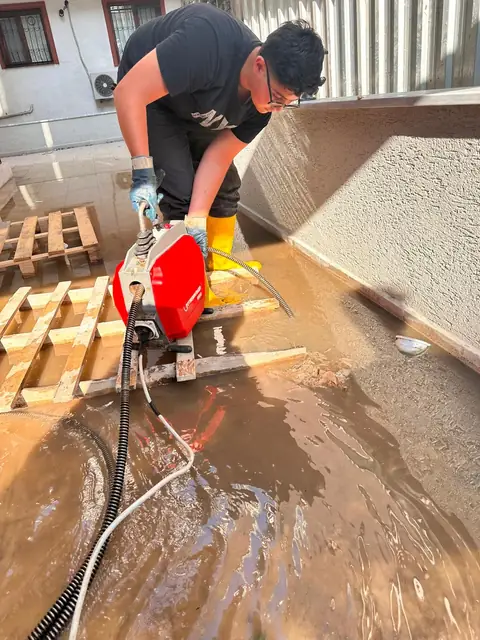
Clearing a drain in a flooded area with a motorised drain snake 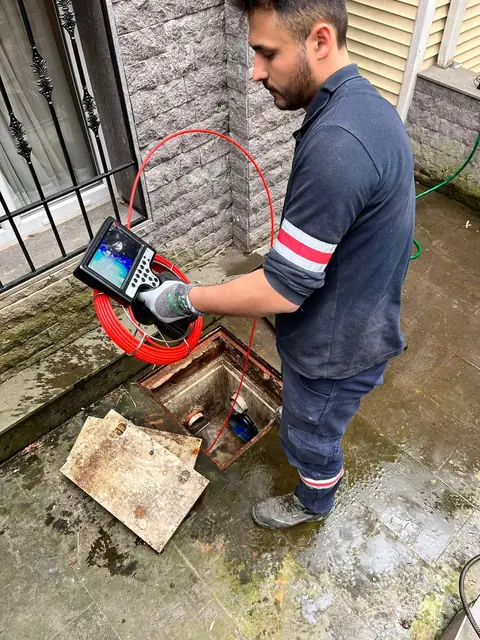
Watching the inside of the pipe on the camera screen at the manhole 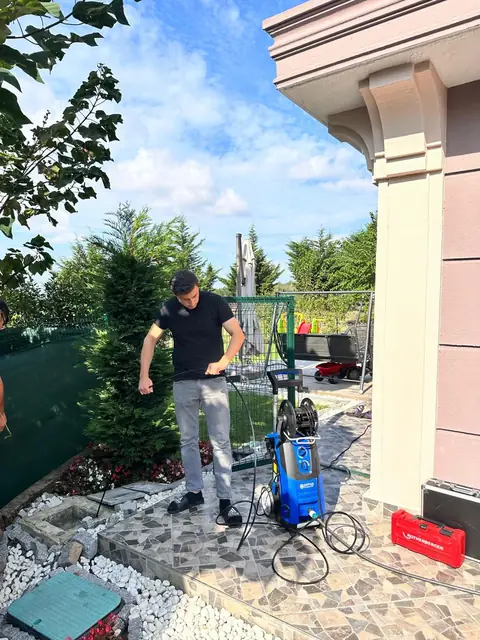
High-pressure water jetting of the garden drain line
Backflow Valve Installation by district
We provide this service in all 39 districts of Istanbul. Choose your district.
Frequently asked questions
What is a backflow valve and what does it do?
A backflow valve is a valve on the sewer line that lets water flow in one direction only. It passes waste water from the building into the sewer, and closes its flap against water coming from the sewer towards the building. This stops dirty water from overflowing into the drains in the basement and on the ground floor when the street sewer fills up in heavy rain.
Where is a backflow valve fitted?
A backflow valve is usually fitted on the last section of the building's line before it connects to the street sewer, often inside an inspection chamber or on the basement drain line. The right place depends on the structure of the building. What matters is that the low drains that need protecting sit on the building side of the valve, and that the valve can be reached for maintenance.
Does the floor have to be broken when a backflow valve is fitted?
In most cases it does not. If the valve can be fitted inside an existing inspection chamber or manhole, the work is carried out by opening the cover. If the line has no suitable chamber, or the valve has to go on a buried line in the basement, only a small opening is made at that point. We explain this to you before installation and get your approval.
How is a backflow valve maintained?
When sediment, paper and grease build up on the flap of a backflow valve, it does not close fully, so it needs to be opened and cleaned at regular intervals. The service cover is opened, the flap and its seat are checked, and the seal is replaced if it is worn. A check carried out just before the rainy season begins helps the valve work when it is needed.
Do people living on the upper floors have any stake in a backflow valve?
Flats on the upper floors are generally not directly affected by backflow, because their drains are above street level. However, since the building's line is shared, an overflow in the basement or on the ground floor concerns the whole building. That is why the decision to fit a backflow valve is often made jointly by the building or site management.
Will the building's line get blocked if a backflow valve is fitted?
A backflow valve that is chosen in the right diameter and fitted in the right direction does not obstruct normal flow or block the line. The flap opens easily with water coming from the building. Problems can come from sediment that builds up in front of the flap over time; for this reason the valve should be somewhere accessible and be checked and cleaned at regular intervals. A maintained valve works freely.
Our other services
No-Dig Drain Unclogging
We locate the blockage with a camera, then clear it with a drain snake and pressurised water. Your tiles stay where they are.
See detailsToilet Unclogging
From an overflowing toilet to the building's shared stack, we clear the toilet drain.
See detailsWashbasin Unclogging
Whether the blockage is in the trap or in the line inside the wall, we clear it cleanly.
See detailsKitchen Sink Unclogging
We jet the whole kitchen drain line with high-pressure water to remove built-up grease and starch.
See detailsCommercial Kitchen Drain Clearing
In restaurant and cafe kitchens, we clear the floor drain, grease trap and shared line without interrupting service.
See detailsShower and Bathtub Drain Unclogging
We clear the hair and soap that build up in floor drains, shower channels and bathtub drains.
See detailsBalcony Drain Unclogging
We clear balcony drains clogged with leaves, soil and sand before the rain arrives.
See detailsDrain Unclogging
We work out which drain is blocked, then clear the line in your home or workplace.
See detailsBlocked Drain Clearing
Is the blockage in the trap, the shared stack or the building outlet? We find it and show you the cause so it doesn't come back.
See detailsPVC Drain Pipe Unclogging
We clear PVC drain pipes without breaking anything, using heads that won't damage them.
See detailsPipe Unclogging
PVC, cast iron, galvanised or concrete pipe: we clear the blocked pipe with a head suited to its material.
See detailsCCTV Drain Unclogging
We look inside the pipe together on a screen and clear the blockage exactly where it is.
See detailsManhole Unclogging
We clear the inlet and outlet lines of an overflowing manhole and get the flow moving again.
See detailsSewer Line Unclogging
We clear the building's main sewer line all the way to the street connection.
See detailsChannel Drain Unclogging
We use high-pressure water to clear garden lines, ramp and car park grates, and storm drains.
See detailsSewer Cleaning
We regularly clean out sludge, grease and root build-up with high-pressure water jetting.
See detailsSewer Camera Inspection
We find cracks, collapses and root intrusion with a CCTV drain camera and show you the footage.
See detailsSewer Line Renewal
We locate the damaged section with a camera and replace only the part that needs it.
See detailsPVC Drain Pipe Replacement
We replace PVC drain pipes that are cracked, leaking or laid with the wrong fall.
See detailsVacuum Truck Service
24/7 pumping with combination and mini vacuum trucks for septic tanks, manholes, grease traps and flooded basements.
See detailsSeptic Tank Pumping
We empty full or overflowing septic tanks by vacuum and take the waste to an authorised disposal point.
See detailsSeptic Tank Cleaning
We clean the sludge at the bottom, the crust on the walls and the inlet and outlet pipes with high-pressure water.
See detailsCombi Vacuum Jetting Truck
One truck jets the line clean and vacuums out the sludge, for blocked main lines and full manholes.
See detailsMini Vacuum Truck
Our small truck gets into narrow streets, steep hills, courtyards and low garage entrances.
See detailsCar Park Vacuum Truck
We pump out an enclosed car park flooded after rain and clear the grate and ramp channels.
See detailsVacuum Truck Hire
We assign an operator-driven vacuum truck to construction sites, factories and housing complexes for scheduled or regular work.
See detailsPrivate Vacuum Truck Service
A vacuum truck for your own property that comes on your schedule, with no waiting in a queue.
See detailsVacuum Truck Company
A vacuum truck company that asks about the job over the phone, picks the right truck and transports the waste according to the rules.
See detailsTake action before the next rain
If your basement has flooded once, do not wait for it to happen again. Call 0212 923 66 85 or write to us on WhatsApp; we come to your address 24/7, inspect the line and explain on site where the backflow valve will go.