Istanbul Sewer Cleaning
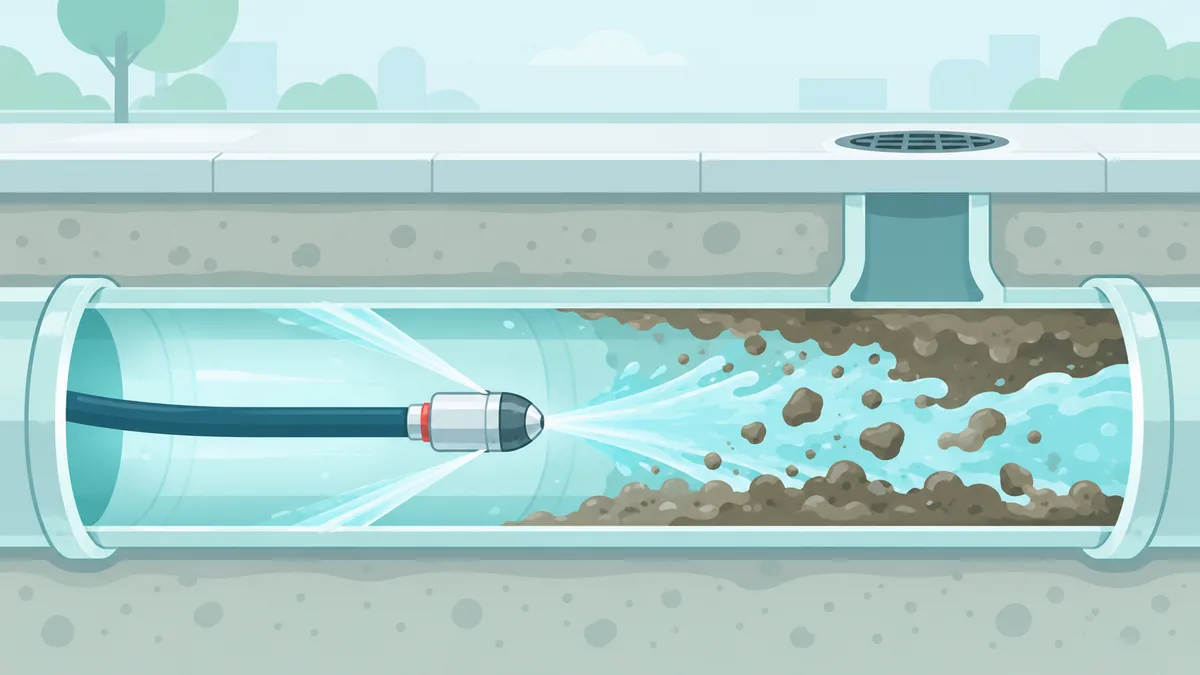
When Cantley carries out sewer cleaning, we flush your building's main waste line from start to finish with a high-pressure water jet. It strips away the sludge that has settled on the bottom of the pipe, the grease stuck to the inner wall and the roots that have worked in through the joints. This is different from clearing a single blockage. The aim is to restore the pipe's internal diameter before the line closes up completely, and to prevent the next overflow in the basement or at a shop's floor drain grate. A line that is flushed regularly cuts down, from the start, the cost and disruption caused by sudden blockages and by sewage backing up into the basement.

Building and site management, restaurants, cafés and multi-storey workplaces usually book this maintenance at set intervals, because sediment building up in a shared line affects every flat at the same time. We work 24/7 in all 39 districts of Istanbul. Our team comes to the address, opens the manhole covers, looks inside the line with a camera if needed, and explains the work to you before starting the cleaning. No tiles are broken and no walls are opened; the work is done through the manholes and cleanout access points. While we work, we take care to disturb the daily routine of the residents as little as possible.
How do you know your line needs cleaning?
A sewer line rarely closes up overnight. As sediment builds up, the building gives small signs, and spotting them early is far easier than dealing with an overflow in the middle of the night.
Ground-floor drains are slow
If everything looks normal on the upper floors but the washbasin, shower or floor drain on the entrance level swallows water slowly, the last section of the shared line may have narrowed. Waste water starts to hold back at the lowest point, so the ground floor is always the first to be affected.
Smell in the basement or stairwell
A heavy smell rising around the manhole, in the corners of the car park or from basement floor drains points to rotting organic sediment and standing water, even a little of it. The smell comes back within a few days even after you ventilate. Very often the source of the smell is the line itself.
Water is sitting under the manhole cover
If you lift the manhole cover and the water sits there instead of flowing, or you see a grey layer of grease on the sides of the channel, the outlet pipe has narrowed. On rainy days this level rises quickly and the risk of overflow grows. It is a clear sign that the line needs flushing.
The grease trap in a restaurant kitchen fills quickly
If the grease trap fills up again soon after being emptied and the kitchen drains gurgle as they run, the grease has been carried further down the line and has hardened on the pipe wall. This layer does not melt with hot water and needs mechanical cleaning. Emptying the trap alone does not solve the problem.
Repeated blockages near a tree
If the line runs through a garden or under trees at the edge of the pavement, roots enter through the joints and weave a fine mesh. If a blockage you cleared comes back at the same spot a few weeks later, roots are very likely the cause.
Why does sediment build up in a sewer line?
The waste water that flows down into a building's line is not just water. Grease from the kitchen, detergent residue, food scraps and toilet paper settle on the bottom in the slowest-flowing parts of the pipe. On long horizontal runs, at bends and at junctions, the flow slows down and the settled sludge gets a little thicker every day. Over time the internal diameter of the pipe shrinks, and water that normally flows freely begins to fill the line at busy hours. This narrowing usually advances unnoticed, and the first sign is often an overflow.
In businesses such as restaurants, cafés and hotels, the main problem is grease. Grease that is liquid when hot sticks to the pipe wall and hardens once it reaches the cold part of the line, and new sediment then clings to it. If the grease trap is the wrong size or is not emptied regularly, this layer can narrow the line seriously within a few months. Hot water or chemical openers only push the grease a little further along and do not solve the problem. To strip grease from a line, the pipe wall has to be scraped with a water jet.
In older buildings, roots and sand come into play as well. The joints of concrete or old-type pipes loosen over time, and tree roots follow the moisture and reach in through these gaps. Sand, soil and leaves from garden and car park drains are also carried into the line. So in buildings with a shared line, having it cleaned regularly instead of waiting for a blockage is the smarter route, for the safety of both the flats and the basement. Cleaning early also stops roots from growing to the point where they crack the pipe.
In what order do we do the cleaning?
Every building is laid out differently, so we begin by getting to know the line. These are the steps the team follows on site.
Surveying the line and checking the manholes
The team first locates the building's manholes and inspection chambers, the cleanout covers and the point where the line joins the main sewer. The covers are opened, and the water level and flow direction are checked. Cleaning done without knowing where the line runs from and to does no more than move sediment from one spot to another.
A camera look first, when needed
If there are repeated blockages, a suspicion of roots or a turn nobody knows about, a camera is sent into the line. The footage shows how thick the sediment is, where the roots are and whether the pipe is sound. The choice of nozzle and pressure is made by looking at this footage, which also keeps the risk of damaging the pipe to a minimum.
Flushing with a high-pressure water jet
A hose with a special nozzle is fed in from the lowest point of the line towards the sewer. The water, which sprays backwards, scrapes the grease and sludge off the pipe wall and carries it along the flow. If there are roots, cutting heads or a motorised drain snake come into play, and the cleaning is done section by section along the length of the line.
Flow test and explaining the result
After cleaning, plenty of water is run through the line and the flow is watched at the manholes. If needed, the camera is sent in again and the cleaned pipe is shown to you. Finally we explain plainly the condition of the line, any broken or collapsed section, and the maintenance interval that suits your building. We also leave a short note for the management.
What can you do until the team arrives?
- Tell the flats and shops on the ground floor; if drains are backing up, they should not run the washing machine or dishwasher.
- In a restaurant kitchen, stop pouring greasy water down the drain, keep the grease trap lid closed and leave the area around it dry.
- If you have opened the manhole cover, have someone stay next to it; do not lean in or climb down, because sewer gas is dangerous.
- Do not pour chemical drain opener down the drain; chemicals that splash while the team works on the line can cause burns. If you have already poured some, be sure to tell us.
- If there are belongings in the basement, lift them off the floor, and if water is collecting near sockets, switch off the fuse for that area.
Pictures from the field
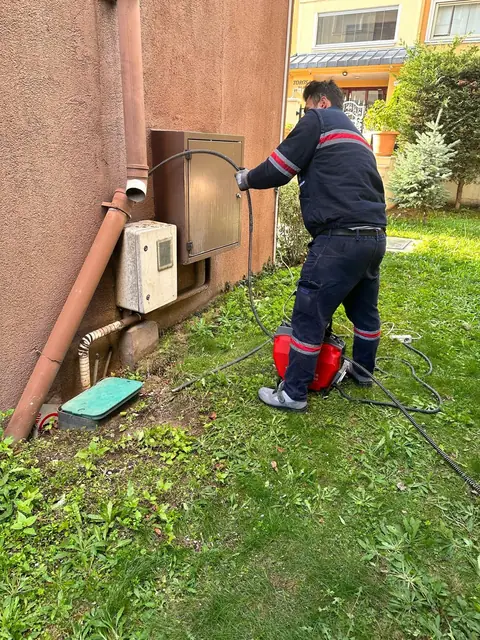
Working on the drain line outside the building with a drain snake machine 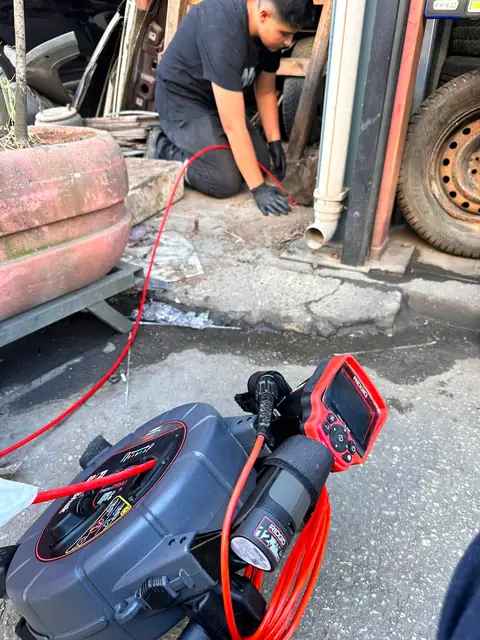
CCTV drain camera inspection of the downpipe in front of the building 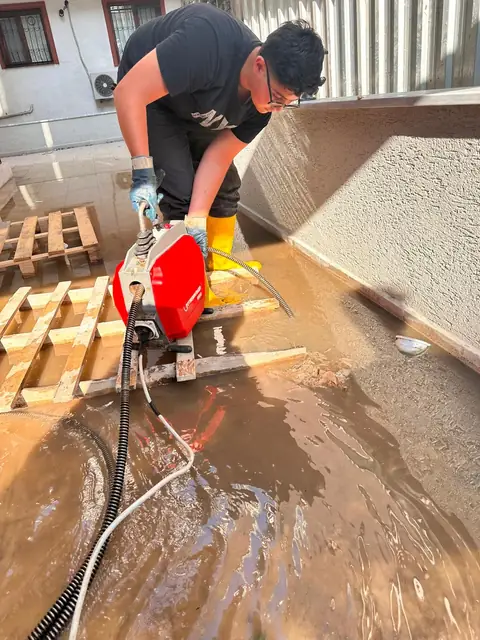
Clearing a drain in a flooded area with a motorised drain snake
Sewer Cleaning by district
We provide this service in all 39 districts of Istanbul. Choose your district.
Frequently asked questions
How often should a sewer line be cleaned?
It depends on how the building is used, and there is no fixed schedule that suits everyone. In homes, sediment builds up slowly, so the maintenance interval can be longer; in restaurants and businesses with a busy kitchen, grease builds up much faster, so cleaning is needed more often. At the first cleaning we look at the condition of the line with a camera and work out together the interval that suits your building.
Will the floor be broken for sewer cleaning?
No, the floor is not broken in a normal cleaning. The water jet and drain snakes are fed into the line through the manholes, inspection chambers and cleanout covers, and the work is done through these openings. Breaking only comes up when the camera shows a broken or collapsed section of pipe, and in that case we first show you the footage and explain the options.
Can high-pressure water damage old pipes?
Used with the right nozzle and a suitable pressure, it does not damage a sound pipe. On lines we suspect are old or cracked, we look with the camera first and set the pressure according to the condition of the pipe. If the camera shows serious damage, we do not force the flushing; we first talk with you about how that section should be repaired.
Who orders sewer cleaning in an apartment building?
For shared lines, this decision usually belongs to the building or site management, because the main line serves all the flats. The manager or caretaker calls us and arranges access to the manholes, and at the end of the job we explain the condition of the line to the management. A flat's own internal plumbing is the responsibility of that flat.
Is emptying the grease trap in a restaurant not enough?
Emptying the grease trap regularly is very important, but it may not be enough on its own. Fine grease that gets past the trap sticks to the pipe wall further down the line and forms a layer, and emptying the trap does not reach that layer. So for businesses with a busy kitchen, we recommend flushing the outlet line with a water jet in addition to maintaining the trap.
Can water be used in the building during sewer cleaning?
Clean water is not shut off, but we ask you to use the drains as little as possible while the work goes on. If plenty of water runs into the line, visibility and control are harder in the section the flushing head is moving through. It is especially important not to use ground-floor and basement drains, so that sediment that has been shifted does not come back to those floors. When the cleaning is finished, we test the line and open it for use.
Our other services
No-Dig Drain Unclogging
We locate the blockage with a camera, then clear it with a drain snake and pressurised water. Your tiles stay where they are.
See detailsToilet Unclogging
From an overflowing toilet to the building's shared stack, we clear the toilet drain.
See detailsWashbasin Unclogging
Whether the blockage is in the trap or in the line inside the wall, we clear it cleanly.
See detailsKitchen Sink Unclogging
We jet the whole kitchen drain line with high-pressure water to remove built-up grease and starch.
See detailsCommercial Kitchen Drain Clearing
In restaurant and cafe kitchens, we clear the floor drain, grease trap and shared line without interrupting service.
See detailsShower and Bathtub Drain Unclogging
We clear the hair and soap that build up in floor drains, shower channels and bathtub drains.
See detailsBalcony Drain Unclogging
We clear balcony drains clogged with leaves, soil and sand before the rain arrives.
See detailsDrain Unclogging
We work out which drain is blocked, then clear the line in your home or workplace.
See detailsBlocked Drain Clearing
Is the blockage in the trap, the shared stack or the building outlet? We find it and show you the cause so it doesn't come back.
See detailsPVC Drain Pipe Unclogging
We clear PVC drain pipes without breaking anything, using heads that won't damage them.
See detailsPipe Unclogging
PVC, cast iron, galvanised or concrete pipe: we clear the blocked pipe with a head suited to its material.
See detailsCCTV Drain Unclogging
We look inside the pipe together on a screen and clear the blockage exactly where it is.
See detailsManhole Unclogging
We clear the inlet and outlet lines of an overflowing manhole and get the flow moving again.
See detailsSewer Line Unclogging
We clear the building's main sewer line all the way to the street connection.
See detailsChannel Drain Unclogging
We use high-pressure water to clear garden lines, ramp and car park grates, and storm drains.
See detailsSewer Camera Inspection
We find cracks, collapses and root intrusion with a CCTV drain camera and show you the footage.
See detailsSewer Line Renewal
We locate the damaged section with a camera and replace only the part that needs it.
See detailsBackflow Valve Installation
We keep water that comes back up from the street in heavy rain out of your basement and ground floor.
See detailsPVC Drain Pipe Replacement
We replace PVC drain pipes that are cracked, leaking or laid with the wrong fall.
See detailsVacuum Truck Service
24/7 pumping with combination and mini vacuum trucks for septic tanks, manholes, grease traps and flooded basements.
See detailsSeptic Tank Pumping
We empty full or overflowing septic tanks by vacuum and take the waste to an authorised disposal point.
See detailsSeptic Tank Cleaning
We clean the sludge at the bottom, the crust on the walls and the inlet and outlet pipes with high-pressure water.
See detailsCombi Vacuum Jetting Truck
One truck jets the line clean and vacuums out the sludge, for blocked main lines and full manholes.
See detailsMini Vacuum Truck
Our small truck gets into narrow streets, steep hills, courtyards and low garage entrances.
See detailsCar Park Vacuum Truck
We pump out an enclosed car park flooded after rain and clear the grate and ramp channels.
See detailsVacuum Truck Hire
We assign an operator-driven vacuum truck to construction sites, factories and housing complexes for scheduled or regular work.
See detailsPrivate Vacuum Truck Service
A vacuum truck for your own property that comes on your schedule, with no waiting in a queue.
See detailsVacuum Truck Company
A vacuum truck company that asks about the job over the phone, picks the right truck and transports the waste according to the rules.
See detailsHave your line cleaned before it blocks
Calling before an overflow starts puts both the building and the neighbours at ease. Call 0212 923 66 85 or write to us on WhatsApp; we come to every district of Istanbul 24/7, look at the line and explain what needs to be done.