
Istanbul Channel Drain Unclogging
For channel drain unclogging in Istanbul, Cantley clears the horizontal drainage lines that run outside and beneath your building: the line from the garden to the street, the grated channel drains on vehicle ramps and site roads, and the collection channels in car parks and basement floors. These channels carry a different load from the drains inside your home. They collect rainwater, wash-down water, mud brought in on vehicle tyres and soil washed off the garden, so a blockage is usually noticed during a downpour, as a pool at the foot of the ramp or water filling the corner of the car park. When a blocked channel is left alone, the water finds its own way towards door thresholds, lift shafts and storage rooms.

In multi-block housing complexes the job is a little more complicated, because the rainwater and courtyard water from several blocks join in one shared channel line and head for the site exit. The grate in front of one block may overflow while the neighbouring block shows no sign at all. Where the overflow starts tells you which section of the line the blockage is sitting in. Our team first opens the grates and the nearest manhole and works out the direction of flow, then clears the line with high-pressure water jetting and, where needed, a motorised drain snake. We work 24/7 in all 39 districts of Istanbul for site management offices, apartment buildings, shops, businesses and car parks.
Where do blocked outdoor channel drains show first?
A blockage in outdoor channel drains shows first where the water arrives last: at the mouth of the grates, at the foot of ramps and in the lowest corner of the car park.
Water stays on top of the grate after rain
If water sits on a grated channel drain long after the downpour has stopped, the bottom of the channel or the pipe connected to it is full. Looking through the gaps in the grate, you can usually see a layer of dark mud or packed leaves.
The car park ramp turns into a pond in every rainstorm
The transverse channel at the bottom of the ramp has to collect all the water coming down from above on its own. When it narrows, water builds up at the foot of the ramp, spreads into the car park and can reach the tyres of parked cars. In closed car parks the same water also puts the lift shaft and electrical panels at risk.
A sewer smell rises from the grates
If a channel that should only carry rainwater gives off a heavy smell, there is rotting leaf matter and mud on the bottom, or even a wastewater connection that has been mixed in. In summer, when the channel has not seen water for a long time, the smell can spread to the courtyard and the building entrance.
Water drains slowly in the garden manhole
If you lift the cover of the inspection manhole in the garden or on the site road and see the water leaving the chamber slowly, the horizontal line between the manhole and the street has narrowed. This sign often appears before the grates start to overflow, which makes it a good chance to act early.
A strip of lawn that sinks or stays wet
If you notice that the lawn or paving stones in the garden have sunk along a straight line, or that a strip stays wet even in dry weather, the channel pipe underneath may be broken or have come apart at a joint. Flushing such a line is not enough on its own, and it needs a look inside with a camera.
What fills outdoor channel drains
The main load on channels outside a building comes from the ground. Soil washed along by garden watering, sand spread on roads against ice in winter, leaves falling from trees in autumn and mud carried by vehicle tyres all slip through the gaps in the grates into the channel. While the water runs fast, this material keeps moving. At corners where the slope eases, at bends and at the points where the line enters a manhole, it settles on the bottom. Mortar, concrete residue and gravel that get into the channel after nearby renovation or landscaping work can harden within a few weeks and raise the floor of the channel permanently.
The second problem for channel lines running through a garden is tree roots. Roots follow moisture to the pipe joints, push in as fine fibres and, over time, turn into a strainer that catches incoming leaves and mud. On site roads used by heavy vehicles, and in gardens that were filled in later, the ground settles. The pipe sinks at one point or its slope reverses. In these sections water waits all the time, sediment is added to the waiting water, and the blockage returns to the same place soon after cleaning.
The picture changes a little in the channels in front of shops and businesses. Soapy water spilled while washing the pavement and cooking oil that reaches the channel from the back courtyards of restaurants and cafés form a sticky layer on the channel floor, and sand arriving on top clings to it. In some older buildings, the ground connections of rainwater downpipes have been mixed up with wastewater lines. In that case the line takes in more water than it can carry during a downpour, and the overflow starts from an unexpected place, for example a floor drain in the basement.
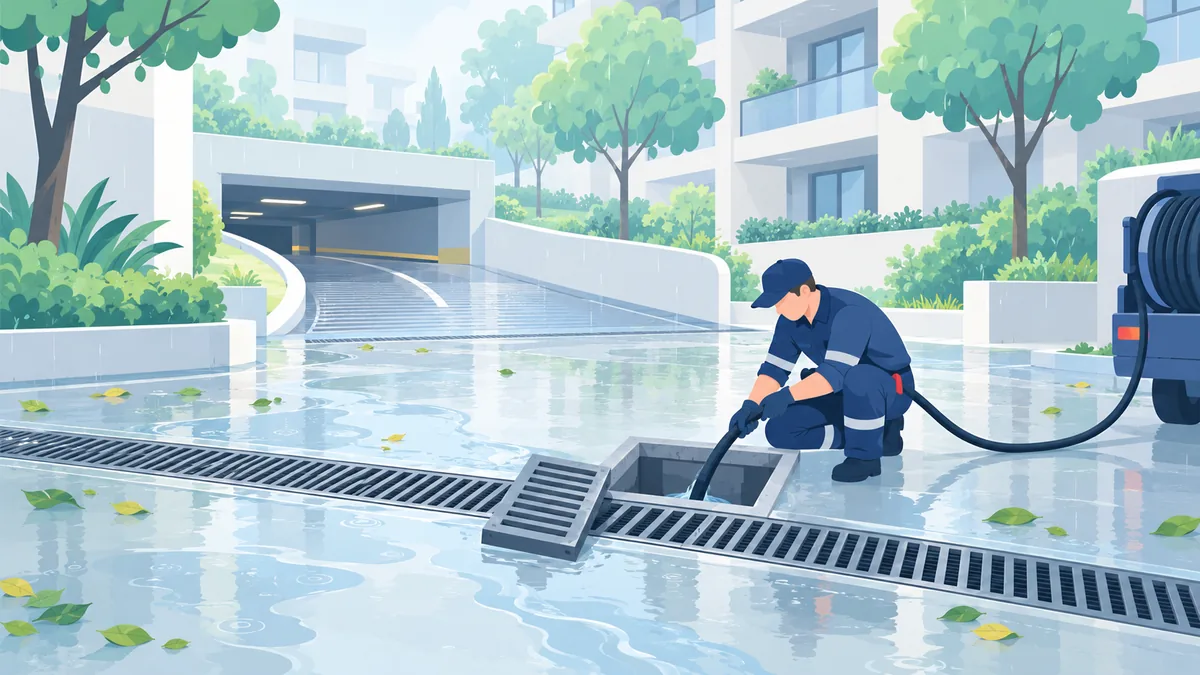
How we clear channel drains outside your building
When we work on outdoor channels, we first work out where the water is collected and where it goes, then step in from the access point closest to the blockage.
We lift the grates and empty the channel
The covers of the grated channels are lifted one after another, and the leaves, sand and mud on the bottom are shovelled out, put in buckets and bagged. Broken, bent or loose grates are noted, because they are dangerous for passing vehicles and let more material into the channel.
We flush the connected pipe from the nearest manhole
The pipe the channel connects to is cleared with a high-pressure water hose from the nearest manhole or cleaning point. The nozzle at the end of the hose moves forward spraying water backwards, loosens the sediment on the pipe floor and carries it towards the manhole. If there is hardened debris or roots, a motorised drain snake and cutting heads are used. The ground, paving stones and asphalt are not broken up.
We look for roots and subsidence with a camera
Once the line is open, especially if the blockage keeps coming back or there are signs of sinking in the garden, a camera is sent into the pipe. Root entry, breaks, joints that have come apart and sections where the slope has been lost show up clearly on the footage. We share the recording with your management, and if a repair is needed we explain the options using this footage.
We run water through and watch the flow together
In the final stage, plenty of water is run into the grates with a hose, and we watch the water move through the channel to the manhole and on to the street without waiting. On ramp channels we also check whether water is collected across the full width of the ramp.
We suggest a maintenance plan for the rainy season
When the job is done, we talk about how often your building's channels should be checked. In gardens with trees and car parks with long ramps, a cleaning after the leaves have fallen and before the winter rains arrive largely prevents the overflow that would otherwise happen in the first downpour.
What you can do while water is building up
- Pick up the leaves and rubbish covering the grate with gloves on, so that at least the surface water can enter the channel.
- If water is collecting on the car park ramp, move vehicles away from the foot of the ramp and from the low corners of the car park.
- Place sandbags or a folded tarpaulin in front of basement and storage room doors to slow the water moving inside.
- If you need to open a manhole cover, do not lean into it or climb down. Sewer gas builds up in the closed chamber and can cause you to lose consciousness.
- If overflowing water is approaching an electrical panel, a lift shaft or sockets, switch off the electricity to that area at the fuse board.
Pictures from the field
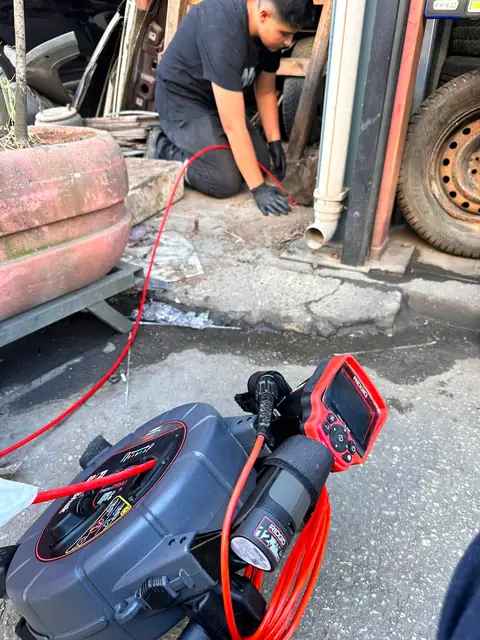
CCTV drain camera inspection of the downpipe in front of the building 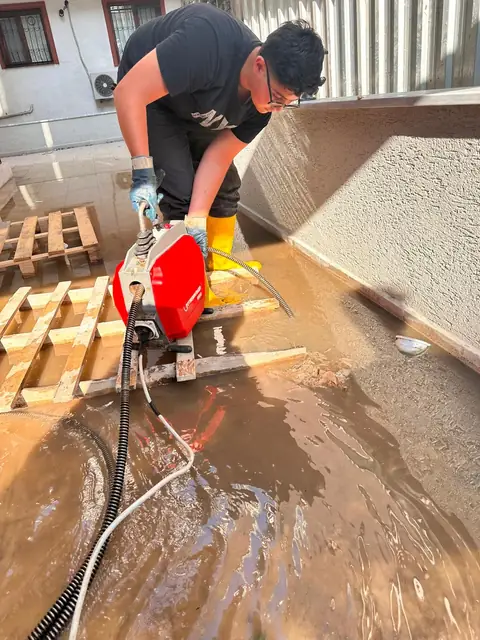
Clearing a drain in a flooded area with a motorised drain snake 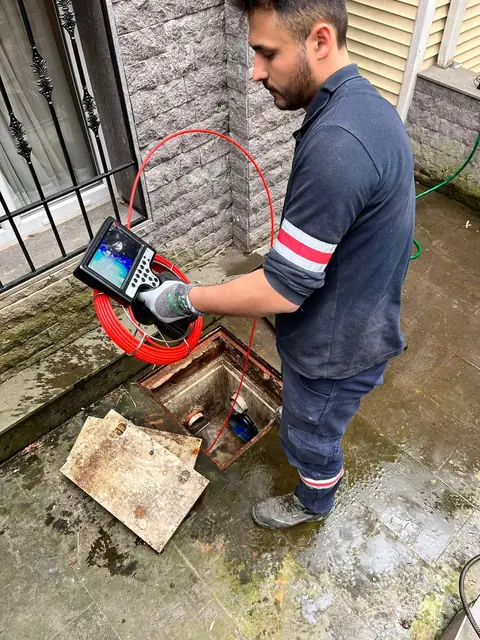
Watching the inside of the pipe on the camera screen at the manhole
Channel Drain Unclogging by district
We provide this service in all 39 districts of Istanbul. Choose your district.
Frequently asked questions
How is a blocked channel drain cleared?
A blocked channel drain is cleared by lifting the grates and emptying the channel, then flushing the connected pipe with high-pressure water from the nearest manhole. A motorised drain snake is used for hardened debris and roots, and where the problem keeps returning we look inside the line with a camera. Because all the work is done through the existing grates and manhole openings, the ground is not broken up.
Is channel drain unclogging the same job as sewer unclogging?
They are close jobs, but the line being dealt with is different. Sewer unclogging deals with the building's main wastewater line, while channel drain unclogging covers the horizontal channels outside the building, such as the garden line, ramp and road channels, car park floor channels and rainwater connections. In a housing complex the two can meet at the same manhole, so when the team arrives we separate the lines on site together.
Why does the car park ramp collect water?
A car park ramp usually collects water because the transverse grated channel at its foot is blocked. Rainwater running down the ramp brings leaves and sand with it, and when the channel or the pipe connected to it narrows, the water stays at the foot of the ramp. Emptying the channel and clearing the connected line with pressurised water solves the problem, and if a channel has lost its slope, that also comes to light during the check.
Who arranges the clearing of the shared channel line between blocks in a housing complex?
The site management arranges the clearing of a shared channel line that serves more than one block, because the line belongs to the whole complex and not to a single block. If the management notes in front of which block, and after which rainfall, overflow was seen, it narrows down the location of the blockage quickly. When the work is done, we explain the condition of the line to the management with camera footage.
If there are roots in the channel, does the pipe need replacing?
Not always. Roots can often be cleared with a cutting head and the pipe stays in use. If the camera shows that the pipe has cracked, been crushed or that a joint has opened, then only repairing that section or renewing the line comes into question.
When should outdoor channel drains be cleaned?
The best time is after the leaves have finished falling and before the winter rains arrive. In gardens with trees, car parks with long ramps and site roads next to bare soil, a second check in spring is also useful. After construction or landscaping work, having the channel cleaned without delay stops mortar and sand from hardening on the bottom.
Our other services
No-Dig Drain Unclogging
We locate the blockage with a camera, then clear it with a drain snake and pressurised water. Your tiles stay where they are.
See detailsToilet Unclogging
From an overflowing toilet to the building's shared stack, we clear the toilet drain.
See detailsWashbasin Unclogging
Whether the blockage is in the trap or in the line inside the wall, we clear it cleanly.
See detailsKitchen Sink Unclogging
We jet the whole kitchen drain line with high-pressure water to remove built-up grease and starch.
See detailsCommercial Kitchen Drain Clearing
In restaurant and cafe kitchens, we clear the floor drain, grease trap and shared line without interrupting service.
See detailsShower and Bathtub Drain Unclogging
We clear the hair and soap that build up in floor drains, shower channels and bathtub drains.
See detailsBalcony Drain Unclogging
We clear balcony drains clogged with leaves, soil and sand before the rain arrives.
See detailsDrain Unclogging
We work out which drain is blocked, then clear the line in your home or workplace.
See detailsBlocked Drain Clearing
Is the blockage in the trap, the shared stack or the building outlet? We find it and show you the cause so it doesn't come back.
See detailsPVC Drain Pipe Unclogging
We clear PVC drain pipes without breaking anything, using heads that won't damage them.
See detailsPipe Unclogging
PVC, cast iron, galvanised or concrete pipe: we clear the blocked pipe with a head suited to its material.
See detailsCCTV Drain Unclogging
We look inside the pipe together on a screen and clear the blockage exactly where it is.
See detailsManhole Unclogging
We clear the inlet and outlet lines of an overflowing manhole and get the flow moving again.
See detailsSewer Line Unclogging
We clear the building's main sewer line all the way to the street connection.
See detailsSewer Cleaning
We regularly clean out sludge, grease and root build-up with high-pressure water jetting.
See detailsSewer Camera Inspection
We find cracks, collapses and root intrusion with a CCTV drain camera and show you the footage.
See detailsSewer Line Renewal
We locate the damaged section with a camera and replace only the part that needs it.
See detailsBackflow Valve Installation
We keep water that comes back up from the street in heavy rain out of your basement and ground floor.
See detailsPVC Drain Pipe Replacement
We replace PVC drain pipes that are cracked, leaking or laid with the wrong fall.
See detailsVacuum Truck Service
24/7 pumping with combination and mini vacuum trucks for septic tanks, manholes, grease traps and flooded basements.
See detailsSeptic Tank Pumping
We empty full or overflowing septic tanks by vacuum and take the waste to an authorised disposal point.
See detailsSeptic Tank Cleaning
We clean the sludge at the bottom, the crust on the walls and the inlet and outlet pipes with high-pressure water.
See detailsCombi Vacuum Jetting Truck
One truck jets the line clean and vacuums out the sludge, for blocked main lines and full manholes.
See detailsMini Vacuum Truck
Our small truck gets into narrow streets, steep hills, courtyards and low garage entrances.
See detailsCar Park Vacuum Truck
We pump out an enclosed car park flooded after rain and clear the grate and ramp channels.
See detailsVacuum Truck Hire
We assign an operator-driven vacuum truck to construction sites, factories and housing complexes for scheduled or regular work.
See detailsPrivate Vacuum Truck Service
A vacuum truck for your own property that comes on your schedule, with no waiting in a queue.
See detailsVacuum Truck Company
A vacuum truck company that asks about the job over the phone, picks the right truck and transports the waste according to the rules.
See detailsCall us if your ramp or garden holds water
If your grated channel drain is overflowing, your ramp is turning into a pond or your garden line drains slowly, call 0212 923 66 85 or send a photo of the channel on WhatsApp. The Cantley team comes out, clears the channel without breaking anything and shows you the condition of the line.