How to Clear a Blocked Toilet
A blocked toilet is cleared by first stopping the water from rising: do not flush again, turn off the cistern tap, then try a plunger. If water is also rising from the sink, the shower or the flats below, the blockage is not in the toilet but in your home's drain pipe or the building's shared stack. In that case stop plunging, stop using water, and call a drain unclogging team together with building management.
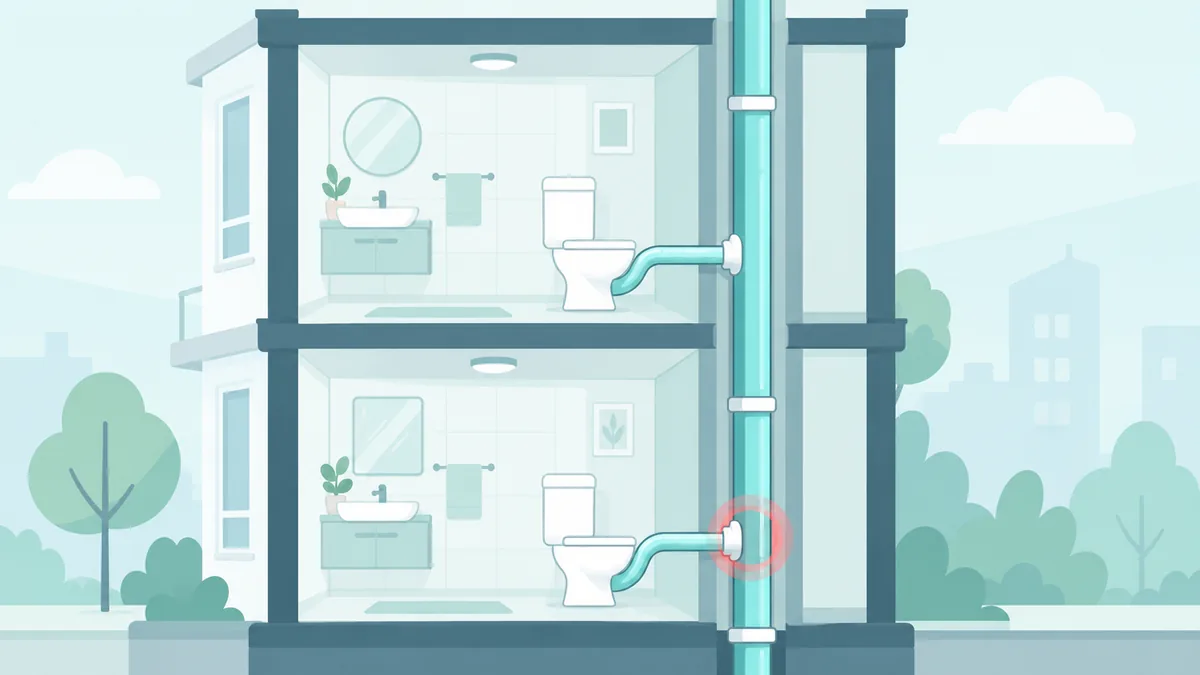
When people search for how to clear a blocked toilet, most look only at the bowl, but the toilet is part of the drainage system of your home and your building. The pipe behind the toilet connects to the bathroom floor drain, the sink and the building's vertical main pipe, the shared stack. If the water keeps rising in the bowl, the blockage can be in a few different places: inside the porcelain, in the horizontal pipe running from the toilet to the stack, or in the stack itself. Choosing the right method starts with working out which one it is.
This guide treats the toilet together with the plumbing of your home and building: what to do the moment it blocks, how to use a plunger and a drain wire on a squat toilet, the signs of a blockage in the drain pipe, and the steps to take when water starts flooding the flats below. For details on the inside of the toilet bowl itself and on toilet drain cleaner products, see our toilet blockage guide. The aim here is to stop the water quickly and to read correctly how far along the line the problem lies.
Why does a toilet drain block?
The source of a toilet blockage is sometimes in the bowl and sometimes in the pipes running through the wall and the floor.
Wipes caught in the pipe bends
Even when wet wipes and paper towels go down the toilet, they snag in the bends of the pipe. As more waste piles up behind them, a plug forms that affects not just your flat but everyone using the same line.
Horizontal pipe with too little slope
If the pipe from the toilet to the stack was not laid with enough fall, waste sits at the bottom of the pipe instead of flowing. This is common in toilets that were moved during a renovation.
Build-up in the shared stack
Grease, soap, wipes and limescale gradually narrow the building's vertical main pipe. When the stack blocks at the bottom, waste from the upper floors cannot get through and comes back up through the toilets of the lowest flats.
Objects dropped into a squat toilet drain
The drain opening of a squat toilet is wide and leads straight into the pipe. A bar of soap, a bucket lid, a cloth or a cleaning sponge can easily fall in and get wedged at the first bend.
A problem on the line outside the building
On the connection that carries the building's wastewater to the sewer in the street, there may be roots growing in, a collapse, or build-up in the manhole. Then every drain in the building slows down, and the lowest toilets are affected first.
Is the blockage in the toilet or in the pipe?
Looking at where the water rises and how it behaves gives you a rough idea of where the blockage is.
Only the toilet is blocked
If the sink and shower run normally and the problem is only in the bowl, the blockage is most likely inside the toilet itself or in the bend right behind it. This is the case with the best chance of being cleared at home.
Water comes up through the shower drain
If dirty water rises from the bathroom floor drain or the bathtub when you flush, the blockage is further along than the toilet, in the pipe where the bathroom lines join. A plunger will not solve this.
The flat below is flooding
If sewage is overflowing from toilets in the ground-floor or basement flats of the building, the shared stack is blocked. This is not a problem of one flat but of the whole building.
Gurgling and sewer smell
If your toilet gurgles or a smell rises when water is used in another flat, the air and water flow in the stack has been disrupted.
All drains are slow
If the kitchen, bathroom and toilet all drain sluggishly at the same time, the problem is at your home's main drain connection or on the line outside the building.
What to do when a toilet blocks: step by step
The first step is the same in every case. Choose the later ones according to the type of toilet and the location of the blockage. Wear gloves, ventilate the bathroom and keep children away.
First job: stop the water
The moment the toilet blocks, whether it is a squat or a standard toilet, this is the first thing to do.
- Do not flush again. A second flush will make the bowl overflow.
- Turn off the isolation valve under the cistern or on the wall by turning it clockwise. On a concealed cistern, the valve is usually behind the flush panel.
- Stop the washing machine and dishwasher and do not use the other taps, because their water goes into the same pipe.
- Lay towels on the floor and scoop some of the water out of the bowl into a bucket with a container.
If water is rising in the flats below in an apartment building, stop using water yourself too. When the stack is blocked, every bucket of water you use ends up in the lowest flat.
Clearing a standard toilet with a plunger
When the blockage is in a standard toilet alone and no water is coming up from any other drain.
- Use a toilet plunger with a flange on the bottom. The rubber must stay under the water.
- Seat the rubber over the drain opening, make the first push slowly, then push and pull firmly.
- After a few rounds, lift the plunger and check whether the water is going down.
- If the water has gone down, test the line by pouring in a bucket of water, then open the isolation valve again.
Do not plunge if chemicals have been poured into the toilet, because splashing liquid can burn your eyes and skin. If a few rounds bring no result, carrying on with force can shift the toilet seal.
Clearing a squat toilet
When water is standing at the drain opening of a squat toilet and not draining.
- Look into the drain opening with a torch. If you can see a bar of soap or a cloth, take it out with a gloved hand.
- Choose a plunger with a wide mouth and a flat rubber. A flanged tip does not seat properly on a squat toilet drain.
- Make sure there are a few fingers of water above the opening and press the rubber down so it seals the hole completely.
- Push and pull firmly to shift the blockage.
- If the plunger is not enough, feed a flexible drain wire in through the drain opening, turning it as you advance, then flush the line with a bucket of warm tap water.
If you cannot see the object that fell in, do not push the wire forward, because you will drive it deeper. In that case, leave the drain alone and let a tradesperson know.
Trying a flexible wire on the toilet pipe
The toilet is draining again but the water still goes down slowly, and you think the blockage is past the bend, inside the pipe.
- Get a hand-cranked flexible drain wire a few metres long.
- On a squat toilet, feed it in through the drain opening. On a standard toilet, use it with its rubber sleeve so you do not scratch the porcelain.
- Advance the wire by turning it. When you meet resistance, work it back and forth a few times to break up the blockage.
- As you pull the wire out, wipe it with a cloth and drop the cloth in a bucket, then test the flow with plenty of tap water.
If the wire stiffens after a few metres or will not turn, stop. Clearing a blockage inside the stack by hand is usually not possible, and there is a risk of jamming the wire in the pipe.
Baking soda and vinegar for light build-up
When the toilet is not fully blocked but drains slowly and has a slight smell, as a maintenance method against soap and organic build-up.
- Empty as much water as you can from the bowl.
- Pour a glass of baking soda into the drain opening and add two glasses of white vinegar on top.
- When the fizzing stops, close the lid and leave it for about an hour.
- Then pour in a bucket of warm tap water and watch the flow.
This mixture does not dissolve wet wipes, pads or a hard object, and it has no effect on a blockage in the stack. Do not use it together with bleach or chemical drain opener.
What to avoid when a toilet is blocked
Plunging while the flat below is overflowing
Plunging or pouring water while the stack is blocked pushes the waste downwards and makes it overflow from the toilet of the flat below. Stop the water first and tell management.
Climbing into the manhole
Do not open the manhole cover in front of the building and go down into it. Toxic and suffocating gases can build up in manholes, and even leaning over the cover for a long time is dangerous.
Pouring in chemical drain opener
Caustic products get diluted in the bowl, do not clear the blockage, and wear down PVC drain pipes and seals. Chemicals poured into the stack are also a hazard for the tradespeople who will work in the flats below.
Pouring in boiling water
Boiling water can crack the porcelain and soften the joints of PVC pipes. Tap water at a temperature that will not burn your hand is enough.
Breaking tiles on a guess
Tiles broken without knowing where the blockage is will often be in the wrong spot. Once the location is found with a camera, the pipes can be cleared without breaking anything.
When should you call a drain unclogging team?
Stop working on it yourself if water is rising from other drains too, if the flats below are flooding, if all the drains have slowed at once, or if there is a constant sewer smell from the stack. These signs show that the blockage is far beyond the toilet, in a place a plunger and a hand-cranked wire cannot reach. Also ask for outside help if water is overflowing from the manhole or if you have poured chemicals into the toilet.
When the stack blocks in an apartment building, tell building management straight away. Explain on which floors and from which drain the water is rising, when the problem started, and whether anything has been poured down the drains in recent days. Management calls the team to clear the shared line and asks residents not to use water for a while. Sharing the same details when you speak to Cantley helps make sure the right machine arrives.
How do we work on a building's drain line?
We start by finding where the blockage is. We put a camera into the drain pipe from the flat or from the stack's cleaning hatch, and see on which floor and at which bend the plug sits and what it is made of. That way we work on exactly that point without breaking tiles, walls or floors. If needed, we show the footage to management and explain whether the problem is in the building's shared line or in a single flat's connection.
We break up blockages in the toilet and horizontal pipes with a motorised drain snake, in other words the robot machine. We wash the grease, wipes and limescale built up in the stack from top to bottom with high-pressure water jetting. For ground-floor flats that suffer backflow, we can recommend fitting a backflow valve, and for cracked PVC pipes or pipes with a faulty slope, replacement. When the job is done, we do a final camera check and show the result to you and to management.
How to keep the toilet and the stack from blocking
- Put only toilet paper down the toilet. Use a lidded bin for wipes, pads and nappies.
- Do not pour frying oil or food scraps into the toilet. Grease cools and sets in the stack and affects the whole building.
- Fit a strainer cover over the drain opening of a squat toilet, and do not wring out cloths and sponges over the opening when cleaning.
- Plan with management to have the shared stack checked by camera and washed at regular intervals.
- For flats on the ground and basement floors, consider having a backflow valve fitted to the drain line.
- When moving a toilet during a renovation, always have the slope of the new pipe checked.
- Put up a short note at the building entrance explaining the damage wipes and grease do to the shared pipe.
Frequently asked questions
How do you clear a blocked toilet?
First stop the water: do not flush again and turn off the cistern tap. Then push and pull firmly with a plunger whose rubber is under the water. If the plunger is not enough, feed a flexible wire in through the drain opening and turn it to break up the blockage. If water is rising from other drains, or your neighbour downstairs mentions flooding, the blockage is in the stack: stop plunging and call a drain unclogging team.
What clears a toilet blockage?
A plunger clears most blockages in the toilet itself, with a flat-rubber model for a squat toilet and a flanged one for a standard toilet. A flexible wire works on a blockage beyond the bend. Baking soda and vinegar only help with light build-up. Blockages in the drain pipe and in the building's stack are cleared by a motorised drain snake and high-pressure water jetting, which cannot be done with household tools.
What should you do if a toilet blocks in an apartment building?
First stop using water and check whether the blockage is only in your flat. If there is overflow or a smell on the lower floors too, the problem is in the shared stack. Tell management on which floors and from which drain the water is coming. Management informs the residents and calls the team. Until the stack is cleared, plunging or pouring in water pushes the waste down to the flats below.
How do you unclog a toilet drain?
If the blockage is right behind the porcelain, a toilet drain can be cleared at home with a plunger and a flexible wire. The wire is advanced by turning it, worked back and forth when it meets resistance to break up the blockage, and then the flow is tested with plenty of water. If the wire will not advance after a few metres, or water rises from the shower drain, the blockage is in the main pipe and a motorised drain snake or water jetting is needed.
Does a toilet blockage clear by itself?
Sometimes it does. A blockage made of too much paper can clear on its own as the paper softens in the water. Wet wipes, pads, a dropped object or build-up in the stack will not go away by waiting, and they grow with new waste. If you wait half an hour and the water still has not gone down, move on to the plunger. If the blockage keeps coming back, the pipe needs to be inspected with a camera.
What should you do when a squat toilet blocks?
First check whether an object is visible in the drain opening and take it out with a gloved hand if there is one. Then push and pull firmly with a wide flat-rubber plunger while there is some water above the opening. If the plunger is not enough, use a flexible wire. On a squat toilet the first bend is close, so the wire reaches it easily. If water also rises from other drains, the problem is further along, in the shared pipe.
My toilet is blocked, so why is the flat below flooding?
The blockage is most likely in the lower part of the building's shared stack or on the line where it leaves the building. When wastewater from the upper floors cannot get past the blockage, it comes out of the lowest drain, meaning the toilet or shower drain of the flats below. In this case the whole building should cut back on water use, management should be told at once, and the stack should be cleared with a motorised drain snake or water jetting.
Can a toilet pipe be cleared without breaking anything?
Yes, most drain pipes are cleared without breaking anything. A camera is put into the pipe to see where the blockage is and what it is, then the plug is cleared on the spot with the robot machine or high-pressure water jetting. Tiles and walls are opened only if the pipe has collapsed, broken or been entered by roots, and even then the camera keeps the area to be broken to a minimum.
Other guides
How to Unclog a Toilet Bowl
How to use a plunger, whether toilet drain openers are safe, and what happens when an object falls into the toilet.
Read the guideHow to Unclog a Bathroom Sink
Trap cleaning, drain snakes, and baking soda with vinegar: which one works and when.
Read the guideHow to Unclog a Kitchen Drain
The sink is blocked and the water won't drain: steps for grease build-up and the dishwasher drain.
Read the guideHow to Unclog a Shower Drain
Hair build-up, smells and pooling water in the shower and floor drain.
Read the guideHow to Unclog a Balcony Drain
How to safely clear a balcony drain blocked by leaves and soil.
Read the guideHow to Unclog a Blocked Pipe
Blockages in PVC and old pipes, the shared drain pipe, and pipe-clearing attachments.
Read the guideHow to Unclog a Drain
The first minutes after a drain blocks: which line it is, what clears it and when to call.
Read the guideIs water rising from other drains too?
If the blockage has reached the drain pipe or the stack, call 0212 923 66 85 or message us on WhatsApp. We come 24/7 in every district of Istanbul, find the spot with a camera and clear the line without breaking anything.