Istanbul Vacuum Truck Company
A vacuum truck company is a business that sucks wastewater out of a septic tank, manhole, grease trap or flooded basement with a vacuum truck, carries it in a sealed tank and unloads it at an authorised point. In Istanbul, the company you call should not start talking before it has seen the job. It should listen to you and choose a vehicle that suits your street and the type of waste. We send vacuum trucks to homes, buildings, housing complexes, businesses and construction sites in all 39 districts of Istanbul.

The first thing to look at when choosing a company is the quality of the answer you get when you call. A team that asks about access, the type of waste and the size of the job will choose the right vehicle and explain clearly what it will do during the work. Working with a team that arrives without asking anything, starts talking about the fee at the door before the work is done, or does not know where the waste will go can mean moving the problem somewhere else and making it bigger.
Here we cover three things: the questions to ask on the phone, what a responsible company does on site, and the process Cantley follows from the first call to the end of the job. That way you can judge for yourself what the company that arrives is doing and whether the work is being done properly.
Which questions should you ask on the phone?
If you cannot get answers to these questions during your call, it becomes hard to tell how well the company knows its work. Each question tells you something different.
Where will the waste be taken?
This is the most important question. A company that says the collected waste will go to an authorised unloading point or a licensed disposal facility has thought about the end of the job. Do not work with a company that says the waste will be emptied into a street grate, a stream or the sea, or one that gives no clear answer on this.
Which vehicle will come, and why?
A narrow street, a low car park entrance or a road inside a gated complex each call for a different vehicle. A good company chooses the vehicle type by address and tells you why it is sending that one. A company that tries to send the same truck to every job usually has no such explanation.
How is access to the cover and the street?
The distance from the septic tank or manhole cover to the road, the width of the street and the place where the truck can park all change the work plan. The job cannot be planned without discussing this. Sending a photo of the street and the cover makes the team's preparation much easier.
What type of waste is it, and will the job finish in one go?
The liquid in a septic tank and the greasy waste from a grease trap are assessed separately. Whether a blockage is on one line or at several points decides whether the job is finished in a single pump-out or over several visits. A company that tells you this at the start will not surprise you with an unexpected second visit.
What does the fee depend on?
The fee varies with the amount and type of waste to be pumped, access to the address, the distance to the point where the waste is taken, and whether the line will be flushed. The company should go through these items with you and explain what affects the fee and why. If a company only gives a general figure without detail, ask for what the team will do in writing before work starts.
At what stages will you be kept informed?
At the start of the job it helps to talk about when and how the team will reach you, when they will call you if they find something on site, and what they will ask of you when the work is finished. A company that simply accepts the job without answering your questions may not keep you informed on site either.
What does a responsible company do on site?
Emptying wastewater in the wrong place affects more than the job at hand. Waste poured into a street grate spreads into the neighbourhood sewer line, and at the next rain the smell and the waste can come back into the basements of nearby buildings. That is why where the waste goes matters as much as the quality of the work. A responsible company keeps the waste in a sealed tank and takes it to its own authorised point.
A team that works well on site first inspects the cover and the line, then tells you which method it will use. Separating the liquid from the sludge at the bottom of a septic tank, flushing a blockage with pressurised water and collecting it by vacuum, or simply pumping out by vacuum are different decisions. A team that does not explain the reasons for its decision may leave you alone with the next problem.
For homeowners, a vacuum truck is often an urgent call. Building and site managements, on the other hand, want a planned schedule and a hose route that does not disturb the shared areas. For businesses and restaurants, the grease trap or wastewater tank has to be pumped out at regular intervals. Asking how the same company meets these three different needs is an easy way to gauge its experience.
In areas such as Adalar, where motor vehicle use is restricted, the job is planned around how the team will reach the island and where the vehicle can stop. In these areas, turning up on site without a detailed phone conversation can mean a wasted trip. A responsible company will tell you this itself, right from the start.
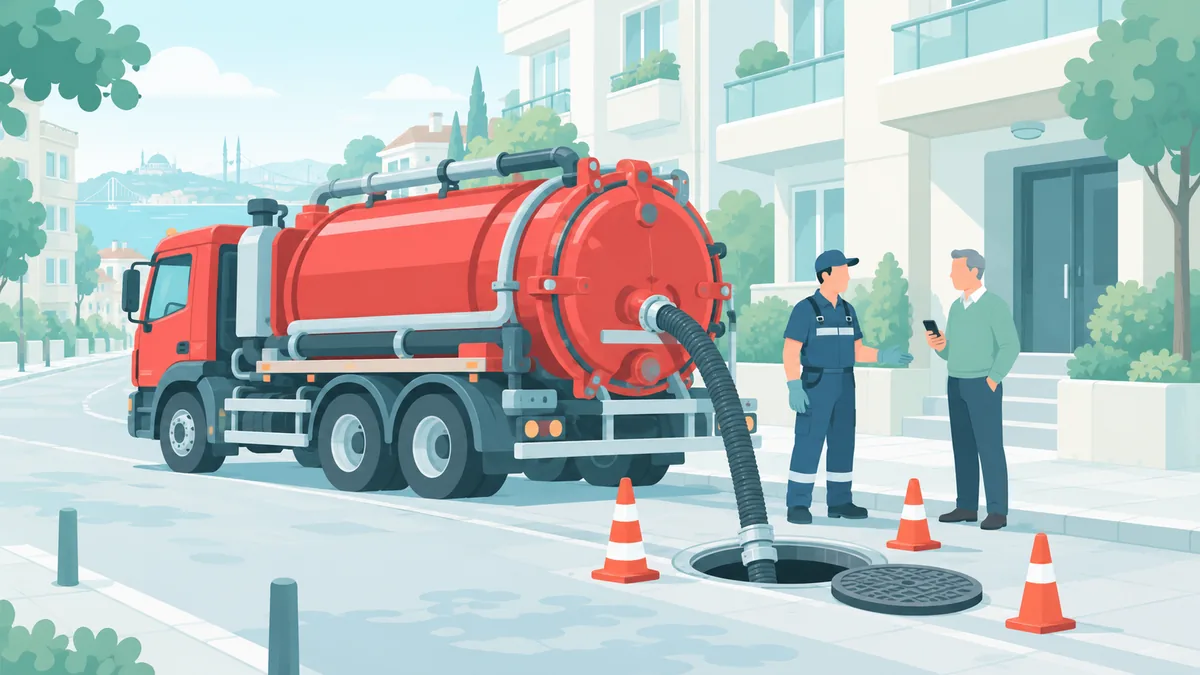
How does a job at Cantley go from the first call to the end of the work?
Our aim is to make the clarity you look for when choosing a company visible to you at every stage of the job.
We clarify the need on the first call
When your request comes in on 0212 923 66 85 or on WhatsApp, we ask what is happening, what type of waste it is and what the address is like. An urgent overflow and a planned septic tank pump-out need different preparation, so we discuss how urgent it is right at the start.
We plan the vehicle and the team
Based on what you tell us, we choose a combination, mini or standard vehicle and tell you the reason for our choice. We also pass the scope of the work on site to the team before it sets off, so that it arrives prepared.
We check the cover and access on site
When the team arrives, it looks at where the vehicle will park, which route the hose will take and whether the cover can be opened. If the hose has to cross a shared area or a neighbour's property, we start only after discussing it with you.
We pump out the waste and flush the line if needed
We start with the liquid part and move on to the sludge at the bottom when necessary. Where a line is blocked, we use the pressurised water of the combination truck and collect the loosened waste by vacuum. At each stage we briefly explain what we are doing.
We take the waste to the authorised point
The collected waste leaves your address in a sealed tank and is delivered to an authorised unloading point or a licensed disposal facility. The waste is not emptied on the road, in the street or anywhere else.
We explain the result and suggest the next step
When the work is finished, the cover and the surroundings are cleaned, and we explain what was pumped out and what we saw on site. If there is a recurring blockage or a facility that needs regular pump-outs, we also work out together what interval might suit it.
Getting ready before the team arrives
- Leave a gap the vehicle can pull into. Move bicycles, waste containers and loads away from the front of the door.
- Have someone ready who can show where the cover is. If the cover is under soil or under a paved surface, marking its position is enough.
- Tell the site security or the car park attendant in advance that a vehicle is coming and that work will go on in the area for a while.
- Do not use appliances that produce wastewater, such as taps, showers and the washing machine, until the team arrives. This reduces overflow and helps keep the working area dry.
- If you have noticed a new problem, for example if another drain has started holding water, tell the team on the first call. This information directly affects the choice of vehicle and the length of the job.
- Keep children and pets away while the cover is open. Do not try to climb down into the manhole or the tank.
Pictures from the field
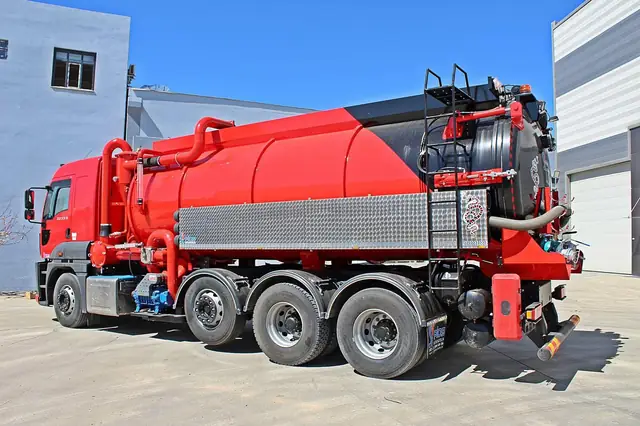
Side view of the red combination jetting and vacuum truck 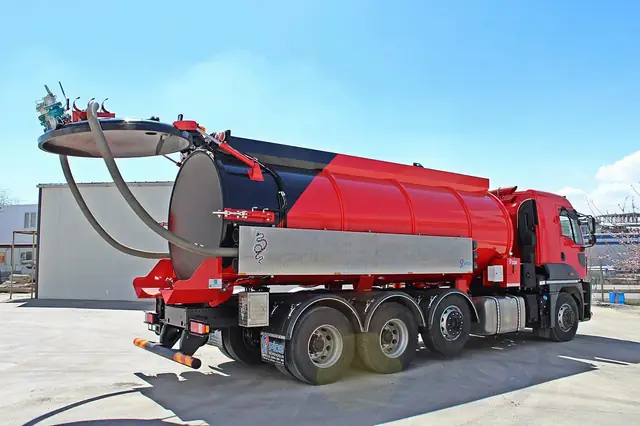
Hose reel on the red combination jetting and vacuum truck 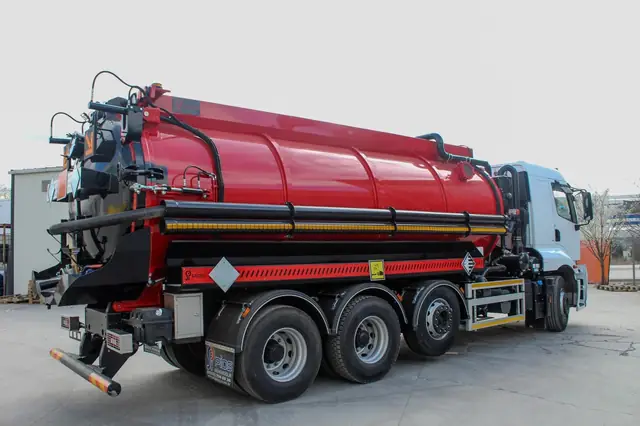
Rear view of the red vacuum truck
Vacuum Truck Company by district
We provide this service in all 39 districts of Istanbul. Choose your district.
Frequently asked questions
How do you choose a vacuum truck company?
Choose the company that asks on the phone where the waste will be taken, which vehicle will be sent and why that vehicle was chosen. Stay away from companies that plan the job without discussing access, or that hint the waste could be emptied into the street or a stream.
Where does the waste pumped out by a vacuum truck go?
The collected waste is carried in a sealed tank and delivered to an authorised unloading point or a licensed disposal facility. Emptying waste into a street grate, a stream or the sea harms the environment and everyone in the neighbourhood.
What information should I give when I call a vacuum truck company?
Describe the type of waste, the distance from the cover or manhole to the road, the width of the street and the place where the vehicle can park. If you also send a photo of the street and the cover, the team can choose the right vehicle more easily.
What should site management look for in a vacuum truck company?
Look at how well they protect shared areas and neighbours' property, whether they can plan a schedule for the work, and whether they tell management in advance what they will do on site. For septic tanks or car park manholes that need regular pump-outs, it helps to discuss the schedule from the start.
How should the fee be discussed with a vacuum truck company?
The fee should not be given as a single figure. It should be explained through items such as the amount and type of waste, access to the address, the distance and whether the line will be flushed. Getting these items from the company in writing prevents differences from appearing later.
What happens if a vacuum truck company empties waste into a street grate?
The waste quickly mixes into the neighbourhood sewer line, and the smell and blockages spread across the whole street. In that case everyone, including the person who ordered the job, becomes part of the problem. Not working with such a company is the right decision.
How do you work with a company for regular pump-outs?
For regular needs such as a septic tank, a grease trap or a car park manhole, the set-up and the schedule should first be agreed together. As a hire or dedicated vacuum truck, we can set the vehicle and the team aside for certain days. After each pump-out we share what was collected and what interval would suit the next one.
How does the company respond when a vacuum truck is called?
We answer your call or WhatsApp message 24/7. First we listen to the situation and find out the type of waste, the access and how urgent it is, then we plan the vehicle and the team accordingly. In Adalar, we first work out together on the phone how close a vehicle can get to the island and where it can stop.
Our other services
No-Dig Drain Unclogging
We locate the blockage with a camera, then clear it with a drain snake and pressurised water. Your tiles stay where they are.
See detailsToilet Unclogging
From an overflowing toilet to the building's shared stack, we clear the toilet drain.
See detailsWashbasin Unclogging
Whether the blockage is in the trap or in the line inside the wall, we clear it cleanly.
See detailsKitchen Sink Unclogging
We jet the whole kitchen drain line with high-pressure water to remove built-up grease and starch.
See detailsCommercial Kitchen Drain Clearing
In restaurant and cafe kitchens, we clear the floor drain, grease trap and shared line without interrupting service.
See detailsShower and Bathtub Drain Unclogging
We clear the hair and soap that build up in floor drains, shower channels and bathtub drains.
See detailsBalcony Drain Unclogging
We clear balcony drains clogged with leaves, soil and sand before the rain arrives.
See detailsDrain Unclogging
We work out which drain is blocked, then clear the line in your home or workplace.
See detailsBlocked Drain Clearing
Is the blockage in the trap, the shared stack or the building outlet? We find it and show you the cause so it doesn't come back.
See detailsPVC Drain Pipe Unclogging
We clear PVC drain pipes without breaking anything, using heads that won't damage them.
See detailsPipe Unclogging
PVC, cast iron, galvanised or concrete pipe: we clear the blocked pipe with a head suited to its material.
See detailsCCTV Drain Unclogging
We look inside the pipe together on a screen and clear the blockage exactly where it is.
See detailsManhole Unclogging
We clear the inlet and outlet lines of an overflowing manhole and get the flow moving again.
See detailsSewer Line Unclogging
We clear the building's main sewer line all the way to the street connection.
See detailsChannel Drain Unclogging
We use high-pressure water to clear garden lines, ramp and car park grates, and storm drains.
See detailsSewer Cleaning
We regularly clean out sludge, grease and root build-up with high-pressure water jetting.
See detailsSewer Camera Inspection
We find cracks, collapses and root intrusion with a CCTV drain camera and show you the footage.
See detailsSewer Line Renewal
We locate the damaged section with a camera and replace only the part that needs it.
See detailsBackflow Valve Installation
We keep water that comes back up from the street in heavy rain out of your basement and ground floor.
See detailsPVC Drain Pipe Replacement
We replace PVC drain pipes that are cracked, leaking or laid with the wrong fall.
See detailsVacuum Truck Service
24/7 pumping with combination and mini vacuum trucks for septic tanks, manholes, grease traps and flooded basements.
See detailsSeptic Tank Pumping
We empty full or overflowing septic tanks by vacuum and take the waste to an authorised disposal point.
See detailsSeptic Tank Cleaning
We clean the sludge at the bottom, the crust on the walls and the inlet and outlet pipes with high-pressure water.
See detailsCombi Vacuum Jetting Truck
One truck jets the line clean and vacuums out the sludge, for blocked main lines and full manholes.
See detailsMini Vacuum Truck
Our small truck gets into narrow streets, steep hills, courtyards and low garage entrances.
See detailsCar Park Vacuum Truck
We pump out an enclosed car park flooded after rain and clear the grate and ramp channels.
See detailsVacuum Truck Hire
We assign an operator-driven vacuum truck to construction sites, factories and housing complexes for scheduled or regular work.
See detailsPrivate Vacuum Truck Service
A vacuum truck for your own property that comes on your schedule, with no waiting in a queue.
See detailsTell us your address and we will choose the right company together
For a septic tank, manhole, grease trap or a flooded basement, you can call 0212 923 66 85 or write to us on WhatsApp. We explain what we ask and why we ask it, and we send the vehicle that suits your street.