
Istanbul Sewer Line Renewal
Sewer line renewal is when the Cantley team removes the broken, collapsed or root-filled section of a foul water line that cleaning can no longer fix, and replaces it with new PVC pipe laid at the correct slope. We always start with the camera, because only the footage shows whether the whole line or just a short stretch is damaged. Wherever possible we renew only the faulty section, not the entire line. That way less ground is opened and the pipe that is still sound is left alone.

To reach the faulty section, the ground usually has to be opened at that point, and we tell you this clearly before work starts. Thanks to the camera, the opened area stays limited to the problem stretch, so the whole garden or basement is not dug up. We work 24/7 in all 39 districts of Istanbul for building and site managements, shop and restaurant owners and homeowners, and we explain the planned work in advance using the footage. The work area is tidied when the job is done, and the line is tested before it goes back into use. The opened ground is closed properly once the work is finished.
When is cleaning not enough?
Some lines ease up once they are flushed, while others close up at the same spot whatever is done. The signs below show that the problem is in the pipe itself.
Blocking again soon after cleaning
If a line that was cleared with water jetting slows down again at the same place within a few weeks, there is a permanent obstacle holding the water there. A collapsed section or a joint that sticks out into the pipe keeps catching debris again after every clean.
A broken or separated pipe on camera
If the footage shows the pipe split, a piece broken off or two joints pulled apart, wastewater is leaking out of the line into the soil. In this case cleaning does not stop the leak, and the soil around the pipe gradually washes away. Acting early stops that void from growing.
Standing water in one part of the line
If the camera moves along and finds the pipe full of water in one section, that part has settled and its slope has reversed. Water and debris wait here, and the line keeps blocking at this point. Flushing empties the water but does not correct the dip itself.
Sunken garden, damp in the basement, odour
A dip in the garden ground above the line, damp on a basement wall that does not go away, or a sewer smell rising from one particular spot all show that the pipe is leaking outwards. These signs usually point to damage that has been going on for a long time. The camera shows where the leak is without breaking anything open.
Lines where roots have crushed the pipe
Roots cleared with a cutting head do not come back for a long time if the pipe is sound. But if the pipe has cracked or been crushed by the root pressure, the roots grow back through the same gap, faster each time, and that section needs to be replaced.
Why do sewer pipes fail?
In many older Istanbul buildings, the building line was laid with concrete, cast iron or old-type pipes. Over the years, wastewater wears these pipes away from the inside, the joints loosen and small cracks grow. In concrete pipes the joints are an open door for roots and ground movement. Past a certain point, these lines do not regain their old strength even when they are flushed. From then on, every clean only gives short-term relief.
Ground movement also damages the line. The settling of the building, soil softening after rain, vehicle loads passing overhead or a dig nearby can press one section of the pipe downwards. In such a section the slope is lost, water pools and debris collects. Sometimes the problem dates from the original installation: a pipe laid with too little slope, or without a firm bed, flows slowly from day one. On these lines, cleaning does no more than postpone the problem.
That is why we decide on renewal by looking at the camera footage. The footage shows which section is faulty, how many joints the damage runs across and whether the rest of the line is sound. If the damage is at a single point, only that part is replaced; if the line is worn along its whole length, renewing all of it is discussed. Where the condition of the line allows, options that open the ground less are also considered, but we can only say so after seeing the footage. We decide which route to take once we have watched the footage together.
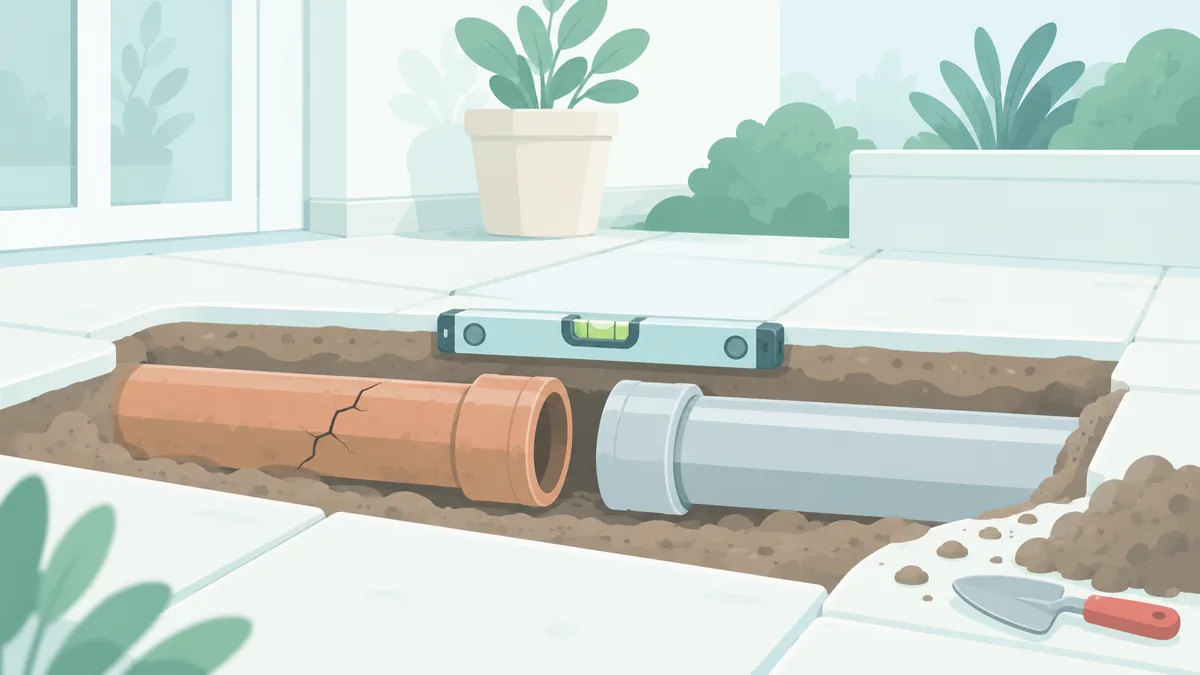
How do we carry out the renewal, step by step?
The aim is to get the line flowing freely again without opening more ground than necessary. The work goes in this order.
Locating the faulty section by camera
First the line is cleaned and the camera is sent in. The points where the damaged section starts and ends are measured by their distance from the entry point and marked on the ground. We show you the footage and explain in advance which part will be replaced and where, and how wide, the ground will be opened. That way there are no surprises.
Opening the ground only at that point
The digging is kept to the marked section. When the garden, car park or basement floor is opened, the soil and surfacing that come up are set aside in an orderly way. Access routes for residents and other pipework nearby are protected, and the area around the work is made safe.
Laying the new PVC pipe at the correct slope
The damaged pipe is removed and a firm, level bed is prepared underneath. The new PVC pipe is laid at a slope that lets water and debris flow freely, and the joints with the old line are connected watertight using suitable fittings. If needed, a cleaning access point is left for future maintenance.
Test, camera check and closing up
Before the ground is closed, plenty of water is run through the line and the joints are checked for leaks. The new section is inspected again by camera and shown to you. Then the pipe is surrounded with suitable fill, the ground is closed and the work area is tidied. You get to see the footage of the new section too.
What to do in the building before renewal
- If the line is completely blocked, tell the residents and limit the use of ground floor and basement drains in particular.
- Get ready to move plant pots, vehicles and belongings from above the point to be opened before the team arrives.
- If you live in an apartment building or a site, inform the management; decisions and access for work in the shared area become easier.
- If water is collecting in the basement, keep away from sockets and cables and, if necessary, switch off the fuse for that area.
- Do not leave manhole covers open and do not lean over them; there is a risk of sewer gas and slipping.
Pictures from the field
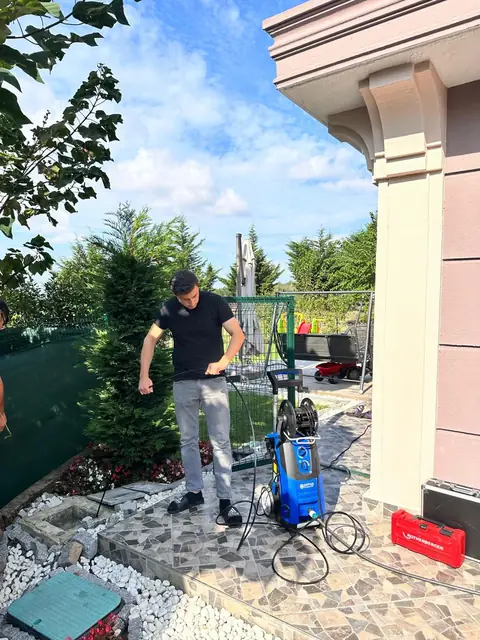
High-pressure water jetting of the garden drain line 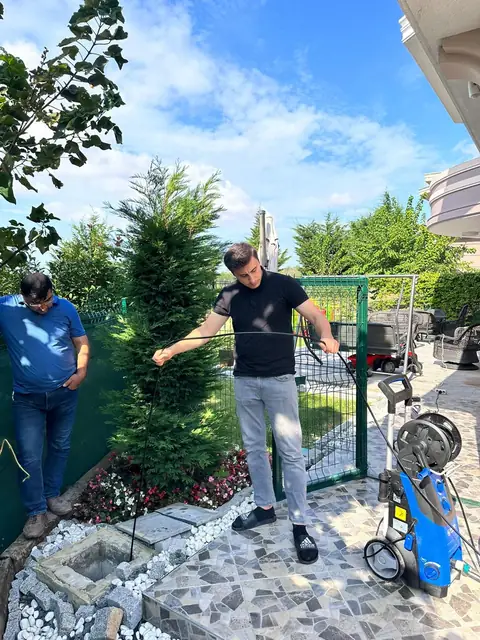
Cleaning the garden drain line with high-pressure water 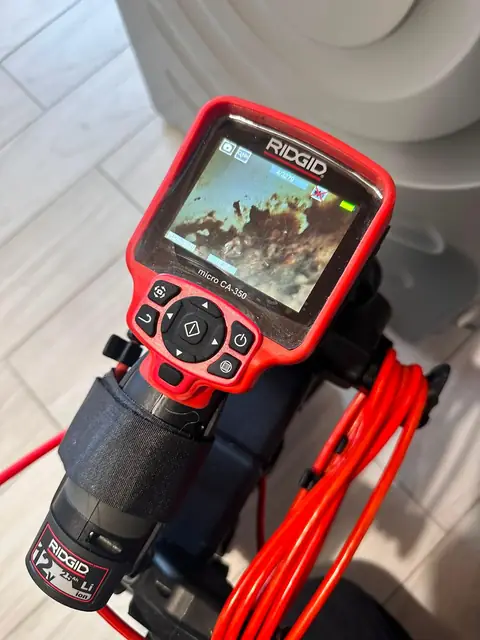
Blockage shown on the pipe camera screen
Sewer Line Renewal by district
We provide this service in all 39 districts of Istanbul. Choose your district.
Frequently asked questions
Does the ground have to be broken to renew a sewer line?
In most cases the ground is opened at the point of the faulty section, and we want to say so from the start. Thanks to the camera, the opened area is limited to the damaged part, and no digging is done along the whole line. In some cases where the structure of the line allows, options that open the ground less can also be discussed; this is assessed by looking at the camera footage.
Does the whole line need replacing, or just part of it?
Most of the time replacing only a part is enough. The camera shows whether the damage is at a single point or along a long stretch of the line. If the rest of the pipe is sound, only the damaged section is renewed. If the line is worn along its whole length or has collapsed in many places, we recommend renewing the entire line instead of repairing it piece by piece.
What pipe is used for the new section?
For building sewer lines we use PVC foul water pipe for the new section. The inside of PVC is smooth, it does not hold debris easily and, laid at the correct slope, it carries wastewater freely. The pipe diameter is chosen to match the existing line, and the joints with the old line are made watertight with suitable fittings.
Can the building use water during the renewal?
While the work is going on, the drains connected to that line must not be used, because once the old pipe is removed the wastewater would run into the open area. Clean water is not cut off, but the sinks, showers and toilets that drain into this line should not be used for a while. The team tells you during the job when the line can be used again.
Will the line block again after renewal?
A new PVC section laid at the correct slope flows much more freely than the old damaged part, and repeated blockages at the same spot are largely gone. Even so, wet wipes, cooking oil and similar waste can block the new pipe too. Keeping this waste out of the drain and having the line cleaned when needed will keep it flowing well for a long time.
Who is responsible for sewer line renewal in an apartment building?
For the shared building line, the decision to renew generally belongs to the building or site management, because the line serves all the flats. Work on a flat's own drain pipes is the responsibility of the flat's owner. Since the camera footage shows which section the damage is in, this distinction is easy to settle together with the management.
Our other services
No-Dig Drain Unclogging
We locate the blockage with a camera, then clear it with a drain snake and pressurised water. Your tiles stay where they are.
See detailsToilet Unclogging
From an overflowing toilet to the building's shared stack, we clear the toilet drain.
See detailsWashbasin Unclogging
Whether the blockage is in the trap or in the line inside the wall, we clear it cleanly.
See detailsKitchen Sink Unclogging
We jet the whole kitchen drain line with high-pressure water to remove built-up grease and starch.
See detailsCommercial Kitchen Drain Clearing
In restaurant and cafe kitchens, we clear the floor drain, grease trap and shared line without interrupting service.
See detailsShower and Bathtub Drain Unclogging
We clear the hair and soap that build up in floor drains, shower channels and bathtub drains.
See detailsBalcony Drain Unclogging
We clear balcony drains clogged with leaves, soil and sand before the rain arrives.
See detailsDrain Unclogging
We work out which drain is blocked, then clear the line in your home or workplace.
See detailsBlocked Drain Clearing
Is the blockage in the trap, the shared stack or the building outlet? We find it and show you the cause so it doesn't come back.
See detailsPVC Drain Pipe Unclogging
We clear PVC drain pipes without breaking anything, using heads that won't damage them.
See detailsPipe Unclogging
PVC, cast iron, galvanised or concrete pipe: we clear the blocked pipe with a head suited to its material.
See detailsCCTV Drain Unclogging
We look inside the pipe together on a screen and clear the blockage exactly where it is.
See detailsManhole Unclogging
We clear the inlet and outlet lines of an overflowing manhole and get the flow moving again.
See detailsSewer Line Unclogging
We clear the building's main sewer line all the way to the street connection.
See detailsChannel Drain Unclogging
We use high-pressure water to clear garden lines, ramp and car park grates, and storm drains.
See detailsSewer Cleaning
We regularly clean out sludge, grease and root build-up with high-pressure water jetting.
See detailsSewer Camera Inspection
We find cracks, collapses and root intrusion with a CCTV drain camera and show you the footage.
See detailsBackflow Valve Installation
We keep water that comes back up from the street in heavy rain out of your basement and ground floor.
See detailsPVC Drain Pipe Replacement
We replace PVC drain pipes that are cracked, leaking or laid with the wrong fall.
See detailsVacuum Truck Service
24/7 pumping with combination and mini vacuum trucks for septic tanks, manholes, grease traps and flooded basements.
See detailsSeptic Tank Pumping
We empty full or overflowing septic tanks by vacuum and take the waste to an authorised disposal point.
See detailsSeptic Tank Cleaning
We clean the sludge at the bottom, the crust on the walls and the inlet and outlet pipes with high-pressure water.
See detailsCombi Vacuum Jetting Truck
One truck jets the line clean and vacuums out the sludge, for blocked main lines and full manholes.
See detailsMini Vacuum Truck
Our small truck gets into narrow streets, steep hills, courtyards and low garage entrances.
See detailsCar Park Vacuum Truck
We pump out an enclosed car park flooded after rain and clear the grate and ramp channels.
See detailsVacuum Truck Hire
We assign an operator-driven vacuum truck to construction sites, factories and housing complexes for scheduled or regular work.
See detailsPrivate Vacuum Truck Service
A vacuum truck for your own property that comes on your schedule, with no waiting in a queue.
See detailsVacuum Truck Company
A vacuum truck company that asks about the job over the phone, picks the right truck and transports the waste according to the rules.
See detailsSee it first, then renew it
If the same line keeps blocking, let us find the problem with the camera. Call 0212 923 66 85 or message us on WhatsApp; we come to your address in all 39 districts of Istanbul, 24/7, inspect the line and explain the work clearly.