How to Unclog a Drain
When a drain blocks, stop using water first and check whether only one drain is affected or several. A blockage in a single drain can often be cleared with a plunger, a cleaned trap or a hand drain snake. If more than one drain is affected, or water rises somewhere else, the problem is in the main line and needs a machine to clear it.
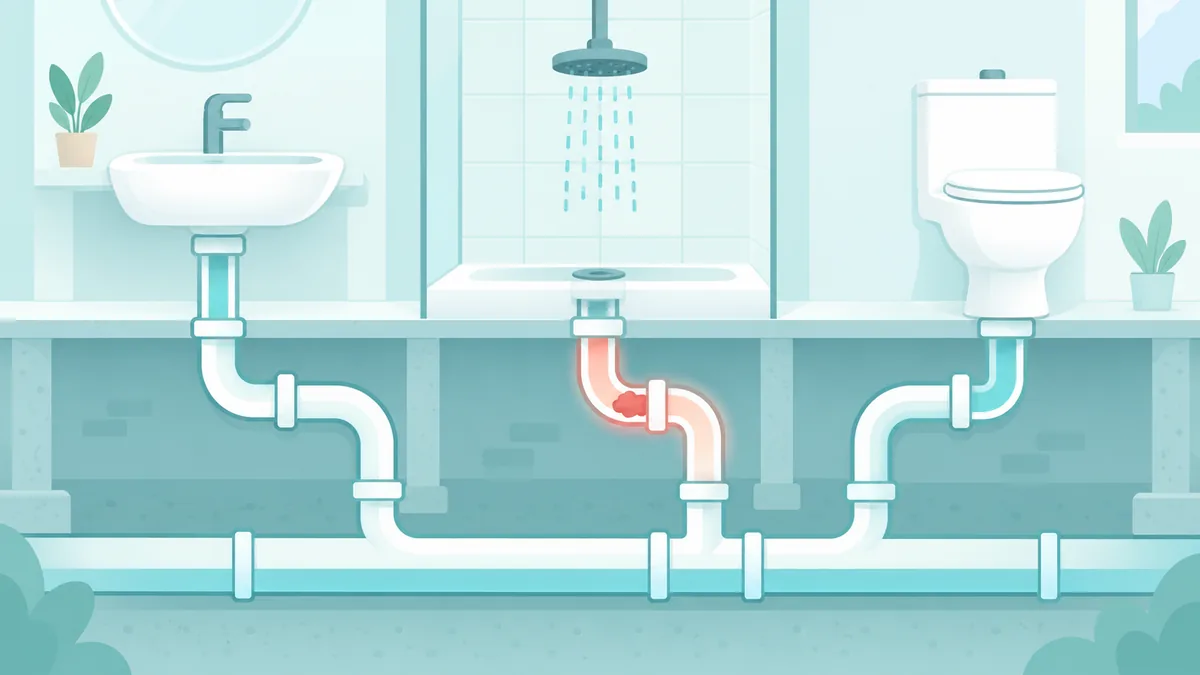
Before answering how to unclog a drain, you need to know which drain is blocked and at which point, because the method depends on it. In a home, the washbasin, kitchen sink, shower, bath, toilet, washing machine and balcony drains run through separate pipes and join at some point. If the blockage is right below a drain, you can clear it yourself. If it is past the junction, it affects every drain in the home, and a plunger or snake in your hands will rarely reach it.
Here we explain the general order to follow when any drain in your home blocks: what to do in the first minutes, what really clears a drain, which method fails in which situation, and how to tell that the blockage is in the main line. Sink, kitchen, bathroom, toilet and balcony drains each have their own causes and tricks, and we cover them in separate guides. The aim is to help you diagnose the problem calmly and avoid unnecessary damage.
What usually blocks drains at home
Most household drains are blocked by small bits of waste that go down with the water every day. Each drain has its own typical culprit, so which drain is blocked often points to the cause.
Hair and soap in the bathroom
In shower and washbasin drains, hair mixes with soap residue and mats together. This clump collects in the trap or just under the drain strainer and slowly cuts off the flow of water.
Grease and coffee grounds in the kitchen
Grease from washing-up sticks to the pipe as it cools, and coffee grounds and food scraps cling to that grease. That is why a kitchen drain usually blocks over weeks rather than all at once.
Wet wipes and pads in the toilet
Wet wipes, sanitary pads, nappies and cotton wool do not break down in water. They catch in the bend of the toilet or in the pipe just behind it and cause sudden blockages.
Leaves, soil and sand on the balcony
Leaves blown in by the wind, soil washed out of plant pots and sand fill the balcony drain. It causes no trouble until it rains, and in a downpour the water collects on the balcony and overflows.
Lint and detergent from the washing machine
The water the machine discharges carries fibres, lint and powder detergent residue. Over time this mixture forms a hardening layer in the drain and trap the machine is connected to.
Build-up in the building's shared line
Sometimes the blockage never forms in your home at all. Waste that builds up in the building's shared stack or at its outlet makes the problem show up first in the drains of the lower floors.
Is the blockage in one drain or in the main line?
If one drain is slow and the others run normally, the problem is most likely in that drain's trap or just behind it. The signs below point to a blockage deeper down, in your home's main line.
Water rises in the shower when you flush
When the toilet's water cannot move along the main line, it looks for the nearest way out. Water showing up in the shower tray or the bathroom floor drain is the clearest sign of a main line blockage.
Gurgling in another drain
A noise from the toilet or bubbles rising through the water when you empty the sink show that the water is held up in the shared pipe and air is being pushed back.
The lowest drain overflows
When the main line is blocked, water collects first at the lowest drain in the home, usually the shower or the floor drain. If water rises there, the problem is not limited to a single fixture.
Water appears elsewhere when a machine empties
If water collects in the kitchen sink or in the bathroom while the washing machine or dishwasher is draining, the shared connection has narrowed.
Lasting smell and backflow
A constant sewer smell from the drains and dirty water coming back up suggest that the blockage extends to the building's shared line or the manhole.
What clears a drain? Methods that work
In most cases mechanical methods clear a drain: a plunger, cleaning the trap and a hand drain snake. Hot water and baking soda with vinegar only help with a light build-up. Try the methods in order, starting with the gentlest.
What to do in the first minutes when a drain blocks
Whenever any drain blocks, start with these steps before moving on to a clearing method.
- Stop using the blocked drain and the other water in the home, and stop a washing machine or dishwasher that is running.
- If the toilet is about to overflow, close the isolation valve behind it so the cistern does not refill.
- Run a small amount of water down the other drains one by one to find out whether the problem is in only one drain.
- If water has spilled, get towels and a bucket ready and move plugged-in appliances and rugs away from the wet area.
- If a chemical was poured down the drain earlier, note which product it was.
If the spilled water is dirty, do not touch it without gloves and keep children and pets away. If you see signs of a main line blockage, tell us or your building management before trying any other method.
Loosening the blockage with a plunger
This is the first method to try when a single drain in a washbasin, sink, shower or bath has a soft blockage.
- Block the overflow hole, or the other bowl of a double sink, with a wet cloth.
- Make sure there is enough water over the drain to cover the rubber cup of the plunger.
- Seat the plunger flat over the drain and press and pull repeatedly without letting air escape.
- Lift the plunger and watch how the water drains, repeating the process a few rounds if needed.
Do not use a plunger on a drain that has had chemicals poured into it, because splashing chemicals can harm your eyes and skin. In a main line blockage, a plunger only pushes the water into another drain.
Removing and cleaning the trap
Suitable when there is an accessible trap under the washbasin or sink and the plunger has not worked.
- Place a bucket under the trap and cover the floor of the cabinet with a towel.
- Loosen the trap nuts by hand, remove the trap and empty the water in it into the bucket.
- Clean out the hair, grease and sediment inside with an old brush.
- Check the seals, refit the trap and tighten the nuts by hand.
- Turn on the tap and check both the flow and whether water leaks from the connections.
Do not overtighten plastic nuts with pliers, because they crack. If a seal has slipped out of place, it will leak. Do not take the toilet apart yourself, as that is a plumber's job.
Pushing through with a hand drain snake
Used when the trap is clean but the drain is still slow, and the blockage may be in the pipe beyond the trap.
- Put on gloves and remove the trap to expose the pipe opening that goes into the wall.
- Push the flexible cable into the pipe and, when you feel resistance, turn the drum to advance it.
- Once you are past the blockage, work the cable back and forth a few times and pull it out while turning it.
- Refit the trap and flush the line by running lukewarm water from the tap.
Never force the cable. Putting a bare metal cable into the porcelain bend of a toilet scratches the glazed surface. Rigid metal such as a coat hanger scratches the pipe and can break off inside.
Lukewarm water and baking soda with vinegar
Can be tried if the water has not stopped completely, the drain is only running slowly, and the cause is soap or a light grease build-up.
- Remove as much of the standing water from the drain as you can with a cup.
- Pour in half a glass of baking soda, then add a glass of vinegar.
- Cover the drain and wait until the fizzing stops.
- Run hot water from the tap for a while to flush away the loosened build-up.
This method does not work on wet wipes, a clump of hair or a solid object. Do not use water boiled on the hob, because it can damage plastic pipes and the porcelain of the toilet.
Common mistakes when a drain is blocked
Treating a chemical opener as the first resort
Chemical drain openers can damage PVC drain pipes and seals, and cause burns if they splash. If they fail to clear the blockage, they stay in the pipe and make the next attempt dangerous. If you have used one, always tell the plumber who comes.
Mixing products
Pouring different openers, or an opener and bleach, into the same drain can release toxic gas. If one product did not work, do not add another on top of it.
Flushing a blocked toilet again and again
If the water is not going down, every new flush fills the bowl a little more and leads to an overflow. Close the isolation valve first and try a plunger.
Pouring boiling water
Boiling water can crack the porcelain of a toilet and soften the joints of plastic pipes. Hot water from the tap is enough.
Running a machine while the main line is blocked
Running the washing machine or dishwasher while several drains are blocked pushes dirty water back into the home through the lowest drain.
When should you call a plumber for a blocked drain?
It is time to call a plumber if several drains slow down at the same time, if water rises in the shower when you flush, or if the plunger and snake have not worked after a few tries. If the same drain blocks again at short intervals, you are only treating the symptom and the real build-up sits further along the pipe. If you have poured a chemical into the drain, do not keep working on it yourself, because opening the trap or using a plunger can splash the chemical onto you.
If sewage is backing up, the drains smell constantly, or the manhole in front of the building is overflowing, the problem has moved beyond your home. If you live in a block of flats, ask whether your neighbours have the same signs and tell the building management. Do not open the manhole cover or climb into it, because the gas inside is dangerous. In these cases a camera is needed to find the blockage and a machine to clear it.
How do we clear a blocked drain?
When the Cantley team arrives, we first listen and check which drains are affected, then put a camera into the pipe if needed. The camera shows whether the blockage is in a pipe serving a single drain or in the main line, and whether the cause is grease, a foreign object or a broken pipe. We start work after explaining what we have seen and how we will clear it.
The blockage is cleared with a motorised drain snake or a robotic machine, and grease and sediment stuck to the pipe wall are washed away with high-pressure water jetting. All of this is done without breaking tiles or walls, and without touching the tiling or the wall. If there is a broken PVC drain pipe, we recommend replacing only that section, and in buildings where backflow keeps recurring, we recommend fitting a backflow valve. The same team also works on manhole and sewer line blockages, and we serve all 39 districts of Istanbul, 24/7.
Daily habits to keep your drains clear
- Fit hair-catching strainers to shower and washbasin drains and empty the strainer once a week.
- Wipe grease from pans and pots with kitchen paper before washing up.
- Put coffee grounds and food scraps in the bin, not down the sink.
- Put nothing but toilet paper down the toilet, and throw wet wipes in the bin.
- Clear the leaves and soil around the balcony drain before the rainy season arrives.
- Clean the washing machine filter at the intervals given in the user manual.
- From time to time, run hot water from the tap down the drains for a while, which stops a light grease build-up from settling.
Frequently asked questions
My drain is blocked, what should I do?
First stop using that drain and the other water in the home, then check whether the blockage is in one drain or several. If it is in one drain, start with a plunger, and if that does not work, clean the trap and try a hand drain snake. If more than one drain is affected, or water rises in the shower, stop working on it at home and have it cleared with a machine.
What clears a drain?
Mechanical methods clear a drain most reliably: a plunger, cleaning the trap and a flexible hand drain snake. Hot water from the tap and baking soda with vinegar only help with a light build-up of grease and soap. Chemical openers sometimes work, but they risk damaging the pipe and splashing. A blockage in the main line can only be cleared by a motorised drain snake or high-pressure water jetting.
Can you pour drain opener into a toilet?
We do not recommend pouring chemical drain opener into a toilet. The water in the bowl dilutes the chemical, so it has little effect on the blockage, and the chemical can sit in the bend and wear down the porcelain and seals. When you plunge, or when a plumber works on it, the water can splash and cause burns. For a toilet, use a toilet plunger first, and if you have poured a chemical in, tell the plumber who comes.
What should you do if all the drains block at the same time?
If all the drains block at the same time, the problem is in your home's main line or in the building's shared pipe. Stop using water immediately and do not run the washing machine or dishwasher. If you live in a block of flats, ask your neighbours whether they have the same problem and tell the management. A plunger or hand drain snake cannot reach this kind of blockage, so a camera and a machine are needed.
Does baking soda and vinegar unclog a drain?
Baking soda and vinegar only loosen a light build-up of soap and grease, and they will not clear a fully blocked drain. The fizzing reaction is short and does not reach deep into the pipe. If there is a clump of hair, wet wipes or a solid object, you will get no result. It is more useful as maintenance when the drain is running normally.
Does a blocked drain clear by itself?
A blocked drain rarely clears by itself, and even if it does, the problem often comes back. After waiting a while the water may drain slowly, but the blockage itself stays in place and new build-up adds to it. Carrying on using the drain while you wait can push the problem into the main line. The easiest course is to act as soon as you notice the slowness.
Why does a blocked drain smell bad?
The bad smell comes from the build-up in the pipe rotting, or from the water in the trap being drawn out. The water in the trap acts as a barrier that stops sewer gas from entering the home. When a blockage upsets this balance, the gas comes back. If the smell continues after cleaning, there may be a problem in the main line or the shared stack.
Other guides
How to Clear a Blocked Toilet
What to do first if the water is rising, how shared lines work in a building, and when to call a professional.
Read the guideHow to Unclog a Toilet Bowl
How to use a plunger, whether toilet drain openers are safe, and what happens when an object falls into the toilet.
Read the guideHow to Unclog a Bathroom Sink
Trap cleaning, drain snakes, and baking soda with vinegar: which one works and when.
Read the guideHow to Unclog a Kitchen Drain
The sink is blocked and the water won't drain: steps for grease build-up and the dishwasher drain.
Read the guideHow to Unclog a Shower Drain
Hair build-up, smells and pooling water in the shower and floor drain.
Read the guideHow to Unclog a Balcony Drain
How to safely clear a balcony drain blocked by leaves and soil.
Read the guideHow to Unclog a Blocked Pipe
Blockages in PVC and old pipes, the shared drain pipe, and pipe-clearing attachments.
Read the guideIf your drain is still blocked, get help
If several drains are blocked at once, or what you tried at home did not work, call 0212 923 66 85 or write to us on WhatsApp. Our team comes to your address, finds where the problem is and clears the drain without breaking anything.