
Istanbul Septic Tank Pumping
Septic tank pumping means emptying the waste water and the sludge that settles at the bottom of the septic tank of a building that is not connected to the sewer, using a vacuum truck. At Cantley we pump septic tanks 24/7 in all 39 districts of Istanbul. Our crew arrives at the cover, lowers the hose into the tank and draws the waste into a closed tank, so it is carried away without spreading into the surroundings.

When a septic tank fills up, the problem is more than just the smell. Once the tank overflows, waste water can spill into the garden, onto a neighbour's plot or back into the drains of your building. That is why calling as soon as the first signs appear, instead of waiting for the tank to fill completely, protects both your home and your neighbours. Summer houses, detached homes with gardens and buildings that are reopened after a long period of disuse are the addresses that need the most attention.
When you call, we first ask where the cover is, roughly how big the tank is and when it was last pumped. With this information we settle on the phone which vehicle is needed and what preparation is required on the street. The waste we pump is taken to authorised discharge points and licensed disposal facilities.
How can you tell the septic tank is full?
A tank usually gives a few clear warnings before it overflows. If you notice one or more of these signs, do not put the pumping off.
All the drains slow down at once
If the shower, sink and toilet all drain slowly at the same time, the problem is not in a single line but at the tank inlet. One blockage is enough to stop a single drain, but several drains slowing down together shows that the waste is rising in the tank.
Smell and wet ground appear in the garden
A rotting smell around the tank, plants that suddenly grow fast in that spot or a patch that keeps the ground permanently wet are signs of a leak. Before blaming the smell on rain or hot weather, have the tank checked. If the sign persists, waiting only makes the problem bigger.
Water or waste seeps from the edge of the cover
If water collects around the cover or a thin trickle runs from its edge, the tank may have started to overflow. In this case do not step on the cover, call the crew and wait, and keep children away from the area.
Backflow appears inside the house
Foul-smelling water coming up from the floor drain on the shower level, or foam and smell at the drain opening when water is run from the sink, suggests that waste is being pushed back from the tank. Because it flows in the wrong direction, this sign also affects health inside the home.
The tank has not been emptied for a long time
If you cannot remember the last pumping, a thick layer of sludge may have built up at the bottom of the tank. In a tank that has not been pumped for a long time, both the volume and the sludge become heavier, so at the first pumping the crew checks the condition of the tank together with you.
The tank fills quickly after rain
If rain water enters the tank through the cover or from surface drainage, the tank can fill at an unusual speed after a downpour. Checking how full the tank is more often during rainy periods is the most practical way to prevent an overflow.
How often should a septic tank be pumped, and what changes that?
There is no fixed schedule that applies to everyone. The pumping frequency depends on the tank volume, the number of people living in the house, daily water use and the type of tank. If the tank is small and use is heavy, it fills faster. That is why even two neighbours' tanks can fill at different intervals.
The type of tank matters too. In sealed tanks the waste leaves only by pumping, while in leaching types part of it soaks into the ground. Leaching tanks can last longer, but over time they lose their absorption capacity, and when that happens the need for pumping can arise earlier than expected. Knowing which type of tank you have helps you tell when to call.
The season also plays a part. In a rainy period the volume in the tank can rise suddenly, and even a tank pumped at the normal interval can overflow. In summer houses a tank left empty for a long time fills slowly, but in the week when many guests arrive it fills in a short time. Where use fluctuates, the pumping schedule needs to be set around these periods.
A practical approach is to see how full the tank is at the first pumping and estimate the time of the next one. During pumping we observe the thickness of the sludge at the bottom and the fill level of the tank, and with this information we can suggest a suitable interval. In later pumpings, the condition of the tank sets the schedule by itself.
The biggest factor that speeds up filling is what gets thrown into the toilet. Wet wipes, cloths, sanitary pads, cooking oil and chemical solvents form deposits in the tank, harden the sludge and mean more waste comes out at every pumping. Using the toilet only for waste water and toilet paper is the easiest way to lengthen the time between pumpings.
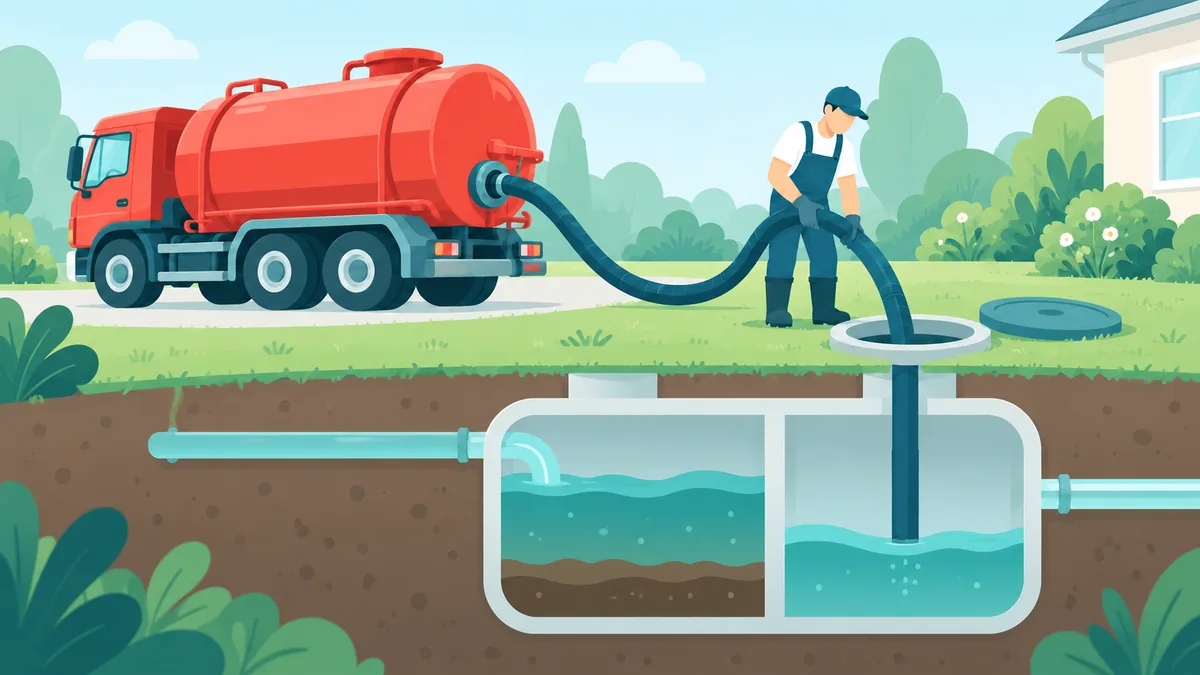
How does vacuum septic tank pumping go, step by step?
Every pumping follows the same order, so the tank is emptied without damage and the work area is left as it was.
We locate the cover and where the truck will park
The crew parks the truck at the safest point nearest to the cover. They find the cover, clear away the soil, plant pot or any material on top of it, and settle the route the hose will take.
We open the cover and check the tank
When the cover is open we look at the level and smell of the waste. If there is anything unexpected in the tank, for example a foreign object or an unusual fill level, we tell you before the pumping.
We place the hose inside the tank
We lower the vacuum hose into the tank through the opening. When the pump runs, the low pressure created in the truck's tank draws the liquid at the end of the hose inside. The liquid part empties first, then the pump gathers the thicker waste at the bottom towards the mouth of the hose.
We pump the sludge at the bottom separately
After the liquid part has been taken, the sediment left at the bottom of the tank is pumped by bringing the mouth of the hose close to the base. This stage is the one that needs the most care, because sludge flows slowly and the crew has to adjust its pace so the hose does not clog.
If needed, we flush the connection line
If the outlet line of the tank is blocked with waste, we clear the line with the high-pressure water of the combination truck and collect the loosened waste by vacuum. This step is applied only when necessary, and we explain to you beforehand why it is being done.
We close up, clean the area and hand over
We put the cover back, and wash down the ground the hose passed over and any residue around the cover. When the pumping is finished, we go over the final condition of the tank together with you. We also tell you that the waste is going to the authorised discharge point in a closed tank.
What should you do at home until the crew arrives?
- Leave clear the area where the truck can stand near the cover, and keep the garden gate and parking space open.
- Find the cover and clear away the soil or material on top of it. If the cover is heavy or broken, do not try to lift it on your own, tell the crew.
- While the tank is full, cut down on water use in the house. Stop the washing machine, the dishwasher and long showers until the crew arrives.
- Do not touch the waste around the tank and the cover with bare hands, and keep children and pets away from this area.
- Do not climb down into the tank or into the opening of an open cover. The gases in the tank cannot be detected by smell, and even a single breath can have serious consequences.
- If the hose will need to pass through a shared area, tell the people concerned in advance, and make sure the garden and passageways are not kept closed that day.
Pictures from the field
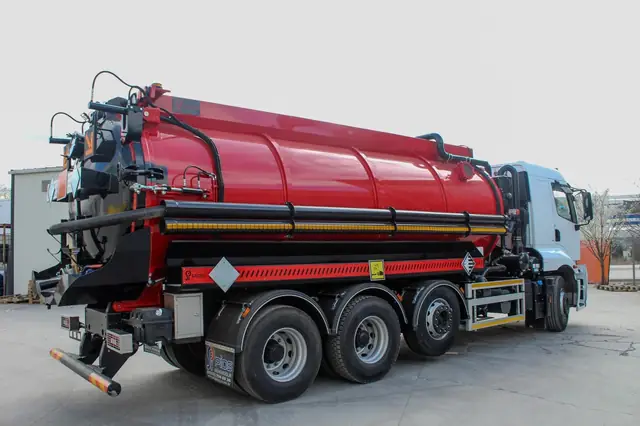
Rear view of the red vacuum truck 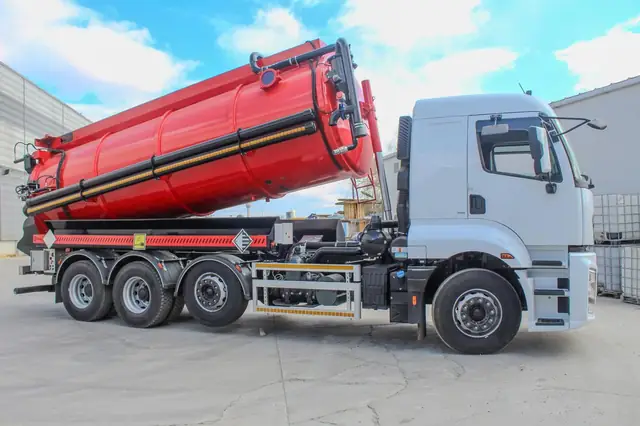
Red vacuum truck and its tank 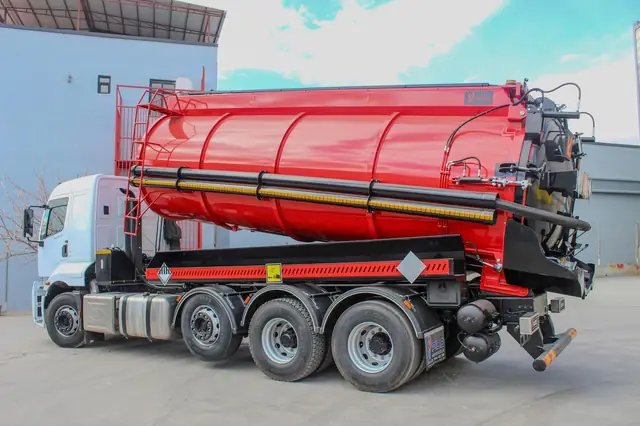
Red combination jetting and vacuum truck
Septic Tank Pumping by district
We provide this service in all 39 districts of Istanbul. Choose your district.
Frequently asked questions
How is a septic tank emptied?
A septic tank is emptied with a vacuum pump whose hose is lowered into the tank. The liquid part is pumped first, then the sludge at the bottom is taken out and the waste is transferred to a closed tank. Nobody goes down into the tank, and the work is done from the cover.
When should a septic tank be pumped?
It should be pumped before the tank overflows, when the drains start to slow down or when smell and wet ground appear in the garden. Water seeping around the cover or backflow inside the house are situations where you should call without waiting.
Can I have my septic tank pumped at night or at the weekend?
Yes. We work 24/7, so you can call at night, at the weekend and on public holidays too. We assess the overflow risk of the tank with you on the phone and direct the crew accordingly.
What should I prepare before septic tank pumping?
Have ready the location of the cover, the way to the cover and when the last pumping was done. Keeping the area where the truck can pull up clear speeds up the job. Sending a photo of the street and the cover on WhatsApp also makes planning easier.
Can I empty the septic tank myself?
Going into the tank or touching the waste by hand carries a serious health risk. Even opening the cover and looking into the tank is dangerous because of toxic gas. We recommend leaving the pumping to the crew instead of doing this yourself.
Is septic tank pumping the same as septic tank cleaning?
No. Pumping is emptying the waste water and sludge in the tank. Deep cleaning deals separately with the layers that have built up on the inner surfaces and the base of the tank. After pumping, we tell you whether the tank also needs cleaning, depending on its condition.
Where does the pumped septic waste go?
The pumped waste is carried in a closed tank and taken to an authorised discharge point or a licensed disposal facility. Waste is not discharged on the road, into a storm drain grate, a stream or the sea. You can always ask the crew where the waste is going.
What determines the scope of a septic tank pumping job?
The scope is affected by the amount of waste to be pumped, access to the tank, the type of waste and the distance it has to be carried. Whether the line needs flushing and how far the hose has to be laid also count. After getting this information on the phone, we explain clearly what the job depends on.
Our other services
No-Dig Drain Unclogging
We locate the blockage with a camera, then clear it with a drain snake and pressurised water. Your tiles stay where they are.
See detailsToilet Unclogging
From an overflowing toilet to the building's shared stack, we clear the toilet drain.
See detailsWashbasin Unclogging
Whether the blockage is in the trap or in the line inside the wall, we clear it cleanly.
See detailsKitchen Sink Unclogging
We jet the whole kitchen drain line with high-pressure water to remove built-up grease and starch.
See detailsCommercial Kitchen Drain Clearing
In restaurant and cafe kitchens, we clear the floor drain, grease trap and shared line without interrupting service.
See detailsShower and Bathtub Drain Unclogging
We clear the hair and soap that build up in floor drains, shower channels and bathtub drains.
See detailsBalcony Drain Unclogging
We clear balcony drains clogged with leaves, soil and sand before the rain arrives.
See detailsDrain Unclogging
We work out which drain is blocked, then clear the line in your home or workplace.
See detailsBlocked Drain Clearing
Is the blockage in the trap, the shared stack or the building outlet? We find it and show you the cause so it doesn't come back.
See detailsPVC Drain Pipe Unclogging
We clear PVC drain pipes without breaking anything, using heads that won't damage them.
See detailsPipe Unclogging
PVC, cast iron, galvanised or concrete pipe: we clear the blocked pipe with a head suited to its material.
See detailsCCTV Drain Unclogging
We look inside the pipe together on a screen and clear the blockage exactly where it is.
See detailsManhole Unclogging
We clear the inlet and outlet lines of an overflowing manhole and get the flow moving again.
See detailsSewer Line Unclogging
We clear the building's main sewer line all the way to the street connection.
See detailsChannel Drain Unclogging
We use high-pressure water to clear garden lines, ramp and car park grates, and storm drains.
See detailsSewer Cleaning
We regularly clean out sludge, grease and root build-up with high-pressure water jetting.
See detailsSewer Camera Inspection
We find cracks, collapses and root intrusion with a CCTV drain camera and show you the footage.
See detailsSewer Line Renewal
We locate the damaged section with a camera and replace only the part that needs it.
See detailsBackflow Valve Installation
We keep water that comes back up from the street in heavy rain out of your basement and ground floor.
See detailsPVC Drain Pipe Replacement
We replace PVC drain pipes that are cracked, leaking or laid with the wrong fall.
See detailsVacuum Truck Service
24/7 pumping with combination and mini vacuum trucks for septic tanks, manholes, grease traps and flooded basements.
See detailsSeptic Tank Cleaning
We clean the sludge at the bottom, the crust on the walls and the inlet and outlet pipes with high-pressure water.
See detailsCombi Vacuum Jetting Truck
One truck jets the line clean and vacuums out the sludge, for blocked main lines and full manholes.
See detailsMini Vacuum Truck
Our small truck gets into narrow streets, steep hills, courtyards and low garage entrances.
See detailsCar Park Vacuum Truck
We pump out an enclosed car park flooded after rain and clear the grate and ramp channels.
See detailsVacuum Truck Hire
We assign an operator-driven vacuum truck to construction sites, factories and housing complexes for scheduled or regular work.
See detailsPrivate Vacuum Truck Service
A vacuum truck for your own property that comes on your schedule, with no waiting in a queue.
See detailsVacuum Truck Company
A vacuum truck company that asks about the job over the phone, picks the right truck and transports the waste according to the rules.
See detailsContact us about your septic tank
You can share the location of the cover, the date of the last pumping and the access situation by calling 0212 923 66 85, or write to us on WhatsApp. We listen to the job on the phone and send the right vehicle to any district of Istanbul. If you send a photo of the cover and the street on WhatsApp, we can plan faster.