
How to Unclog a Bathroom Sink
A blocked sink is usually caused by hair and soap residue building up in the plug and the trap. First remove the plug and clean it, then block the overflow hole with a wet cloth and use a plunger. If the water still drains slowly, put a bucket underneath, take the trap off and rinse it out. A blockage left in the pipe going into the wall needs a hand-turned drain snake.
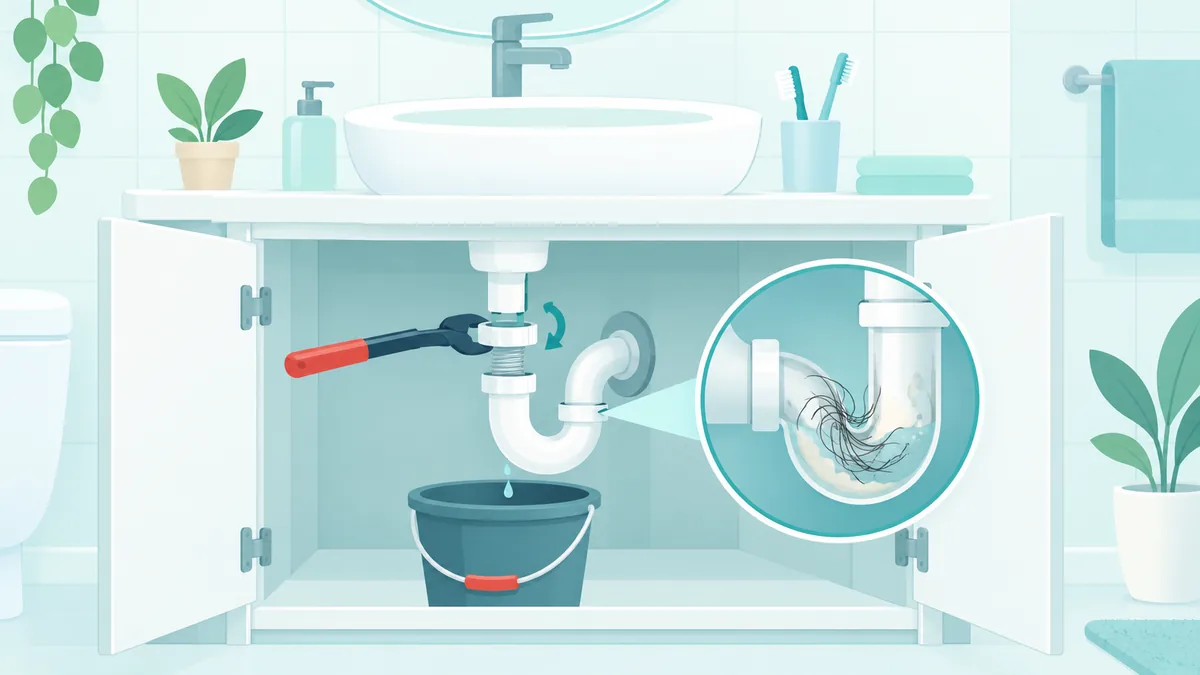
The answer to how to unclog a bathroom sink starts with working out exactly where the water is getting stuck. In a bathroom sink the blockage is almost always in the first half metre: in the grate under the plug, in the bend of the trap, or in the short pipe where the trap meets the wall. Strands of hair combine with soap and toothpaste to form a felt-like layer. The water slows down first, then begins to sit at the bottom of the basin. That is why, in most cases, a bucket, a cloth and a little patience are enough to fix it yourself.
In this guide we have put the steps in order from easy to difficult. First come the things you can do without taking anything apart, then opening and cleaning the trap, and last, feeding a drain snake into the pipe inside the wall. We have also written when each method works and where you should stop. If you have poured a chemical down the drain, if you hear a sound from the shower tray while emptying the sink, or if water rises from another drain, the blockage has gone past the sink's own trap. We have prepared a separate section for those situations.
Why does a sink get blocked?
A bathroom sink blocks at the point where hair and soap cling together, because of its narrow drain and curved trap.
Hair and beard stubble
Hair that is washed down wraps around the stem and grate of the plug. Short hairs that run off after shaving settle at the bottom of the trap. Harmless on their own, these strands turn into a real blockage over time, together with the soap that sticks to them.
Soap and toothpaste residue
When bar soap mixes with water, it leaves a grey, soft layer on the pipe wall. Toothpaste sticks to the inner surface in a similar way. As the layer thickens, the inner diameter of the pipe narrows and even the smallest hair starts to catch.
Limescale build-up
In homes with hard water, limescale settles on top of the soap layer and hardens it. In that case gentle methods such as hot water and baking soda lose their effect, and the trap has to be taken off to clean it.
Small items dropped down the drain
Earrings, toothpaste caps, cotton wool or cotton buds can travel down as far as the trap. Objects like these do not dissolve with baking soda and often will not shift with a plunger. The trap has to be removed and they have to be taken out by hand.
Build-up in the overflow hole
The channel of the overflow hole at the front of the sink is rarely cleaned, and mould and soap collect inside it. This deposit causes a smell and, over time, falls down into the plug area and slows the flow.
Signs that your sink is starting to block
A bathroom sink usually gives a warning for a few days, sometimes a few weeks, before it blocks completely.
Water sits at the bottom
If the water that collects in the basin while you brush your teeth drains away slowly after you turn the tap off, the drain has started to narrow. This is the earliest stage and the easiest one to deal with.
Gurgling and air bubbles
If you hear a gurgling sound as the water drains, or bubbles come up through the hole, water and air are trying to pass through the same narrow gap. The blockage is most likely inside the trap.
Smell around the plug
A sour or musty smell rising from the drain opening shows that the soapy hair collected in the trap and the overflow channel has begun to rot. The smell is often noticed before the flow slows down.
Water rising in other drains
If water rises in the shower tray or the floor drain while you empty the sink, the problem is not in the sink's trap but in the bathroom's shared line. If you see this sign, there is very little you can do at home.
How to clear a sink drain: step-by-step methods
A sink drain is cleared by starting with the easiest method. If one step does not work, move on to the next, and if you have poured a chemical down the drain, do not try the plunger or the dismantling steps at all.
Remove the plug and clean out the hair
When the water drains slowly but has not stopped completely, and the blockage built up gradually over days rather than suddenly.
- With push-down plugs, set the plug to the open position, turn it anticlockwise and pull it up. On some models the plug lifts straight out.
- With plugs that have a rod or lever behind them, loosen the small nut under the sink, pull the horizontal rod out, then lift the plug out from above.
- Remove the hair wrapped around the plug and inside the hole with a glove or a toothed plastic hair-removal strip.
- Scrub the grate with an old toothbrush and washing-up liquid, put the plug back and run hot tap water for a while.
The nut on a rod-type plug is usually plastic. If you overtighten it, it cracks, and if you leave it loose, it drips from underneath. After tightening it by hand, hold a dry paper towel underneath to check for leaks.
Hot water and washing-up liquid
When the only symptom is slow draining and a slight smell, that is, while the soap layer is still soft.
- Bail the water sitting in the sink into a bucket with a cup.
- Squeeze two or three tablespoons of liquid washing-up liquid into the drain.
- Slowly pour in the hottest water you can get from the tap, or a pan of warmed water.
- Wait about half an hour, then run the tap and check whether the flow has speeded up.
Do not use boiling water. The joints of a PVC trap and pipe can soften and start to leak. Hot water does not dissolve a hair clump, it only loosens the soap around it.
Block the overflow hole and use a plunger
When water stands at the bottom of the sink or drains very slowly, and no chemical has been poured down the drain.
- Remove the plug and block the overflow hole at the front firmly with a wet cloth. If it is left open, the pressure the plunger creates escapes through it.
- Make sure there is enough water in the sink to cover the rubber cup of the plunger.
- Seat the plunger fully over the drain hole and work it with firm, steady up-and-down strokes fifteen to twenty times.
- Pull the plunger away suddenly and see whether the water drains quickly. If needed, repeat two or three more rounds.
Choose a small, flat-rimmed plunger for the sink. If you have previously poured a chemical drain opener down the drain, do not plunge. Water containing chemicals can splash into your face and eyes.
Take the trap off and rinse it
When the plunger has not worked, when an object has fallen down the drain, or when the smell comes directly from the trap.
- Empty the cupboard under the sink and place a bucket and a few cloths under the trap.
- On a bottle trap, loosen the lower chamber by hand. On a curved trap, loosen the nuts at the two ends by hand. The water inside will run into the bucket.
- Clean the chamber and the pipe in hot soapy water with an old toothbrush, and take out any object that has fallen in.
- Check that the seals are in place and sitting flat, then tighten the parts by hand.
- Turn the tap on fully and watch for drips by holding dry paper under the joints.
Do not tighten the nuts with pliers or a wrench. The plastic thread strips easily. A leak from a crooked seal is often noticed on the cupboard floor the next day, so check several times on the first day.
Feed a drain snake into the wall pipe
When the trap is spotless but the water still will not drain, that is, when the blockage is inside the wall pipe the trap connects to.
- With the trap removed, place a bucket under the pipe opening coming out of the wall.
- Gently push a flexible, hand-turned drain snake into the pipe. When you meet resistance, keep turning the snake clockwise without stopping.
- When the snake starts to advance, feed it in a little further, then pull it back and clean off the hair caught on its tip.
- Refit the trap and test the flow with hot tap water.
Do not force the snake. In old galvanised or thin PVC pipes, the elbow can be damaged. Sharp-ended metal such as a wire coat hanger scratches the inside of the pipe and sets up the next blockage.
Baking soda and vinegar for maintenance
When the blockage is mild, the smell is noticeable and the drain still takes water. This method is more for maintenance.
- Pour half a tea glass of baking soda into the dry drain.
- Add a tea glass of white vinegar on top and cover the hole with a cloth.
- Wait until the fizzing stops, about half an hour.
- Rinse the drain well with warm or hot tap water.
This mixture loosens the soap and light dirt layer. It does not dissolve a hair clump, cotton wool or a dropped object. If the water does not drain at all, try the plunger or cleaning the trap first.
What not to do when your sink is blocked
Pouring boiling water
Water straight off the boil softens the seals and glued joints of a PVC trap. In ceramic sinks, a sudden temperature difference can also cause a hairline crack.
Mixing different drain openers
Using two different drain openers, or bleach followed by a drain opener, can cause toxic gas and heating. If you have used one product, never add a second.
Dismantling or plunging after a chemical
Opening or plunging a trap that has had drain opener poured into it can cause burns to your skin and eyes. Always tell the technician who comes which product you used and when.
Poking with a coat hanger or a knife
Hard, sharp metal bends the plug mechanism and scratches the inner surface of the pipe. Hair and soap cling more easily to a scratched surface, and the blockage returns more often.
Overtightening nuts with tools
Plastic trap parts become watertight with hand strength alone. A nut tightened with a wrench or pliers cracks, and a small blockage can turn into a flood inside the cupboard.
What to do when a sink is blocked, and when to call a technician
If your sink is blocked, try the plug first, then the plunger, then the trap. If the water still will not drain after these, the blockage is in the line inside the wall and it is time to get outside help. Water rising in the shower or floor drain while you empty the sink, a second blockage in the same week, a sewer smell even though the trap is clean, and a chemical previously poured down the drain all mark this limit. Beyond this point, forcing the snake often scratches the pipe or loosens a joint.
In apartment buildings, the bathroom sink is connected to the shared stack that runs down through the floors. When hair and soap from the upper floors collect at the bend of the stack, the sink and shower on a lower floor can overflow together. In that case, cleaning your own trap does not solve the problem. You only need to reach the Cantley team on 0212 923 66 85 or via WhatsApp and describe what you see. The team comes to the address, examines the problem on site, and starts work after explaining to you what will be done.
How is a sink unclogged without breaking anything?
Unclogging a sink without breaking anything is done by locating the blockage with a camera, without touching the tiles. The team first removes the trap and, if needed, feeds a thin camera into the wall pipe to show you on the screen whether the blockage is close to the trap or at the bend of the stack. That way the choice of tool rests on what is seen, not on guesswork, and you can see for yourself what is inside the pipe.
For hair and soap blockages, a motorised drain snake or a robotic cutting machine chosen to suit the pipe diameter is used. These tools break up the blockage and scrape the inner surface of the pipe. If the stack or a long horizontal line has narrowed with limescale and residue, the line is washed from end to end with high-pressure water jetting. When the job is done, the trap is refitted with proper seals, the flow is tested with you, and if needed the final condition is checked with the camera. No wall or floor is broken during the process.
How to stop the sink blocking again
- Place a fine-mesh hair strainer over the drain hole and empty it every evening.
- If you comb your hair or shave over the sink, first collect the hairs with a paper towel and throw them in the bin.
- Once a week, run hot tap water with a few drops of washing-up liquid down the drain to stop the soap layer hardening.
- Once a month, remove the plug and brush the grate underneath.
- Throw cotton wool, cotton buds and dental floss in the bin, not in the sink.
- Clean inside the overflow hole now and then with an old toothbrush and hot soapy water.
- In homes with hard water, do a baking soda and vinegar treatment once a month.
Frequently asked questions
What do you do to unclog a bathroom sink?
To unclog a bathroom sink, first remove the plug and clean out the hair, then block the overflow hole with a wet cloth and use a plunger. If that is not enough, take the trap off over a bucket and rinse it. If the water still will not drain although the trap is clean, feed a hand-turned drain snake into the wall pipe. If you have poured a chemical down the drain, do not follow these steps, and tell the technician who comes which product you used.
How do you clear a blocked sink pipe?
A blocked sink pipe is cleared by removing the trap and feeding a flexible, hand-turned drain snake into the pipe from the wall opening. When the snake meets resistance it is not pushed but turned as it is advanced, and the hair caught on its tip is pulled out. If the blockage is at the bend of the stack, a hand snake will not reach it, and a motorised drain snake or high-pressure water jetting is needed.
Can you pour boiling water down a sink?
No, boiling water should not be poured down a sink drain. The joints of PVC traps and pipes soften at high temperature and start to leak, and a ceramic sink can also crack from a sudden temperature difference. Hot water from the tap, or warmed water, is enough to loosen the soap layer. Pour the water slowly and then leave the tap running for a while.
Is it harmful to use a chemical drain opener?
Chemical drain openers are harmful if not used carefully. They contain strong acids or bases, can damage old or thin PVC pipe, and burn skin and eyes if they splash. Two different products must never be mixed. They often do not fully clear hair blockages and leave chemical-laden water behind, so try mechanical methods first.
How do you remove a sink trap?
A sink trap is removed by placing a bucket underneath and turning the nuts anticlockwise by hand. On a bottle trap only the lower chamber is opened, while on a curved type the nuts at the two ends are loosened. After cleaning, the seals are seated back in place and the nuts are tightened by hand without tools. Finally, water is run and the joints are checked.
What should you do if the sink and shower block at the same time?
If the sink and shower are blocked at the same time, the problem is in the shared line or the building's stack, and there is very little you can do from home. Plunging in this case can push water up through the other drain. The safest course is to stop using the drains and call a team that can inspect the line with a camera.
Why does a sink smell bad?
A sink usually smells because of hair and soap rotting in the trap and in the channel of the overflow hole. Cleaning the plug and the trap and brushing the overflow hole removes most of the smell. If a sewer smell still comes after cleaning, the trap seal may be leaking or the water in the trap may be draining away. In that case the line needs to be checked.
Other guides
How to Clear a Blocked Toilet
What to do first if the water is rising, how shared lines work in a building, and when to call a professional.
Read the guideHow to Unclog a Toilet Bowl
How to use a plunger, whether toilet drain openers are safe, and what happens when an object falls into the toilet.
Read the guideHow to Unclog a Kitchen Drain
The sink is blocked and the water won't drain: steps for grease build-up and the dishwasher drain.
Read the guideHow to Unclog a Shower Drain
Hair build-up, smells and pooling water in the shower and floor drain.
Read the guideHow to Unclog a Balcony Drain
How to safely clear a balcony drain blocked by leaves and soil.
Read the guideHow to Unclog a Blocked Pipe
Blockages in PVC and old pipes, the shared drain pipe, and pipe-clearing attachments.
Read the guideHow to Unclog a Drain
The first minutes after a drain blocks: which line it is, what clears it and when to call.
Read the guideIf your sink is still blocked
If the water will not drain despite the steps you have tried, call 0212 923 66 85 or write to us on WhatsApp. The Cantley team comes to every district of Istanbul 24/7, finds the blockage with a camera and clears it without breaking anything.