
Istanbul Sewer Camera Inspection
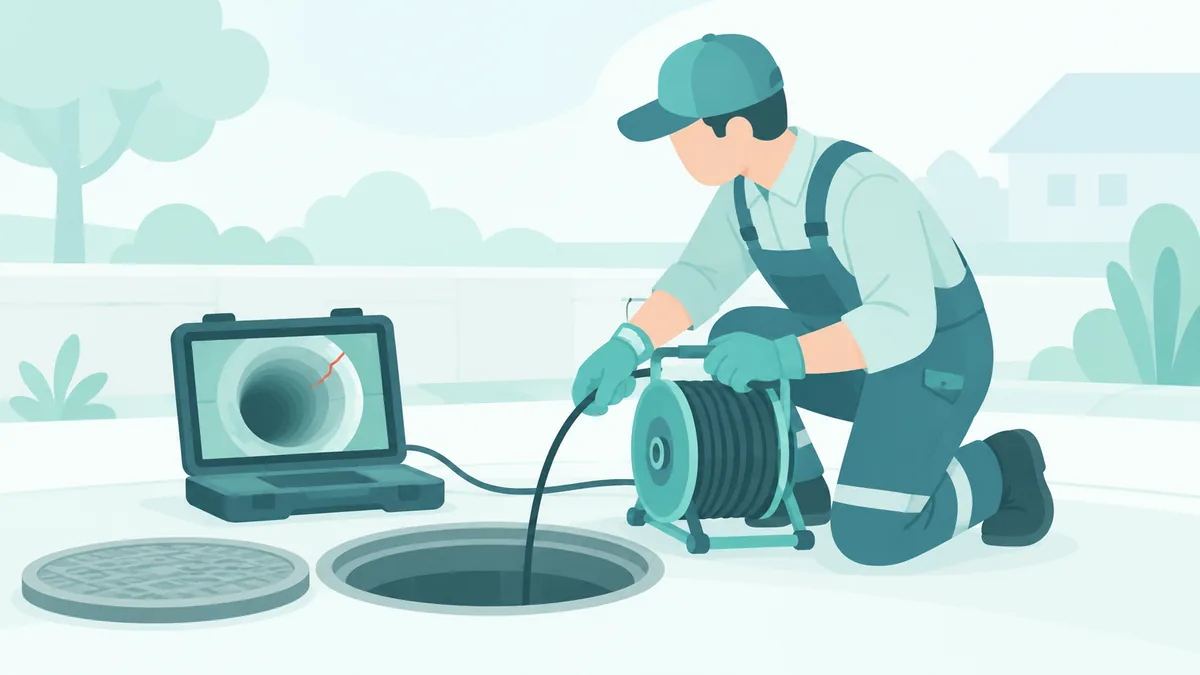
A sewer camera inspection means the Cantley team feeds a waterproof camera on a flexible cable into the line through a drain or manhole opening and watches the inside of the pipe live on a screen. This way, a crack, collapse, root intrusion or shifted joint is identified from the footage instead of being guessed at. Without breaking anything, we can see where the problem is and how far it sits from the entry point. If needed, that information also tells us where to mark the ground. The inspection also shows which way the line turns and where it connects.

The inspection is useful for repeated blockages, before you buy a flat or shop or start a renovation, and when you want to work out a line whose route is unknown. We watch the footage with you, explain each finding in plain language, and decide together what to do. We work 24/7 in all 39 districts of Istanbul for building managements, site managers, shop owners and homeowners. The footage lets you see the work and approve it yourself, and it prevents unnecessary spending. A short inspection avoids unnecessary breaking.
When is a camera inspection needed?
A camera is not necessary for every blockage. In the following situations, though, any work done without knowing where the problem is means wasted effort and unnecessary breaking.
The same blockage keeps coming back
If a drain you have cleared blocks again at the same spot within a few weeks, there is a lasting obstruction inside the line. A collapsed section, a joint hanging into the pipe or a mat of roots keeps holding the water back. The camera shows what the obstruction is and exactly where it sits.
Before buying or renovating
When you buy an older flat, shop or detached house, the one thing you cannot see is the pipework under the floor. An inspection before a bathroom or kitchen renovation keeps a cracked pipe from being left under new tiles and removes the need to break the floor up later.
Damp, subsidence or smell
Unexplained damp on a basement wall, a sunken patch in the garden or a sewer smell that will not go away in one particular room suggests the line is leaking somewhere. The camera lets us find which joint or crack the leak comes from without breaking anything. That way you can act before the leak grows.
The route of the line is unknown
In older buildings the plumbing plan is often lost, and nobody knows which wall the line runs under or which manhole it connects to. As the camera advances, we trace the route, so digging, renovation or new connection work is done in the right place. Your renovation crew can also work with confidence using this information.
A check after cleaning
For managements who want to see that the pipe is truly clear and no damage has been left inside after the line is flushed, we carry out a camera check. Seeing the cleaned pipe with your own eyes also makes it easier to plan when the next maintenance is due. The check also helps a new problem get noticed early.
What goes wrong inside the pipe?
Pipes under the ground age quietly. The building settling, the soil swelling with rain and drying out again, and the load of vehicles passing overhead all strain the pipe over time. As a result, some sections collapse and form a dip where water collects, while some joints slip apart. A joint edge hanging into the pipe works like a barrier that catches paper and sediment, and the blockage always starts at the same point. This kind of damage can progress for a long time without leaving any trace on the surface.
Roots follow moisture. A small gap at a joint gives the fine roots of a nearby tree a way in, and a root feeding inside turns into a mat that fills the pipe within a few seasons. In old concrete and cast iron pipes, the inner surface wears away and cracks form. Even in newer PVC lines, a section laid at the wrong gradient lets water stand and sediment build up. Without looking inside the line, it is impossible to tell which of these causes applies.
None of these problems can be seen from outside. What you notice on the surface is only the result: a slow drain, a smell or a damp stain. Work done without a camera is therefore often based on guesswork, and it can lead to the wrong spot being broken open or a sound line being replaced from end to end. The footage makes both a correct diagnosis and a sensible decision possible. That is why we recommend the camera as the first step for recurring problems.
How is a camera inspection carried out?
We would like you to be with us during the inspection, because seeing what is on the screen together makes the decision easier.
Choosing the entry point
The team first decides where the camera can enter the line most easily: a manhole, an inspection chamber, a cleaning hatch or a trap that can be removed. If the line is very dirty, a short water rinse is done first so the picture comes out clear, because a crack cannot be made out in a pipe coated with sludge.
Advancing the camera along the line
The camera, fitted with a light, is pushed slowly along the pipe on its flexible cable. On the screen you can watch the inner surface of the pipe, the joints, the bends and the side connections live. Because we can see at every moment how far the cable has gone in, the distance of each finding from the entry point is noted.
Locating the findings
When a crack, collapse, roots or a shifted joint appears, the camera is stopped there and the footage is examined in detail. If the line and the ground allow, this point is also located and marked above ground. That way, if a repair is needed later, only that section is opened up.
Explaining the footage to you
When the inspection is finished, we show you what we saw on the screen one by one and explain in plain language what each finding means. Is there a problem that cleaning will solve, does a section need replacing, or is the line sound? We decide together by looking at the footage.
Preparing for the inspection
- Make a note of where the manholes, inspection chambers and cleaning hatches you know of are, and uncover them beforehand if they are covered by plant pots or belongings.
- Write down briefly when the problem started, which drains are affected and any work that has been done before.
- If you have the building's plumbing plan or old renovation drawings, keep them ready to show the team.
- During the inspection, put off heavy water use such as the washing machine and shower so the picture comes out clear.
- If you have poured a chemical drain opener down the drain, tell us. The team will take precautions accordingly when lowering the cable into the line.
Pictures from the field
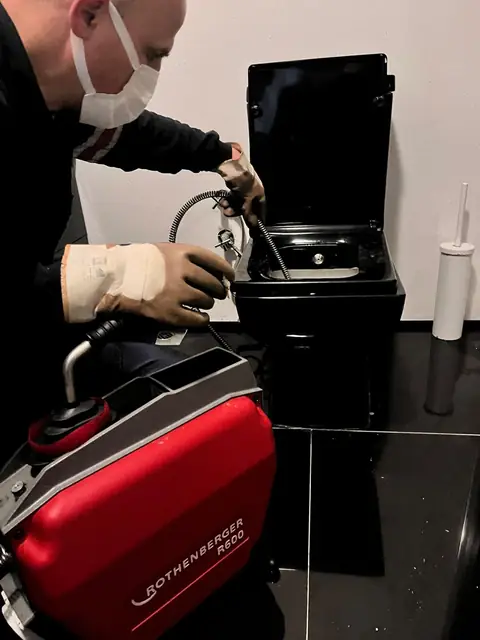
Inspecting a toilet drain with a camera and a drain snake machine 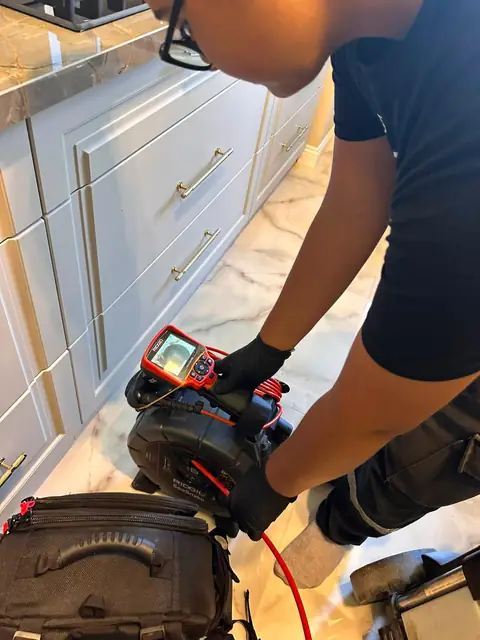
Checking the kitchen drain line with a drain camera 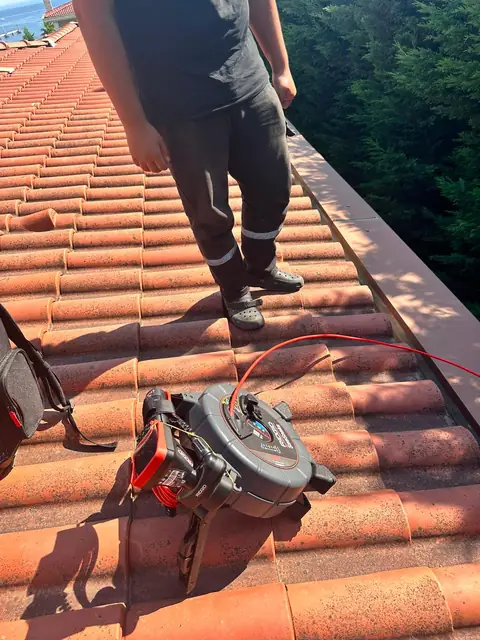
CCTV drain camera inspection of the roof rainwater line
Sewer Camera Inspection by district
We provide this service in all 39 districts of Istanbul. Choose your district.
Frequently asked questions
Is anything broken open for a sewer camera inspection?
No, the camera enters the line through existing openings. A manhole, an inspection chamber, a cleaning hatch or a removable trap is enough, and no tiles, walls or floors are broken. Breaking only comes up if the footage shows a repair is needed, and only at the marked spot, and that decision is yours. In most inspections, opening a single cover is enough.
What can be seen inside the pipe with the camera?
You can see cracked and broken pipes, collapsed sections or sections with a disturbed gradient, shifted or separated joints, roots that have grown in, thick layers of grease and sludge, and foreign objects left in the pipe. Which way the line turns and which manhole it connects to also become clear during the inspection.
Should I have a camera inspection before buying a home or shop?
Yes, we recommend it especially for older buildings. The condition of the pipes under the floor is not visible at the time of sale, and the problem often appears only after you have moved in. An inspection before buying shows whether the line is sound and lets you discuss a possible repair with the seller in advance.
Can a camera inspection be done on a completely blocked line?
Partly. The camera goes as far as the blockage and shows what the obstruction is, but the line has to be cleared to see beyond it. For this reason, on fully blocked lines the flow is often restored first with a drain snake or water jetting, and then the whole line is inspected with the camera.
What happens after the camera inspection?
What is done depends on the footage. If the line is sound and the problem is sediment, cleaning with water jetting is enough. If a particular section is cracked, collapsed or full of roots, renewing that section is discussed. If the line turns out clean and sound, we look for the source of the problem elsewhere in the building. In every case the decision is made together with you.
Are the sink or toilet removed during a camera inspection?
Usually not. The camera mostly enters through a manhole, an inspection chamber or a cleaning hatch. If the problem is right behind a sink, the trap can be removed and the camera sent in from there, and when the work is done the trap is refitted and checked for leaks. The toilet is removed only if there is no other entry point, and with your approval.
Our other services
No-Dig Drain Unclogging
We locate the blockage with a camera, then clear it with a drain snake and pressurised water. Your tiles stay where they are.
See detailsToilet Unclogging
From an overflowing toilet to the building's shared stack, we clear the toilet drain.
See detailsWashbasin Unclogging
Whether the blockage is in the trap or in the line inside the wall, we clear it cleanly.
See detailsKitchen Sink Unclogging
We jet the whole kitchen drain line with high-pressure water to remove built-up grease and starch.
See detailsCommercial Kitchen Drain Clearing
In restaurant and cafe kitchens, we clear the floor drain, grease trap and shared line without interrupting service.
See detailsShower and Bathtub Drain Unclogging
We clear the hair and soap that build up in floor drains, shower channels and bathtub drains.
See detailsBalcony Drain Unclogging
We clear balcony drains clogged with leaves, soil and sand before the rain arrives.
See detailsDrain Unclogging
We work out which drain is blocked, then clear the line in your home or workplace.
See detailsBlocked Drain Clearing
Is the blockage in the trap, the shared stack or the building outlet? We find it and show you the cause so it doesn't come back.
See detailsPVC Drain Pipe Unclogging
We clear PVC drain pipes without breaking anything, using heads that won't damage them.
See detailsPipe Unclogging
PVC, cast iron, galvanised or concrete pipe: we clear the blocked pipe with a head suited to its material.
See detailsCCTV Drain Unclogging
We look inside the pipe together on a screen and clear the blockage exactly where it is.
See detailsManhole Unclogging
We clear the inlet and outlet lines of an overflowing manhole and get the flow moving again.
See detailsSewer Line Unclogging
We clear the building's main sewer line all the way to the street connection.
See detailsChannel Drain Unclogging
We use high-pressure water to clear garden lines, ramp and car park grates, and storm drains.
See detailsSewer Cleaning
We regularly clean out sludge, grease and root build-up with high-pressure water jetting.
See detailsSewer Line Renewal
We locate the damaged section with a camera and replace only the part that needs it.
See detailsBackflow Valve Installation
We keep water that comes back up from the street in heavy rain out of your basement and ground floor.
See detailsPVC Drain Pipe Replacement
We replace PVC drain pipes that are cracked, leaking or laid with the wrong fall.
See detailsVacuum Truck Service
24/7 pumping with combination and mini vacuum trucks for septic tanks, manholes, grease traps and flooded basements.
See detailsSeptic Tank Pumping
We empty full or overflowing septic tanks by vacuum and take the waste to an authorised disposal point.
See detailsSeptic Tank Cleaning
We clean the sludge at the bottom, the crust on the walls and the inlet and outlet pipes with high-pressure water.
See detailsCombi Vacuum Jetting Truck
One truck jets the line clean and vacuums out the sludge, for blocked main lines and full manholes.
See detailsMini Vacuum Truck
Our small truck gets into narrow streets, steep hills, courtyards and low garage entrances.
See detailsCar Park Vacuum Truck
We pump out an enclosed car park flooded after rain and clear the grate and ramp channels.
See detailsVacuum Truck Hire
We assign an operator-driven vacuum truck to construction sites, factories and housing complexes for scheduled or regular work.
See detailsPrivate Vacuum Truck Service
A vacuum truck for your own property that comes on your schedule, with no waiting in a queue.
See detailsVacuum Truck Company
A vacuum truck company that asks about the job over the phone, picks the right truck and transports the waste according to the rules.
See detailsLet's look together before breaking anything
Let's not open up anywhere until we have seen where the problem is. Call 0212 923 66 85 or write on WhatsApp. We come to your address 24/7 in every district of Istanbul, inspect your line with the camera and show you what we see.