Istanbul Blocked Drain Clearing
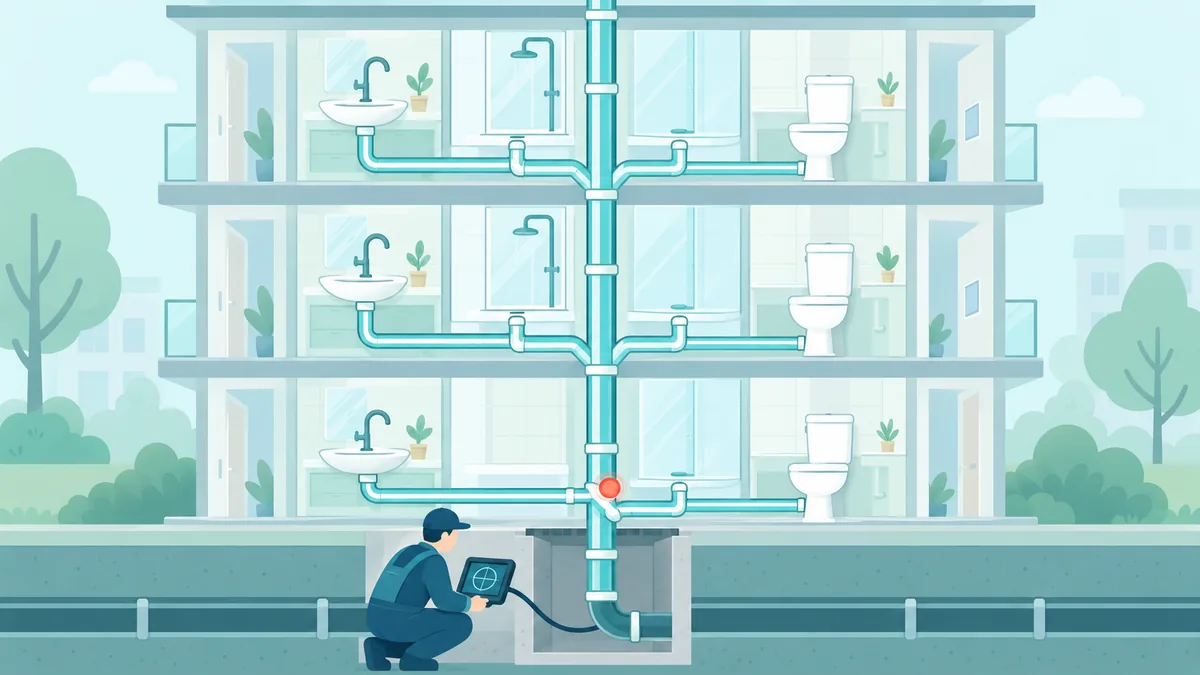
When Cantley clears a blocked drain in Istanbul, we first find which part of the plumbing the blockage is sitting in, because the same symptom can come from four different places. A blocked drain can be in the trap under the sink, in the connecting pipe running through the wall or the screed, in the vertical shared stack that serves every floor of the building, or in the outlet pipe where the building joins the street line. Each one has a different access point, a different machine and a different way of working. Work on the wrong section leaves the blockage in place and brings the problem back later, usually worse. Our team works across all 39 districts of Istanbul, 24/7, and clears the line without breaking tiles or walls.

Your own observations are the first tool for locating a blockage. Which drain has slowed down, where the water is rising, and whether the problem affects only your flat or your neighbours too: these tell us a lot before we even walk through the door. We ask these questions on the phone and confirm with a camera on site. When blockages keep coming back, our job does not end with clearing them. We look for the underlying cause, such as the pipe's gradient, a sagging section or a slipped joint, and show it to you on camera. We work in the same order for flat owners, building and site management, shops and offices.
Reading the blockage's location from the symptoms
A blocked drain leaves a different trace depending on where it is in the plumbing. Whichever of the situations below looks like what you see at home or at work, the blockage is most likely in the place described.
One drain is slow: the problem is in the trap or just behind it
If the kitchen sink drains slowly but the bathroom washbasin and shower run normally, the blockage is in the section that belongs to that one drain. Most often it is a lump of grease or hair in the elbow of the trap or in the first stretch of pipe going into the wall. This is the easiest blockage to reach and the quickest to clear.
Several drains in the same flat are affected: the connecting pipe
If the bathroom washbasin, the shower and the washing machine outlet have slowed down together, or water from one collects in the grate of another, the problem is in the horizontal pipe that gathers these drains and carries them to the stack. This pipe usually runs under the screed or inside the wall, so you cannot see it, and taking the trap off is not enough to reach it.
Water comes up in a lower-floor drain when upper floors use water: the stack
If dirty water rises from the shower grate or the toilet when you have not used any water yourself, especially if it gets worse in the morning and evening, the blockage is in the building's shared vertical pipe. Water coming down from the upper floors hits the blockage and returns through the first outlet it finds, usually the drains on the lowest floors. This is no longer one flat's problem but the whole building's.
The manhole is overflowing or the ground floor is flooded: the building outlet
If water collects around the cover of the manhole in the garden or car park, and the drains in the basement and ground floor overflow at the same time, the blockage is in the outlet pipe that connects the building's waste water to the street line. All of the building's water collects at this point, so the flooding spreads the longer it is left. Never go down into the manhole, as toxic gas may be present.
If the blockage keeps coming back, where is the real cause?
The cause of a blocked drain that keeps repeating is often the pipe itself, and the waste simply collects wherever that fault is. The most common fault is the wrong gradient. Horizontal pipes should fall slightly towards the stack or the building outlet. If the fall is too small, the water slows down and the solids it carries settle on the bottom of the pipe. If the end of a pipe was lifted when the floor was raised during renovation, or if a new drain was later connected to an old line, the pipe can even slope the wrong way in places.
The second fault is sagging. Long pipes carried on hangers in a false ceiling or a basement ceiling slowly drop in the middle and form a bowl-shaped dip. Some water always stays in this dip, and sediment collects there too. A broken or slipped joint works in a similar way: the small step it creates inside the pipe catches hair and fibres every time something passes, and the blockage grows on top of that step.
In kitchen and business lines, the cause is mostly a layer of grease. As cooking oil cools in the pipe it coats the pipe wall, the layer thickens, the inner diameter narrows, and the hole made by a snake closes up again within a short time. In old concrete or clay pipes outside the building, tree roots enter at the joints and weave through the line in fine strands. In these cases the roots must be cleared with a snake fitted with a cutting head, and the grease must be stripped off the pipe wall with pressurised water, otherwise the blockage forms again at the same spot.
Our process from the phone call to the final test
To find the blockage by knowing rather than guessing, we follow the same steps on every job. We tell you what we find at each step, on the spot and with you.
We ask on the phone which drains are affected
When you call, we ask which floor you are on, which drains have slowed down, where the water is rising and whether your neighbours have a similar complaint. These answers go a long way towards showing whether the blockage is in the trap, the connecting pipe, the stack or the building outlet, and they decide which machines the team brings.
We see the location and type of the blockage with a camera
On site, we send the camera into the line from the most suitable access point, which may be the removed trap, a cleaning access cover or the manhole. On the screen we watch together where the blockage sits and whether it is a hard object or a soft build-up of grease and sediment. This image also decides which method we use to clear it.
For solid blockages we use a snake or a robot
Solid blockages such as a clump of wet wipes, a sanitary pad, an object that has fallen into the pipe or roots are broken up or pulled out with a motorised drain snake. In wide pipes such as the stack and the building outlet, we use robotic machines that can pass through bends. We work through the line's existing openings without touching tiles or walls.
For grease and sludge we wash the line with pressurised water
We strip soft deposits such as grease stuck to the pipe wall, soap residue and sludge with high-pressure water jetting. A rotating nozzle washes the whole inner surface of the pipe, so the blockage is not just punched through the middle and the layer does not quickly form again. We set the pressure according to the material and age of the pipe.
We test every drain and explain the cause to you
When the job is done, we test not just the blocked drain but every drain connected to the same line, one after another, with plenty of water. Then we send the camera through once more to check the cleaned line. We show you the cause of the blockage on camera, along with any lasting fault such as a gradient error, a sagging section or a broken joint, and explain what can be done. For building management, this information makes it easier to decide how to protect the stack in future.
While you wait for the team: how not to make the blockage worse
- If you suspect a blockage in the stack or the building outlet, do not use any drain in the home, because every drop you send down comes back out of the lowest grate.
- If you are on a lower floor and water is rising from a drain, tell your upstairs neighbours and the building management; the less water goes down the stack, the slower the overflow becomes.
- Do not pour boiling water down drains. Warm tap water does no harm, but boiling water loosens the joints of plastic pipes and can crack a porcelain toilet.
- Do not leave the cover of an overflowing manhole open, keep children and pets away from it, and do not try to go down into it.
Pictures from the field
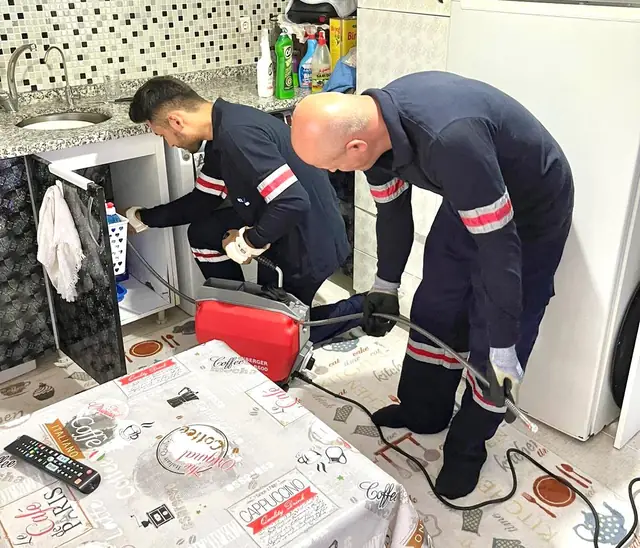
Crew clearing a washing machine drain
Blocked Drain Clearing by district
We provide this service in all 39 districts of Istanbul. Choose your district.
Frequently asked questions
How is a blocked drain cleared?
Clearing a blocked drain means first finding where the blockage is and then cleaning the line with the right machine for it. The blockage is seen on camera. If it is a solid object, it is broken up with a motorised drain snake or a robot, and if it is grease and sludge, it is stripped off with pressurised water. At the end of the job, every connected drain is tested and the cause of the blockage is explained to you.
Do you come out at night for a blocked drain in Istanbul?
Yes, we work day and night in all 39 districts of Istanbul, every day including weekends. A stack or manhole that starts overflowing at night should not wait for the morning. You can reach us on 0212 923 66 85 or write on WhatsApp, and we will listen to the situation on the phone and send the team with the machines needed.
How do I tell whether the blockage is in my flat or in the building's stack?
If water rises from your drains at moments when you are not using any water, the blockage is most likely in the stack. If the problem appears only when you use water and your neighbours have no such complaint, the blockage is in your flat's own pipes. When you cannot be sure, the camera gives the definite answer.
Should I tell the building management about a stack blockage?
Yes. The stack is the shared line of the whole building, and because a blockage in it affects every flat, the management and your neighbours need to be told. The management can call us directly. We clear the stack from the most suitable cleaning access or from the vent at the roof, and report the result, and any fault found, to the management with images.
What should I do if a drain keeps blocking?
A drain that keeps blocking needs the line inspected with a camera, because this is often caused by a fault in the pipe. Too little gradient, a sagging section, a slipped joint or a thick layer of grease will bring the blockage back every time. Once the fault is identified on camera, the line is either cleaned from end to end with pressurised water or only the damaged section is repaired.
Does work stop in a shop or office while the drain is being cleared?
Usually it does not, because we do not break anything, so we can work while your premises stay open. The affected drains still need to stay out of use for a while. We ask about your busy hours in advance and schedule the job for when you have the fewest customers.
Our other services
No-Dig Drain Unclogging
We locate the blockage with a camera, then clear it with a drain snake and pressurised water. Your tiles stay where they are.
See detailsToilet Unclogging
From an overflowing toilet to the building's shared stack, we clear the toilet drain.
See detailsWashbasin Unclogging
Whether the blockage is in the trap or in the line inside the wall, we clear it cleanly.
See detailsKitchen Sink Unclogging
We jet the whole kitchen drain line with high-pressure water to remove built-up grease and starch.
See detailsCommercial Kitchen Drain Clearing
In restaurant and cafe kitchens, we clear the floor drain, grease trap and shared line without interrupting service.
See detailsShower and Bathtub Drain Unclogging
We clear the hair and soap that build up in floor drains, shower channels and bathtub drains.
See detailsBalcony Drain Unclogging
We clear balcony drains clogged with leaves, soil and sand before the rain arrives.
See detailsDrain Unclogging
We work out which drain is blocked, then clear the line in your home or workplace.
See detailsPVC Drain Pipe Unclogging
We clear PVC drain pipes without breaking anything, using heads that won't damage them.
See detailsPipe Unclogging
PVC, cast iron, galvanised or concrete pipe: we clear the blocked pipe with a head suited to its material.
See detailsCCTV Drain Unclogging
We look inside the pipe together on a screen and clear the blockage exactly where it is.
See detailsManhole Unclogging
We clear the inlet and outlet lines of an overflowing manhole and get the flow moving again.
See detailsSewer Line Unclogging
We clear the building's main sewer line all the way to the street connection.
See detailsChannel Drain Unclogging
We use high-pressure water to clear garden lines, ramp and car park grates, and storm drains.
See detailsSewer Cleaning
We regularly clean out sludge, grease and root build-up with high-pressure water jetting.
See detailsSewer Camera Inspection
We find cracks, collapses and root intrusion with a CCTV drain camera and show you the footage.
See detailsSewer Line Renewal
We locate the damaged section with a camera and replace only the part that needs it.
See detailsBackflow Valve Installation
We keep water that comes back up from the street in heavy rain out of your basement and ground floor.
See detailsPVC Drain Pipe Replacement
We replace PVC drain pipes that are cracked, leaking or laid with the wrong fall.
See detailsVacuum Truck Service
24/7 pumping with combination and mini vacuum trucks for septic tanks, manholes, grease traps and flooded basements.
See detailsSeptic Tank Pumping
We empty full or overflowing septic tanks by vacuum and take the waste to an authorised disposal point.
See detailsSeptic Tank Cleaning
We clean the sludge at the bottom, the crust on the walls and the inlet and outlet pipes with high-pressure water.
See detailsCombi Vacuum Jetting Truck
One truck jets the line clean and vacuums out the sludge, for blocked main lines and full manholes.
See detailsMini Vacuum Truck
Our small truck gets into narrow streets, steep hills, courtyards and low garage entrances.
See detailsCar Park Vacuum Truck
We pump out an enclosed car park flooded after rain and clear the grate and ramp channels.
See detailsVacuum Truck Hire
We assign an operator-driven vacuum truck to construction sites, factories and housing complexes for scheduled or regular work.
See detailsPrivate Vacuum Truck Service
A vacuum truck for your own property that comes on your schedule, with no waiting in a queue.
See detailsVacuum Truck Company
A vacuum truck company that asks about the job over the phone, picks the right truck and transports the waste according to the rules.
See detailsLet us find the blockage together
Call 0212 923 66 85 or write on WhatsApp to tell us which drains are affected. Our team comes to your address, finds the blockage with a camera, shows it to you and clears the line without breaking anything. A photo of the overflowing grate or manhole helps the team arrive with the right machines.