
Istanbul Septic Tank Cleaning
Septic tank cleaning in Istanbul goes beyond emptying the pit. We deal with the sludge layer stuck to the bottom and walls, the build-up in the inlet and outlet pipes, and the condition of the vent stack and the cover together. In detached houses, villas, housing complexes and businesses that are not connected to the sewer network, simply pumping out a septic tank removes the liquid only. The dark layer that settles on the bottom and the crust that dries on the sides of the pit stay where they are. The Cantley team arrives with a combination truck to clear these layers.

During cleaning we do two jobs separately. First we clean the inside of the pit: the liquid, the sludge at the bottom and the layer on the sides. Then we wash the inlet and outlet pipes with pressurised water, so we know the line coming into the pit and the line leaving it are both open. If this second step is skipped, the pit may look empty for a while, but the problem soon comes back.
How do you know your septic tank needs cleaning?
If some symptoms continue even though the pit has just been emptied, the problem may lie deeper than pumping can reach. These are the signs we see most often.
There is a smell from the pit or the cover
If a sharp smell continues in the garden, around the cover or in the bathroom drain after pumping, the crusted layer on the sides of the pit and the old sludge at the bottom are still rotting. A blocked vent stack can also carry the smell into the house.
Drains are running slowly
If sink and shower drains empty slowly, or the water stands for a while before draining, the cause is often solid waste that has built up in the pipes at the pit inlet. Sludge inside the pit can also partly block the mouth of the outlet pipe.
The pit fills up again right after pumping
If the pit starts filling again after it has been emptied, some of the waste may not be passing through it. Built-up bottom sludge reduces the usable volume of the pit and leads to frequent pumping.
The area around the cover is wet or crusty
A dried, hardened layer at the edge of the cover, dampness around it, or a smell seeping from under it shows that the cover and side walls need cleaning. This area is often missed during pumping, so it is usually treated separately.
Smell is coming from the vent pipe
If the mouth of the vent pipe in the garden or beside the building is blocked by a bird's nest, leaves or pieces of plaster, gas and smell cannot escape the right way and are pushed back. Checking whether the stack is open and what its inner surface looks like is part of the cleaning job.
Kitchen and bathroom water is backing up
If shower or washing-up water rises back up instead of flowing fully into the pit, build-up in the inlet pipe may be pushing wastewater up the stack. This symptom is not solved by pumping alone, it needs the pipe to be washed.
What builds up on the bottom and walls of the pit?
In a septic tank, the waste separates into three layers. Grease and foam sit on top, liquid in the middle, and sand, fibres and sludge at the bottom. Vacuum pumping usually takes the liquid part and the loose sludge at the bottom. Compacted sludge on the bottom and the crust stuck to the pit wall can stay in place even when water runs over them.
Once the crust on the wall has formed, it does not fall off by itself. Greasy waste dries and clings to the sides of the pit, and over time it narrows the interior volume. That is why, at every cleaning, we also check all four sides of the pit, the line between the wall and the liquid level, and the bottom.
In the inlet and outlet pipes, the real problem usually starts before a blockage. Fibrous waste, paper and grease cling to the pipe wall and narrow it. Washing with pressurised water strips off this layer. The opening at the pipe connections is also checked at this stage.
The high-pressure water of the combination truck is used for this job. As the nozzle moves along the pipe, water jetting backwards loosens the build-up on the pipe wall and carries it into the pit, and the vacuum hose collects it. When the washing is finished, we see together that the pipe is really open and the water flows into the pit freely.
Where the pit is heavily used, build-up forms faster. Fibrous cleaning materials, used cooking oil and excessive amounts of bleach contribute the most. Usage habits and the type of waste are the main factors that decide the cleaning interval.
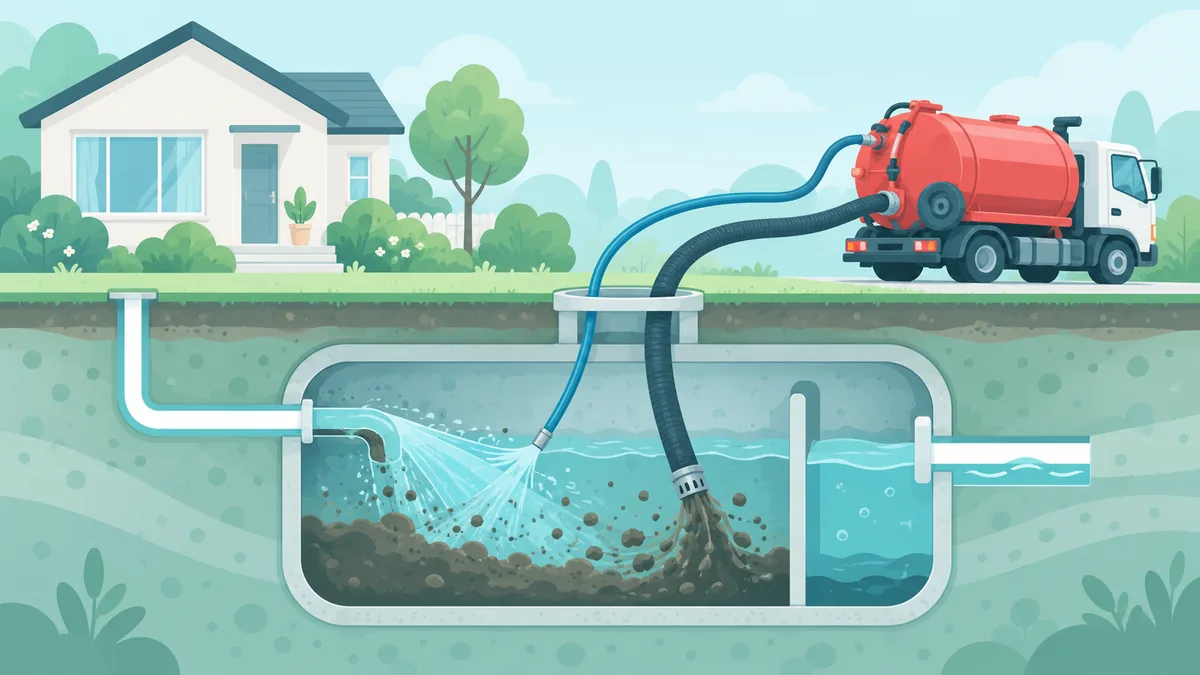
How does septic tank cleaning work?
In every job, our aim is to leave the pit and its connecting pipes clean and to protect the surroundings from the waste.
We inspect the pit and its connections
When the team opens the cover, they see the condition of the pit, the sludge level and the position of the inlet and outlet pipes. If needed, we check inside the pipe with a camera, so it is clear beforehand where the washing needs to be done.
We pump out the liquid and the bottom sludge
First the liquid and the floating layer in the pit are removed, then the dark sludge at the bottom is drawn out with the hose. A pit is not counted as emptied until the bottom has been cleaned.
We remove the crust on the walls
The crust stuck to the walls and to the edge line is loosened with pressurised water and collected by vacuum. The inner surface of the pit is left looking clean when the pumping is finished.
We wash the inlet and outlet pipes
Pressurised water is sent into the pipe with the combination truck, and the loosened build-up is pushed towards the pit and pumped out. After washing, we check that water flows freely in both directions.
We clean the cover, the stack and the surroundings
We wash under and around the cover and check whether the vent stack is open. We also leave the area where the hose passed clean.
We take the waste to an authorised point
The pumped waste leaves your address in a closed tank and is delivered to an authorised discharge point or a licensed disposal facility. Under no circumstances is the waste discharged into a storm drain grate, a stream or the sea.
What can you do before the team arrives?
- Find the cover and move any pots, rugs or stones off it. If the cover is very heavy, do not try to open it alone, marking its position is enough.
- Clear the area in front of the pit, leave a path the truck can approach along, and let the car park or site attendant know we are coming.
- If the septic tank is full or overflowing, do not run the washing machine or dishwasher, and keep tap use to a sensible level.
- Put up a barrier around the cover for children and pets. Do not lean over to look into the pit and do not stand on the cover.
- Do not scrape the leaves, soil and dried layer around the cover by hand. Trying to remove the sludge yourself creates both smell and splashing.
- Note the date the pit was last pumped and which materials are used most in the house, and tell the team this information.
Pictures from the field
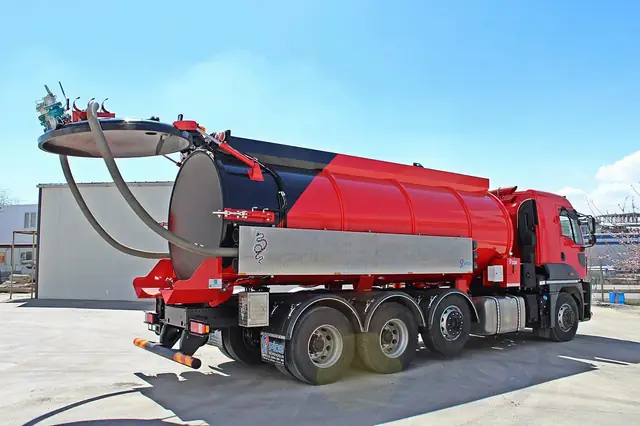
Hose reel on the red combination jetting and vacuum truck 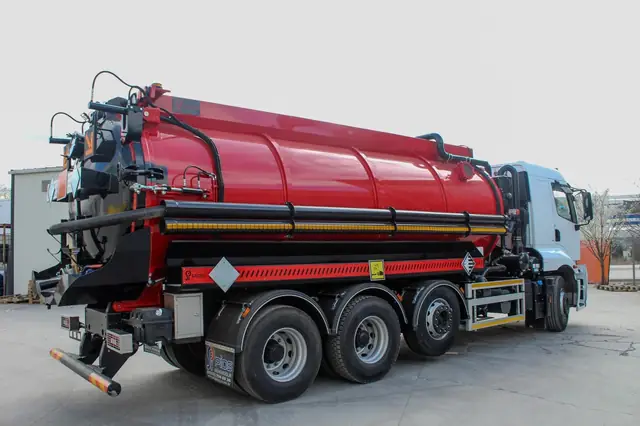
Rear view of the red vacuum truck 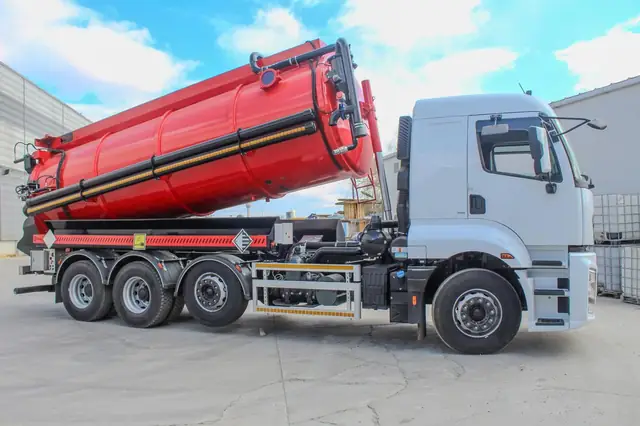
Red vacuum truck and its tank
Septic Tank Cleaning by district
We provide this service in all 39 districts of Istanbul. Choose your district.
Frequently asked questions
Is septic tank cleaning the same as septic tank pumping?
No. Pumping empties the liquid and sludge in the pit, while cleaning also covers the compacted sludge at the bottom, the crust on the walls and the connecting pipes. If the smell or repeated filling continues after pumping, cleaning is needed.
How often should a septic tank be cleaned?
The cleaning interval changes with the size of the pit, the number of people using it and the type of waste, so there is no single schedule that suits everyone. When you see a smell, slow-draining water or a pit that fills in a short time, it is the right moment to have it checked. At the first visit we look at the condition of the pit and recommend an interval that suits you.
Is there a smell while the septic tank is being cleaned?
Some smell is normal when the pit is opened, but doing the job quickly and in a closed way keeps it limited. Hose connections are kept tight, and the area around the cover is washed when pumping is finished. If the smell continues after cleaning, it can point to another problem in the pit or the stack.
Why does the smell continue after cleaning?
The most common reasons are crust or bottom sludge that was not fully removed and a vent stack that is still blocked. A faulty cover seal or a crack at a connection can also carry the smell outside. The team checks these at the first visit and explains the cause to you.
Is cleaning different for a septic tank with a sealed tank?
A septic tank with a sealed tank also develops bottom sludge and wall crust, so the cleaning follows the same logic. The structure of the pit, the position of the cover and the location of the connecting pipes decide which vehicle is chosen. On the phone we ask about the type of pit and where the cover is.
Do you do regular septic tank cleaning for sites and businesses?
Yes, we prepare regular maintenance plans for building and site management, as well as for villas, hotels and businesses. Cleaning the pit at set intervals causes far fewer problems than making an emergency call after an overflow. We decide the plan together, based on the size of the pit and how heavily it is used.
Can a building connected to the sewer network have a septic tank?
Septic tanks are generally not used in buildings connected to the network, but a pit may exist in older buildings, in extra blocks in the garden, or in areas that cannot be connected to the sewer. We find out your building's situation on the phone and decide the right service.
What information should I have ready for septic tank cleaning?
It helps to know where the cover is, how wide the street and the garden gate are, when the pit was last pumped, and which materials are used most in the house. You can share these by phone or on WhatsApp with a photo. That way the team knows which vehicle is needed before they arrive.
Our other services
No-Dig Drain Unclogging
We locate the blockage with a camera, then clear it with a drain snake and pressurised water. Your tiles stay where they are.
See detailsToilet Unclogging
From an overflowing toilet to the building's shared stack, we clear the toilet drain.
See detailsWashbasin Unclogging
Whether the blockage is in the trap or in the line inside the wall, we clear it cleanly.
See detailsKitchen Sink Unclogging
We jet the whole kitchen drain line with high-pressure water to remove built-up grease and starch.
See detailsCommercial Kitchen Drain Clearing
In restaurant and cafe kitchens, we clear the floor drain, grease trap and shared line without interrupting service.
See detailsShower and Bathtub Drain Unclogging
We clear the hair and soap that build up in floor drains, shower channels and bathtub drains.
See detailsBalcony Drain Unclogging
We clear balcony drains clogged with leaves, soil and sand before the rain arrives.
See detailsDrain Unclogging
We work out which drain is blocked, then clear the line in your home or workplace.
See detailsBlocked Drain Clearing
Is the blockage in the trap, the shared stack or the building outlet? We find it and show you the cause so it doesn't come back.
See detailsPVC Drain Pipe Unclogging
We clear PVC drain pipes without breaking anything, using heads that won't damage them.
See detailsPipe Unclogging
PVC, cast iron, galvanised or concrete pipe: we clear the blocked pipe with a head suited to its material.
See detailsCCTV Drain Unclogging
We look inside the pipe together on a screen and clear the blockage exactly where it is.
See detailsManhole Unclogging
We clear the inlet and outlet lines of an overflowing manhole and get the flow moving again.
See detailsSewer Line Unclogging
We clear the building's main sewer line all the way to the street connection.
See detailsChannel Drain Unclogging
We use high-pressure water to clear garden lines, ramp and car park grates, and storm drains.
See detailsSewer Cleaning
We regularly clean out sludge, grease and root build-up with high-pressure water jetting.
See detailsSewer Camera Inspection
We find cracks, collapses and root intrusion with a CCTV drain camera and show you the footage.
See detailsSewer Line Renewal
We locate the damaged section with a camera and replace only the part that needs it.
See detailsBackflow Valve Installation
We keep water that comes back up from the street in heavy rain out of your basement and ground floor.
See detailsPVC Drain Pipe Replacement
We replace PVC drain pipes that are cracked, leaking or laid with the wrong fall.
See detailsVacuum Truck Service
24/7 pumping with combination and mini vacuum trucks for septic tanks, manholes, grease traps and flooded basements.
See detailsSeptic Tank Pumping
We empty full or overflowing septic tanks by vacuum and take the waste to an authorised disposal point.
See detailsCombi Vacuum Jetting Truck
One truck jets the line clean and vacuums out the sludge, for blocked main lines and full manholes.
See detailsMini Vacuum Truck
Our small truck gets into narrow streets, steep hills, courtyards and low garage entrances.
See detailsCar Park Vacuum Truck
We pump out an enclosed car park flooded after rain and clear the grate and ramp channels.
See detailsVacuum Truck Hire
We assign an operator-driven vacuum truck to construction sites, factories and housing complexes for scheduled or regular work.
See detailsPrivate Vacuum Truck Service
A vacuum truck for your own property that comes on your schedule, with no waiting in a queue.
See detailsVacuum Truck Company
A vacuum truck company that asks about the job over the phone, picks the right truck and transports the waste according to the rules.
See detailsLet's check your pit together
If you have a septic tank with a smell, slow-draining water or a pit that fills in a short time, call 0212 923 66 85 or write on WhatsApp. We listen to the situation and plan the cleaning of the pit and its connecting pipes.