Istanbul Sewer Line Unclogging
In sewer line unclogging, Cantley clears the main line that collects every drain in your building, from the building's outlet all the way to the connection with the street network. Unlike a blocked sink in a single flat, the problem here does not affect just one household. It affects the whole building. Waste water coming down the shared stacks joins a horizontal line at basement or ground floor level, then leaves for the street through the manholes. When any point on this line closes up, every resident is affected at the same time. That is why quick action by the management as soon as a blockage is noticed stops the overflow from spreading.

Blocked sewers cause the most trouble for building and site managements, multi-storey office blocks, and businesses that produce a lot of waste, such as restaurants and hotels. In such a case, the first job is to work out whether the problem is in the building's own line or in the municipal sewer in the street. Our team follows the building's line manhole by manhole, finds the blockage with a camera, and clears the line with motorised machines and high-pressure water jetting. At the end of the job, we show your management on video that the line is clear all the way to the street connection. We make the decisions together with the management.
How do you know the main line is blocked?
Blockages inside a flat affect one home. When the sewer is blocked, the signs show up across the whole building, especially on the lower floors.
Waste water is coming back up in the ground floor flat
If waste water rises from the toilet or shower drain on the ground floor or in the basement whenever the upper floors use water, the main line is blocked. With nowhere to go, the water returns through the lowest drain in the building, and this gets worse quickly.
Several flats have slow drains at the same time
If neighbours on different floors complain about slow drains in the same few days, the problem is not in the individual flats but in the shared line they all connect to. Once this reaches the management, the main line should be checked. A short chat with the neighbours brings it out easily.
Sewer smell in the basement or stairwell
If you can constantly smell sewage at the building entrance, in the basement or in the shelter, the waste water collecting in the main line has started to turn foul. Sometimes the smell is also a sign of a leak or a broken pipe, and it needs a camera inspection.
The building's manholes are full
If the water level in the building's manholes is higher than normal, or they overflow through the covers, the line is blocked further downstream, in the section running towards the street. Knowing which manhole is full and which is empty narrows down where the blockage is.
The lower floors flood when it rains
In buildings where rainwater and waste water share the same line, a narrowed main line suddenly cannot cope in a downpour. If water reaches the basement or ground floor every time it rains, there is a build-up or damage reducing the line's capacity.
Why does a building's sewer get blocked?
A building's main line carries the waste of dozens of households in a single pipe. The small amounts of grease poured into each flat's sink come together in this shared pipe and turn into a thick layer. Items that do not break down, such as wet wipes, sanitary pads and nappies flushed down toilets, cling to this grease layer. In multi-storey buildings, this build-up concentrates most at the bends where the stacks turn into the horizontal line and at the manhole entrances. These bends are the points on the line that need cleaning most.
The second major cause is the age and condition of the line. In older buildings, the main line is often made of concrete or clay pipes. Over the years these pipes crack, the joints shift, and tree roots from the garden get inside. Ground settlement or nearby excavation can cause part of the pipe to collapse. This kind of damage creates dips that hold water, and blockages become more frequent. Cleaning done without a camera cannot see this damage, and the blockage soon comes back.
That is why it matters to separate responsibilities. The line that runs through the building and its plot belongs to the residents, and clearing and repairing it is the management's job. The main sewer network in the street is the responsibility of İSKİ. If the building's last manhole is empty and the street manhole is full, the problem is in the network and should be reported to İSKİ. If your own line is full, the clearing work is on your side. Making this distinction clear avoids unnecessary applications and lost time. It would not be right for residents to work on the network themselves.
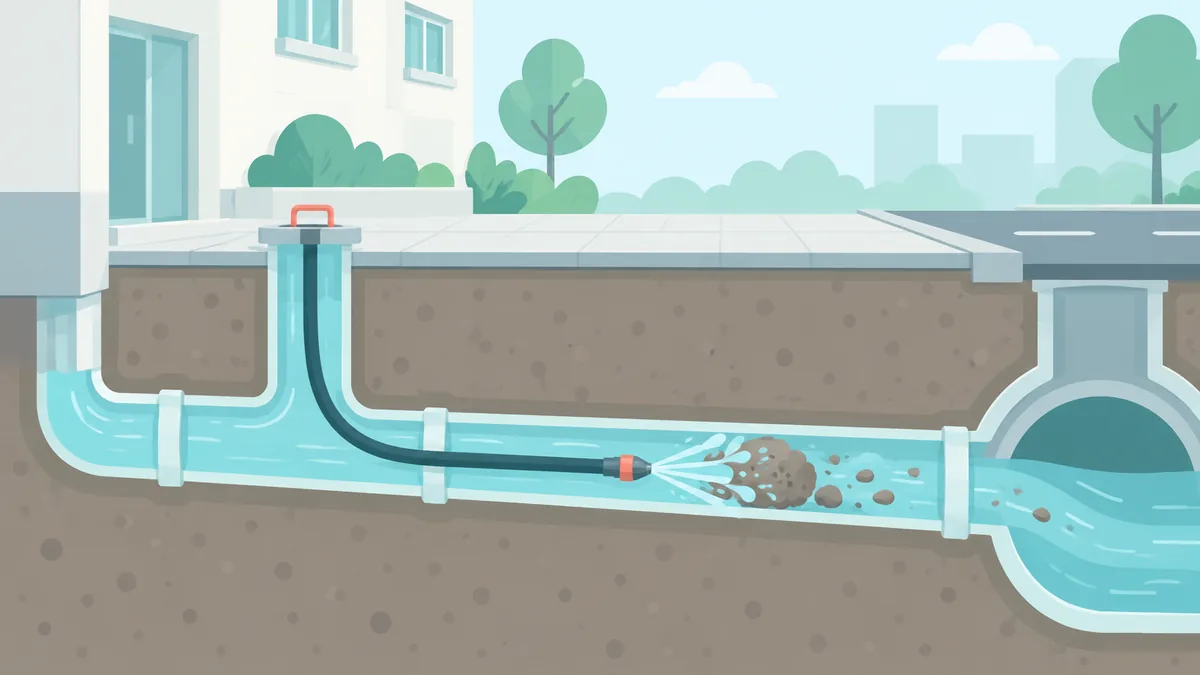
Clearing the main line, step by step
When we work on a building's line, our aim is not just to find and clear the blockage, but also to show you clearly whether the problem is in your line or in the network.
We open the manholes in order and follow the line
We open the covers of the building's manholes in order, from the inside outwards, and check the water levels. If a full manhole is followed by an empty one, the blockage is somewhere between the two. This simple check often narrows the blockage down to within a few metres. If you do not know where the manholes are, we help you find them too.
We use the camera to see the blockage and the pipe's condition
We send the camera into the section we have narrowed down and examine what the blockage is and whether the line is sound. Roots, grease masses, collapses or breaks are clearly visible on the screen. We watch the footage together with a management representative and make the decision together. This recording is also useful for the management.
We clear the line with a drain snake and pressurised water
For large-diameter main lines, we use a powerful motorised drain snake with cutting heads, which break up roots and hardened waste. We then wash the pipe wall from end to end with high-pressure water jetting, pushing the loosened waste on towards the street connection. If needed, we repeat the process several times.
We check all the way to the street connection
Once the line is clear, we ask for water to be run from all floors of the building and watch the flow at the last manhole. We pass the camera through once more to confirm the line is clear all the way to the network connection. If there is a break or collapse, we explain the line renewal options to you. That way the management knows what it is facing.
What to do in the building until the team arrives
- Tell all residents to keep water use to a minimum and not to run washing machines or dishwashers.
- Close the lids of the toilets on the ground floor and in the basement, and put a weight on top of the floor drains to limit the water coming back.
- Have a caretaker or manager who knows where the building's manholes are ready to meet the team.
- If you also see overflow from the manhole in the street, report it to İSKİ separately and take a photo of the manhole.
Pictures from the field
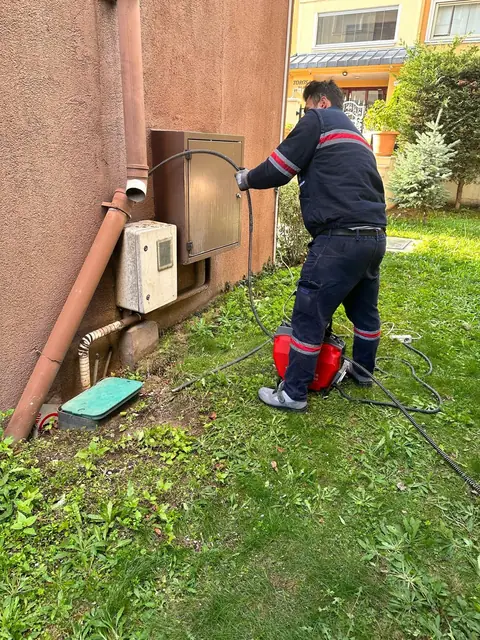
Working on the drain line outside the building with a drain snake machine 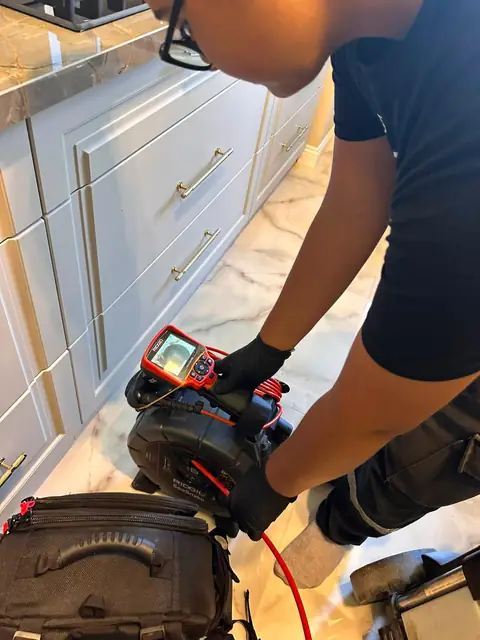
Checking the kitchen drain line with a drain camera 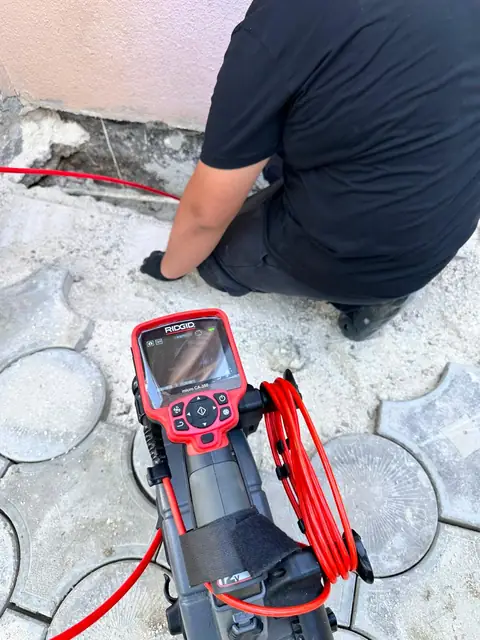
CCTV line check through a manhole in a paved area
Sewer Line Unclogging by district
We provide this service in all 39 districts of Istanbul. Choose your district.
Frequently asked questions
Who do you contact when the sewer is blocked?
If the blockage is in the building's own line, the building management calls a drain unclogging team. If it is in the network in the street, you contact İSKİ. To tell which it is, look at the building's last manhole. If this manhole is empty and the street manhole is full, the problem is in the network. If the manhole is full, the clearing work falls to the building. If needed, we make this distinction together with you on site.
Can a sewer blockage be cleared without breaking anything?
Yes, the great majority of sewer blockages are cleared without breaking anything, using the manholes and cleanout access points. The motorised drain snake and pressurised water enter the line through these points. Breaking is needed only if the pipe itself has collapsed or broken up, and in that case we first show you the camera footage. That way the building entrance and garden stay as they are.
What should the management do when an apartment building's sewer is blocked?
The management should first tell residents to cut down on water use, then call the team along with a caretaker who can show the building's manholes. Collecting which floors and which drains are having problems makes it easier to find the blockage. When the job is done, the camera footage gives the management a clear record of the line's condition. If this information is ready when the team arrives, the work goes much faster.
Why won't the smell from the sewer go away?
A sewer smell that does not go away usually comes from waste water sitting in the main line or from gas leaking through a broken pipe. Dried-out traps and manhole covers that do not seal well make the smell worse. Clearing the line and checking it with a camera is the most reliable way to find the source of the smell. Once the source of the problem is found, the smell goes away for good.
How often should the main line be cleaned?
In a residential building with no blockages, having the line checked by camera at regular intervals is enough. In restaurants, hotels and office blocks with busy kitchens, grease builds up quickly, so cleaning is needed more often. Based on the condition of the line, we suggest a maintenance interval that suits you. This way, blockages are prevented before residents notice them.
Our other services
No-Dig Drain Unclogging
We locate the blockage with a camera, then clear it with a drain snake and pressurised water. Your tiles stay where they are.
See detailsToilet Unclogging
From an overflowing toilet to the building's shared stack, we clear the toilet drain.
See detailsWashbasin Unclogging
Whether the blockage is in the trap or in the line inside the wall, we clear it cleanly.
See detailsKitchen Sink Unclogging
We jet the whole kitchen drain line with high-pressure water to remove built-up grease and starch.
See detailsCommercial Kitchen Drain Clearing
In restaurant and cafe kitchens, we clear the floor drain, grease trap and shared line without interrupting service.
See detailsShower and Bathtub Drain Unclogging
We clear the hair and soap that build up in floor drains, shower channels and bathtub drains.
See detailsBalcony Drain Unclogging
We clear balcony drains clogged with leaves, soil and sand before the rain arrives.
See detailsDrain Unclogging
We work out which drain is blocked, then clear the line in your home or workplace.
See detailsBlocked Drain Clearing
Is the blockage in the trap, the shared stack or the building outlet? We find it and show you the cause so it doesn't come back.
See detailsPVC Drain Pipe Unclogging
We clear PVC drain pipes without breaking anything, using heads that won't damage them.
See detailsPipe Unclogging
PVC, cast iron, galvanised or concrete pipe: we clear the blocked pipe with a head suited to its material.
See detailsCCTV Drain Unclogging
We look inside the pipe together on a screen and clear the blockage exactly where it is.
See detailsManhole Unclogging
We clear the inlet and outlet lines of an overflowing manhole and get the flow moving again.
See detailsChannel Drain Unclogging
We use high-pressure water to clear garden lines, ramp and car park grates, and storm drains.
See detailsSewer Cleaning
We regularly clean out sludge, grease and root build-up with high-pressure water jetting.
See detailsSewer Camera Inspection
We find cracks, collapses and root intrusion with a CCTV drain camera and show you the footage.
See detailsSewer Line Renewal
We locate the damaged section with a camera and replace only the part that needs it.
See detailsBackflow Valve Installation
We keep water that comes back up from the street in heavy rain out of your basement and ground floor.
See detailsPVC Drain Pipe Replacement
We replace PVC drain pipes that are cracked, leaking or laid with the wrong fall.
See detailsVacuum Truck Service
24/7 pumping with combination and mini vacuum trucks for septic tanks, manholes, grease traps and flooded basements.
See detailsSeptic Tank Pumping
We empty full or overflowing septic tanks by vacuum and take the waste to an authorised disposal point.
See detailsSeptic Tank Cleaning
We clean the sludge at the bottom, the crust on the walls and the inlet and outlet pipes with high-pressure water.
See detailsCombi Vacuum Jetting Truck
One truck jets the line clean and vacuums out the sludge, for blocked main lines and full manholes.
See detailsMini Vacuum Truck
Our small truck gets into narrow streets, steep hills, courtyards and low garage entrances.
See detailsCar Park Vacuum Truck
We pump out an enclosed car park flooded after rain and clear the grate and ramp channels.
See detailsVacuum Truck Hire
We assign an operator-driven vacuum truck to construction sites, factories and housing complexes for scheduled or regular work.
See detailsPrivate Vacuum Truck Service
A vacuum truck for your own property that comes on your schedule, with no waiting in a queue.
See detailsVacuum Truck Company
A vacuum truck company that asks about the job over the phone, picks the right truck and transports the waste according to the rules.
See detailsLet us clear your building's main line
For your building, site or business, call 0212 923 66 85 or write to us on WhatsApp. We follow the line manhole by manhole, find the blockage with a camera and clear it without breaking anything. We show your management the condition of the line on video.