
Istanbul Vacuum Truck Hire
Vacuum truck hire means reserving a vehicle with a vacuum pump and a sealed tank, together with its operator, for the days you choose or at regular intervals. This is different from a one-off emergency call-out: the job is planned in advance, and the vehicle and crew are chosen to suit your site. At Cantley we arrange these scheduled pump-outs for building sites, factories, housing complexes, business centres and event venues in all 39 districts of Istanbul.

With planned work, the first question is scope: which waste is to be removed, how many points will be worked on, and whether the job is a single visit or a recurring one. The same site may need a septic tank, rainwater in a basement and the waste tank of a construction site emptied by different methods. We talk this through by phone or on site and decide together which vehicle and which frequency suit you.
The scope of a planned job depends on the amount and type of waste, how easy access is, the distance to the disposal point and whether the pumping will repeat. In the following sections we explain what needs to be settled for a scheduled pump-out and how these decisions work out on site.
Situations that call for scheduled pumping
Not every vacuum truck call is an emergency. In the situations listed here, planning the job in advance works in your favour and keeps the site running in order.
Building sites and foundation pits
Rainwater collecting on a construction site, muddy water filling the foundation pit and site toilet waste all need regular pumping while the building goes up. Water build-up changes as the excavation gets deeper, so the most practical approach is to set the pumping calendar around the construction stages.
Factory and workshop tanks
In production facilities, part of the liquid waste left after the process, or an oily waste tank, has to be emptied at set intervals. We settle which waste goes to which facility together with your company's own procedures.
Events and open-air venues
At festivals, fairs, wedding venues and camps, chemical toilets and waste tanks fill up quickly over the course of the event. Setting the pumping frequency in advance according to the event length and daily crowds keeps the area from overflowing.
Housing complexes and apartment blocks
In sites with several blocks, shared septic tanks and shared manhole lines need regular maintenance. If management ties certain periods of the year to a pumping calendar, overflows at the door and smells spreading across the garden can be avoided.
Shopping centres and office buildings
Car park manholes, grease traps and basement drainage lines should be checked at set intervals because of heavy use. For building management, fixing this maintenance to a set day reduces the disruption that shop and office tenants experience.
Restaurants and food-producing businesses
A grease trap fills at the pace of the kitchen and quickly nears capacity in busy periods. Planning the pumping on a weekly or monthly basis keeps grease from escaping into the main line and straining the building's sewer.
How is a vacuum truck hire arrangement set up?
The foundation of a planned arrangement is being clear about what the job is. When we talk by phone or on site, we look at three questions: what the waste is, how often it builds up and how close the vehicle can get to the site. Whether the waste is liquid, sludgy or oily determines both the vehicle and the disposal point.
The vehicle is chosen according to the scale of the job. On a large building site or a site with long access roads, a standard vacuum truck is the right choice, while in a narrow housing complex or at a low car park entrance a mini vacuum truck is more suitable. On blocked lines that need pressurised water, a combination truck can jet and pump in the same visit. We explain clearly which vehicle we chose and why.
Access is the issue that affects the plan most. If the road the vehicle can use, the route of the hose and the location of the well or tank to be emptied are settled beforehand, the crew finishes the job on the first visit. If the hose will pass through shared areas, informing management and staff in advance is part of the plan.
Pumping frequency depends on how heavily the facility is used. A weekly or monthly programme, or one that runs only for the length of an event, is built around the real use of the site. On the first visit we observe how quickly the tank or well fills, and we update our recommendation based on that.
Where the waste is taken must be discussed openly in every planned job. Collected waste is carried to authorised discharge points and licensed disposal facilities, and is never emptied by the roadside or into a storm drain grate. Oily waste goes to a facility suited to its type. We recommend talking this through with us before the plan is finalised.
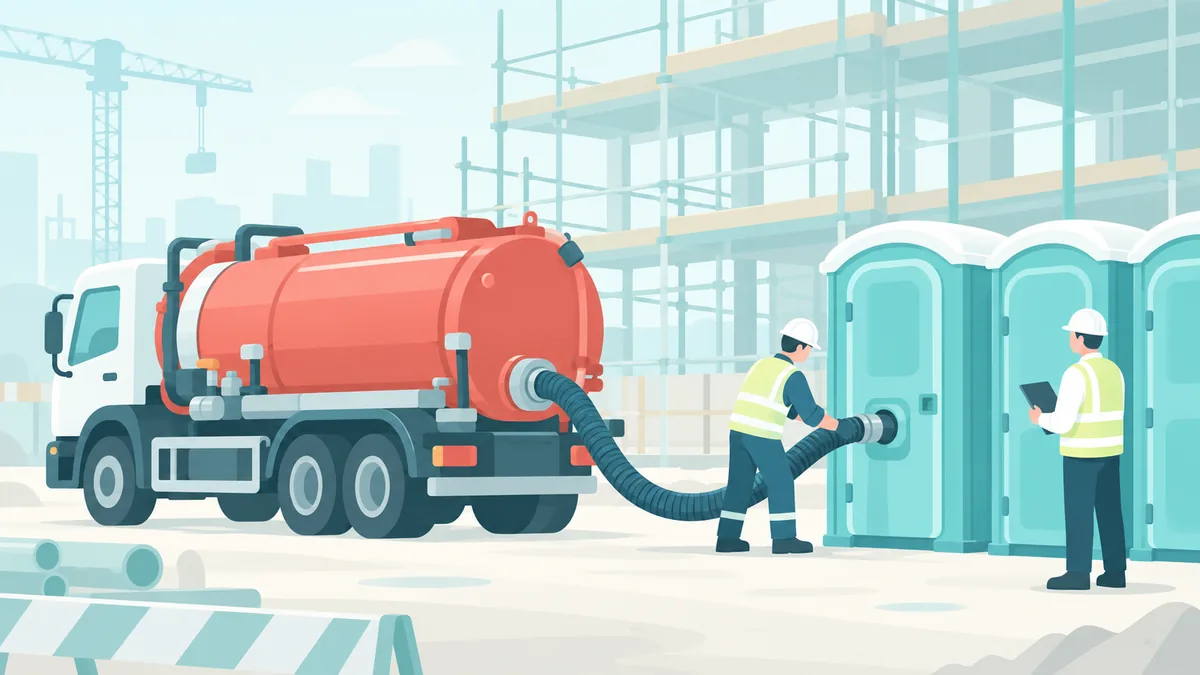
How does a scheduled vacuum truck job proceed?
Our aim is for each visit to hold fewer surprises than the one before. In most jobs the steps run in the following order.
We define the scope together
We talk through the waste to be removed, the frequency of the job, access and disposal by phone or on WhatsApp. A photo of the site and a short description of the location make it much easier for us to choose the right vehicle.
We see the site in person
If needed, the crew walks the site before work starts and marks the cover, the hose route and the spot where the vehicle will park. This preliminary visit stops the plan for the first day from changing on site.
We reserve the vehicle and the day
We set aside the vehicle and the crew for the day we agreed on. If the schedule is going to change, we tell you in advance so that your site preparation is not disrupted.
We pump, and jet if needed
The waste inside the tank or well is removed by vacuum. If sludge has built up on the line or the tank wall, it is jetted with the combination truck and the loosened waste is collected through the same hose.
We take the waste to an authorised point
The collected waste leaves your address in a sealed tank and is taken to an authorised discharge point or a licensed disposal facility. If you wish, we will tell you which facility it went to.
We leave the site clean and review the calendar
We wash the areas the hose passed through, close the cover and check the emptied tank or well together with you. For the next pumping, we go over the calendar again based on what we observed.
Preparing before the crew arrives
- Clear the road and parking area where the vehicle will stand, and move any materials blocking the gate or the garden entrance.
- Discuss pedestrian movement along the hose route and the use of shared areas with management or the site supervisor beforehand.
- Mark the location of the cover, tank or well. Do not try to lift heavy covers on your own.
- Let staff on site and neighbours know the vehicle is coming, and keep children and pets away from the work area.
- If a well or manhole is open, do not go near its edge. Toxic gas can build up in closed pits, so cordon off the area and wait for the crew.
- If an event or production is under way, tell the crew beforehand whether the facility in use can be emptied at that moment.
Pictures from the field
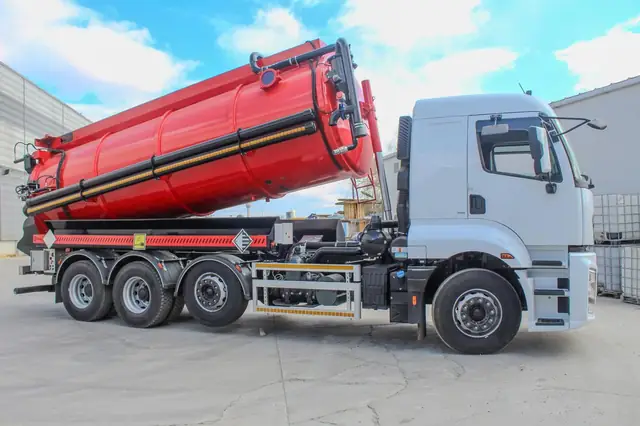
Red vacuum truck and its tank 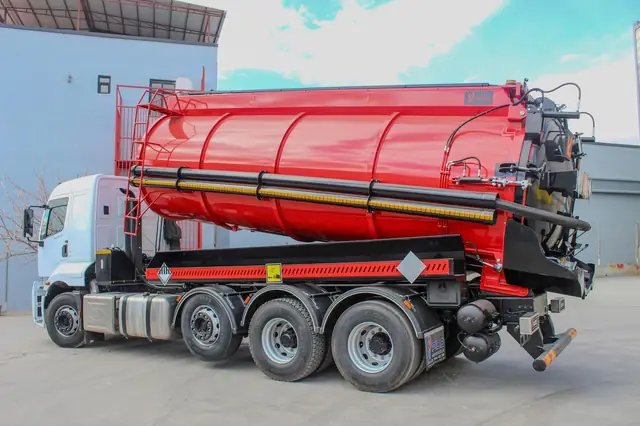
Red combination jetting and vacuum truck 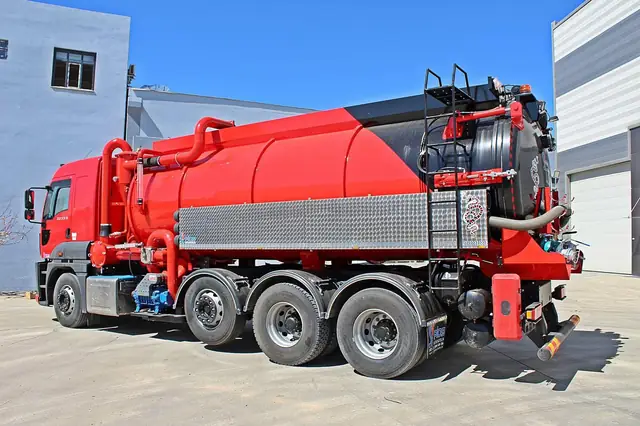
Side view of the red combination jetting and vacuum truck
Vacuum Truck Hire by district
We provide this service in all 39 districts of Istanbul. Choose your district.
Frequently asked questions
What is the difference between vacuum truck hire and an emergency vacuum truck?
With vacuum truck hire the job is planned in advance and the vehicle is reserved for the days you choose, while with an emergency vacuum truck the crew responds immediately to an overflow or blockage. Because scope, frequency and access are discussed beforehand in planned work, there are fewer unexpected situations on site.
Can I hire a vacuum truck for a building site?
Yes, we can plan regular pumping for rainwater, pit water and site toilet waste collecting on a building site. We set the pumping frequency together by discussing what stage the construction is at and where the water builds up.
Can I call a vacuum truck to an event venue?
Yes, we can arrange scheduled pumping for waste tanks at open-air events such as festivals, fairs, wedding venues and camps. If you share the event length and the number of facilities in use beforehand, we set the emptying interval accordingly.
How often should the vacuum truck come?
Frequency depends on how fast the waste builds up and on the size of the well or tank, so instead of giving a general interval we see the site and make a recommendation. In periods of heavy use, pumping needs to happen more often, before overflow begins.
Do you provide a regular vacuum truck service for site management?
Yes, we prepare a regular pumping plan for housing complex and apartment management for septic tanks, shared manholes and car park manholes. The plan includes the pumping dates and scope for each period, and it can be reviewed again according to management's needs.
Where does the waste go with vacuum truck hire?
Collected waste is not emptied by the roadside or into a storm drain grate. It is taken to an authorised discharge point and a licensed disposal facility. Oily waste also goes to a facility suited to its type, and when you ask, we tell you which facility it went to.
Can a hired vacuum truck get into a narrow street or a low car park?
Yes, a mini vacuum truck can be used in narrow streets and in car parks with low entrances. If the large vehicle cannot get in, we position it at the nearest suitable point and run the hose to the cover. For this, it is enough to know the width of the street and the height of the entrance.
What determines the scope of scheduled pumping?
The scope is determined by the amount and type of waste, how easy access is, the distance to the disposal point, the type of vehicle and the pumping frequency. Once these are settled, we explain the scope of the job to you clearly in writing.
Our other services
No-Dig Drain Unclogging
We locate the blockage with a camera, then clear it with a drain snake and pressurised water. Your tiles stay where they are.
See detailsToilet Unclogging
From an overflowing toilet to the building's shared stack, we clear the toilet drain.
See detailsWashbasin Unclogging
Whether the blockage is in the trap or in the line inside the wall, we clear it cleanly.
See detailsKitchen Sink Unclogging
We jet the whole kitchen drain line with high-pressure water to remove built-up grease and starch.
See detailsCommercial Kitchen Drain Clearing
In restaurant and cafe kitchens, we clear the floor drain, grease trap and shared line without interrupting service.
See detailsShower and Bathtub Drain Unclogging
We clear the hair and soap that build up in floor drains, shower channels and bathtub drains.
See detailsBalcony Drain Unclogging
We clear balcony drains clogged with leaves, soil and sand before the rain arrives.
See detailsDrain Unclogging
We work out which drain is blocked, then clear the line in your home or workplace.
See detailsBlocked Drain Clearing
Is the blockage in the trap, the shared stack or the building outlet? We find it and show you the cause so it doesn't come back.
See detailsPVC Drain Pipe Unclogging
We clear PVC drain pipes without breaking anything, using heads that won't damage them.
See detailsPipe Unclogging
PVC, cast iron, galvanised or concrete pipe: we clear the blocked pipe with a head suited to its material.
See detailsCCTV Drain Unclogging
We look inside the pipe together on a screen and clear the blockage exactly where it is.
See detailsManhole Unclogging
We clear the inlet and outlet lines of an overflowing manhole and get the flow moving again.
See detailsSewer Line Unclogging
We clear the building's main sewer line all the way to the street connection.
See detailsChannel Drain Unclogging
We use high-pressure water to clear garden lines, ramp and car park grates, and storm drains.
See detailsSewer Cleaning
We regularly clean out sludge, grease and root build-up with high-pressure water jetting.
See detailsSewer Camera Inspection
We find cracks, collapses and root intrusion with a CCTV drain camera and show you the footage.
See detailsSewer Line Renewal
We locate the damaged section with a camera and replace only the part that needs it.
See detailsBackflow Valve Installation
We keep water that comes back up from the street in heavy rain out of your basement and ground floor.
See detailsPVC Drain Pipe Replacement
We replace PVC drain pipes that are cracked, leaking or laid with the wrong fall.
See detailsVacuum Truck Service
24/7 pumping with combination and mini vacuum trucks for septic tanks, manholes, grease traps and flooded basements.
See detailsSeptic Tank Pumping
We empty full or overflowing septic tanks by vacuum and take the waste to an authorised disposal point.
See detailsSeptic Tank Cleaning
We clean the sludge at the bottom, the crust on the walls and the inlet and outlet pipes with high-pressure water.
See detailsCombi Vacuum Jetting Truck
One truck jets the line clean and vacuums out the sludge, for blocked main lines and full manholes.
See detailsMini Vacuum Truck
Our small truck gets into narrow streets, steep hills, courtyards and low garage entrances.
See detailsCar Park Vacuum Truck
We pump out an enclosed car park flooded after rain and clear the grate and ramp channels.
See detailsPrivate Vacuum Truck Service
A vacuum truck for your own property that comes on your schedule, with no waiting in a queue.
See detailsVacuum Truck Company
A vacuum truck company that asks about the job over the phone, picks the right truck and transports the waste according to the rules.
See detailsLet's work out your plan together
You can discuss a vacuum truck hire plan for your building site, factory, housing complex or event venue by calling 0212 923 66 85. You can also write to us on WhatsApp and share the scope of the job. We will listen and recommend the vehicle and pumping frequency that suit your job.