Published: 17 October 2026
In short
- Wet wipes, pads and cat litter do not break down in water. Whatever the packaging says, they belong in the bin.
- A cistern that sends too little water, or one clogged with limescale, makes blockages more frequent even with normal use.
- If the symptom shows up in the flats below yours more than in your own, the cause is usually the building's shared stack.
- If every drain in the building slows down at the same time, there may be roots or a collapse in the line outside the building.
We have grouped the nine causes into three groups and added, for each one, how to recognise it and what you can do to stop it coming back. Clearing a blockage step by step is a separate subject and is covered in our guides. The point here is to understand why the same problem keeps coming back.
Blockages caused by what goes into the toilet
Toilet paper is made to separate into fibres when it meets water. Most other paper and fabric products flushed down the toilet do not have this property, and they catch in the toilet bend, in the connection inside the wall or at the first turn of the stack. The first three causes belong to this group, and they account for a large share of blockages in homes.
- Wet wipes: They are reinforced so the fabric does not tear, so they stay in one piece in water for a long time. The sign is water that drains slowly at first and then, a few weeks later, stops completely. As a precaution, keep a bin with a lid next to the toilet.
- Pads, nappies and cotton pads: They soak up water and swell, closing the bend like a plug. Often the water will not go down at all after a single use, and a plunger does not work. Keep a separate bin with a bag in the bathroom for these items.
- Cat litter: Clumping litter hardens when wet and builds up in layers at the bottom of the pipe. Even if only a small amount goes down, the blockage comes a little sooner each time. Put litter in the bin in a tied bag, not in the toilet.
Causes from the cistern and the porcelain
A blockage can happen even when nothing wrong has been flushed. The force that carries waste through the bend is the volume and speed of the water released from the cistern in one go. When that force weakens, or the passage narrows, even a normal amount of paper stops halfway and waits for the next use.
- A cistern that sends too little water: Cisterns set low to save water, with a float that sits too low, or with a water bottle placed inside, do not send enough water to sweep the bend. The sign is bits of paper left in the bowl after flushing. Have the internal fittings checked and bring the water level up to the mark inside the cistern.
- Limescale build-up: Hard water gradually narrows the water holes under the rim and the inner surface of the bend. The sign is water running into the bowl weakly and unevenly, and a white or yellowish crust under the rim. Brush under the rim regularly and soften the crust with vinegar.
- Too much paper at once: With thick, multi-ply paper, the wad jams in the middle of the bend. The blockage comes suddenly and can usually be cleared easily with a plunger. For long visits, flushing once partway through removes this problem.
Causes inside the wall and the building
The last three causes are not in the toilet itself but in the pipes the waste water travels through. Nothing done at home gives a lasting result with these, because the narrowing is somewhere a plunger and a hand-fed wire cannot reach. The symptoms also are not usually limited to a single toilet.
- Oil and food waste poured into the toilet: Frying oil or soup leftovers pass through the toilet easily, but in a cold pipe the fat solidifies and glues wipes, paper and other waste to itself. The sign is a blockage that returns every few months and gets harder to clear each time. Let the oil cool and collect it in a closed bottle.
- The building's shared stack: In the vertical main pipe, waste from the upper floors gradually forms a narrowing. The sign is water coming up through the toilet or floor drain of the flats below, and a gurgling noise when water is drained in another flat. The stack needs to be inspected with a camera and cleaned at regular intervals, by decision of the building management.
- Roots or a collapse in the line outside the building: Roots of garden trees enter old pipes at the joints, and worn concrete pipes can collapse over time. The sign is every drain in the building slowing down together and the water in the manhole standing higher than usual. The line needs to be inspected with a camera and, if necessary, renewed with no-dig methods.
Which one is blocking your toilet?
To work out the cause, look at when and how the blockage came. A sudden, one-off blockage is most often caused by something that went into the bowl. A flow that gets worse from day to day suggests limescale, grease or a weak cistern. If the same symptom shows up at your neighbours' too, the place to look is the building's shared plumbing.
Another clue is how often it happens. A blockage that occurs once after a long gap is usually an accident. If it repeats every month, there is an unresolved narrowing behind it, and each clearing only eases the problem for a while. At that point it is wiser to stop fighting with the plunger and look at the cause.
What to have checked when blockages keep coming back?
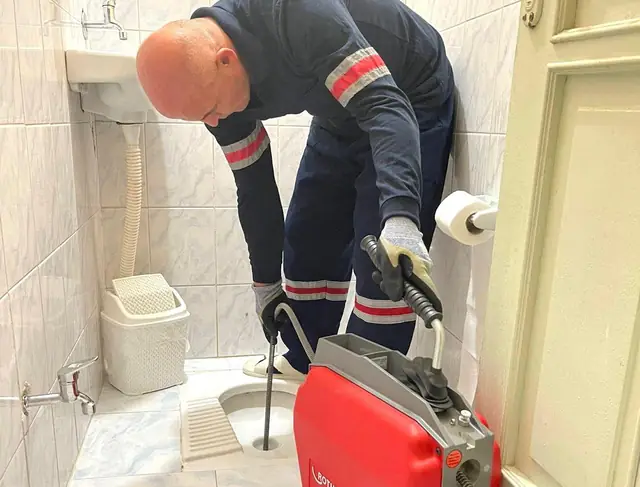
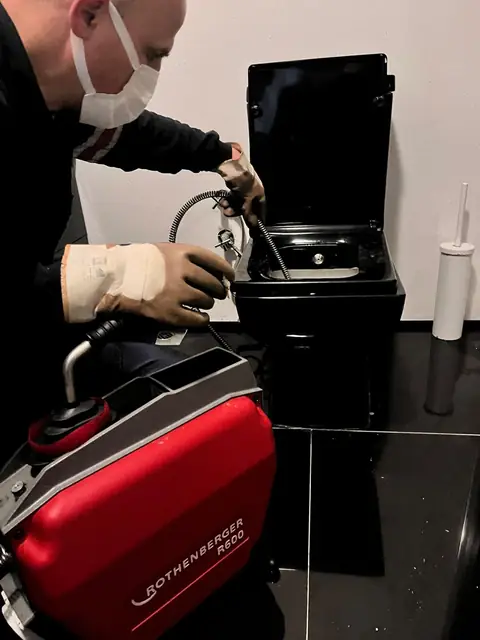
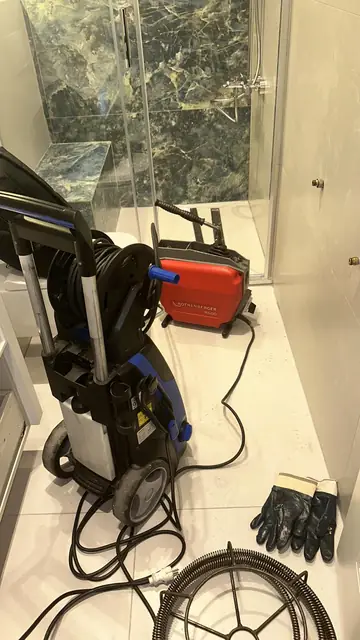
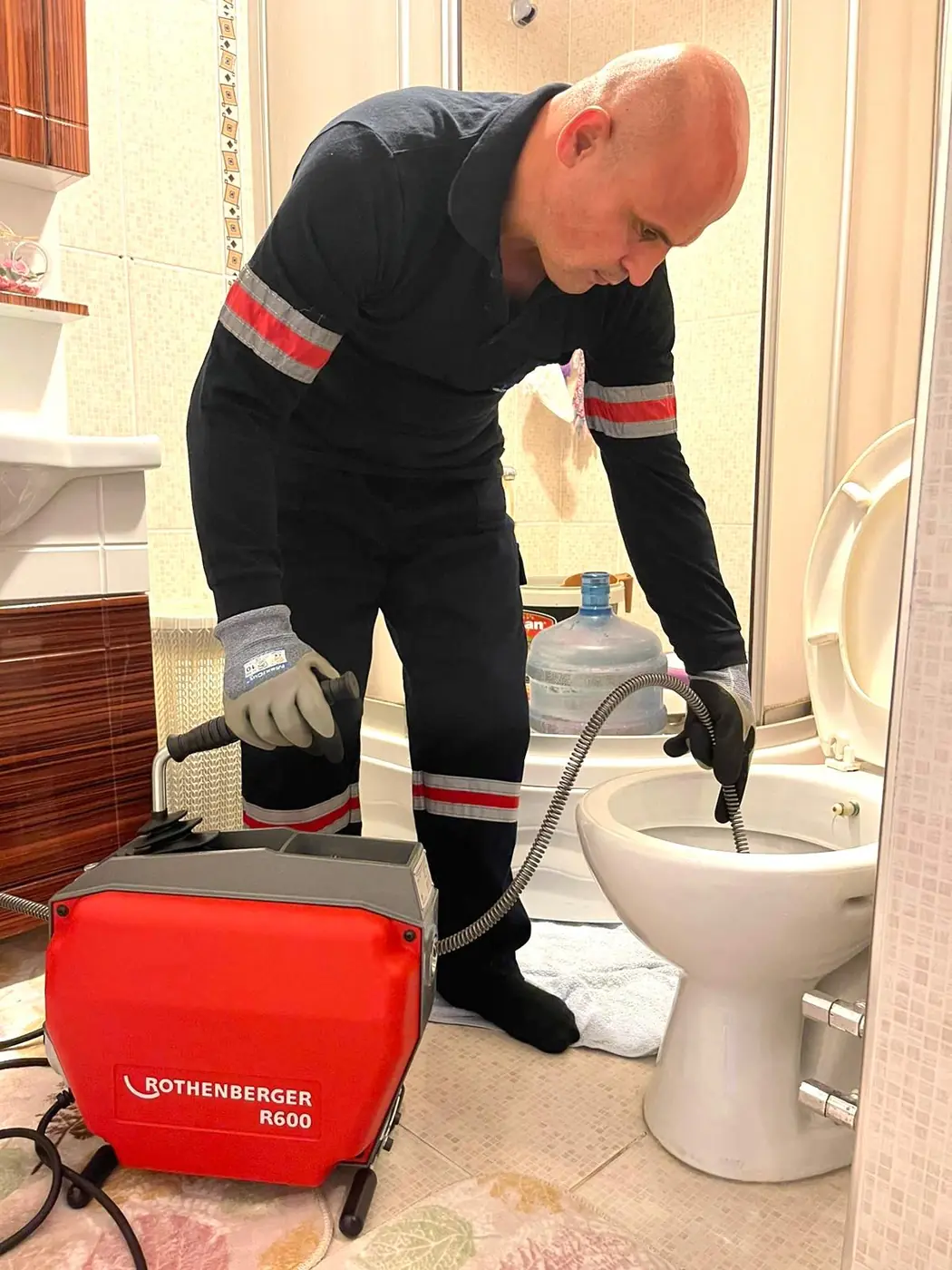
If the same toilet blocks often, clearing it with a plunger each time does not remove the cause. In such cases the Cantley team first puts a camera into the pipe and shows you on screen whether the narrowing is at the toilet connection, in the horizontal pipe or in the stack. Then, depending on the cause, the line is cleaned with a motorised drain snake or high-pressure water jetting. If there are roots or a collapse, renewing the line is discussed.
Having footage also shortens the argument in a building about who is responsible for what. When the narrowing is seen in the stack, it is a matter for the management. When it is in the flat's own connection, it is for the flat owner. This check, done without breaking tiles, also makes the problem clear before you start a bathroom renovation.