Published: 17 October 2026
In short
- When a squat toilet won't drain, the blockage is usually in the trap just below the floor-level pan, buried in the screed.
- Sand, hair and cloth fibres that arrive with floor-washing water build up in this trap faster than in a toilet bowl.
- A plunger only works if it fully covers the wide drain opening; a small sink plunger lets air escape.
- Because the pan is set into the floor, removing it means breaking tiles, so the unclogging is done through the opening itself.
- If water comes up from the bathroom floor drain or from the flat below, the problem is not the pan but the building's shared line.
Another feature of a squat toilet is that it has no overflow margin. In a toilet bowl the water rises in the bowl and waits there for a while; in a squat toilet the water sits at floor level, and after a few buckets it spreads across the bathroom. So the first rule is this: while it is not draining, do not flush again and again, and do not keep pouring water in with a jug.
What is under the squat pan?
A squat toilet is installed by setting a porcelain or enamel pan into the screed. The opening of the pan connects directly to a trap. On some models the trap is cast into the body of the pan; on others it is a separate bend placed under the pan and covered with concrete. In both cases a little water always stays in the trap, and this water stops the smell from the drain pipe rising into the bathroom.
The trouble is that there is no way to look at this bend from outside. A plumber can remove a toilet bowl and look underneath, but taking out a squat pan means breaking the floor and laying it again. That is why, with squat toilet blockages, all the work is done through the opening itself.
Why won't it drain: the five most common causes
In most homes a squat toilet is used like a floor drain for the bathroom or balcony. Dirty bucket water, mop water, even water from washing rugs gets poured into this opening. That is why types of blockage that are rare in a toilet bowl turn up often in a squat toilet.
- Floor cloth or mop piece: a cloth slipping away while a bucket is emptied is the story we hear most with squat toilets. The cloth opens out in the trap and blocks the passage almost completely.
- Sand, soil and mortar: sand in the water poured after washing a balcony or terrace settles at the bottom of the bend. Mortar or tile adhesive left over from renovation hardens there.
- Bags and packaging: small bags thrown in instead of the bin do not break up in water, and they stick tighter to the bend as water passes.
- Wet wipes, pads and nappies: the wide opening swallows these easily, but the bend below does not let them through.
- Hair, soap and limescale build-up: in old pans that have taken floor water for years, the inner surface of the bend thickens, the passage slowly narrows and water drains more slowly than before.
Why does a plunger work differently on a squat toilet?
A plunger seals the opening and pushes the water back and forth to move the blockage; for that, the rubber must cover the opening completely and there must be water under it. The opening of a squat pan is wider than a toilet's and often not round but oval or slightly angular. The small plunger you use in the kitchen does not cover it; air escapes at the edges and the force never reaches the blockage.
For a squat toilet, choose a plunger with a wide mouth, a flat base and thick rubber. If there is no water in the opening, add a bucket of lukewarm water, press the rubber over the opening and push and pull, slowly at first, then with firmer strokes. Because the splashing happens at floor level, laying old towels around and wearing gloves makes the job easier. If the water does not start to go down after a few tries, the blockage is most likely a cloth or a bag, and the plunger will only press it a little further in.
What you can safely try at home, and what to avoid
The enamel surface of a squat pan and the bend beneath it cannot take rough treatment. Whatever you try, the aim should be to pull out or soften the blockage, not to force it further down.
- If you can see the end of a cloth or bag at the mouth of the opening, pull it slowly with a gloved hand; if you tug suddenly it will tear and the rest stays inside.
- Pouring hot tap water with a little washing-up liquid can help with soap and grime build-up; boiling water can crack the enamel and soften plastic connections, so do not use it.
- A flexible rubber-coated wire can be fed along the curve of the bend; do not force it, and when you meet resistance, turn it to try to catch the blockage.
- Do not push in a wire coat hanger, a skewer or an iron rod; they scratch the enamel and push the cloth deeper.
- Do not pour in chemical drain opener or hydrochloric acid. A chemical that splashes up from an opening at floor level reaches your feet and eyes, and it is also dangerous for the team who work on it afterwards. If you have poured something in, be sure to say so.
Is the problem in the pan or in the building's line?
Squat toilets are usually found in older buildings, on ground floors and garden floors. These floors are the closest point to the building's shared line and may be where everything coming down from the upper floors stops first. So it would not be right to always blame the trap under the pan when the water won't drain.
If you notice any of the signs below, the blockage has passed the trap and reached the main drain pipe inside the home or the building's shared stack. In that case any work through the opening is wasted, and the line must be cleared from the stack's cleaning cover or from the manhole in the garden.
- Water rises from the bathroom floor drain or the shower.
- When someone upstairs uses water, the water level in the squat toilet rises.
- Gurgling and a sewer smell come from the opening.
- The same blockage keeps coming back at short intervals.
- There is water or dampness around the manhole cover in the garden.
How is it cleared without breaking the pan?
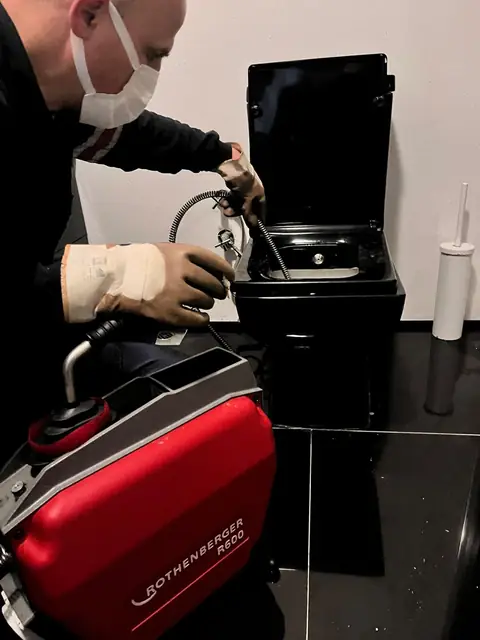
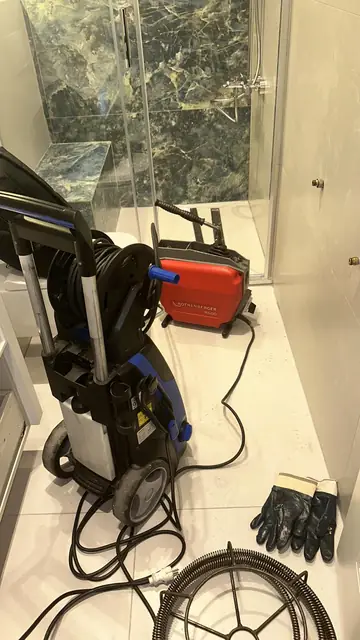
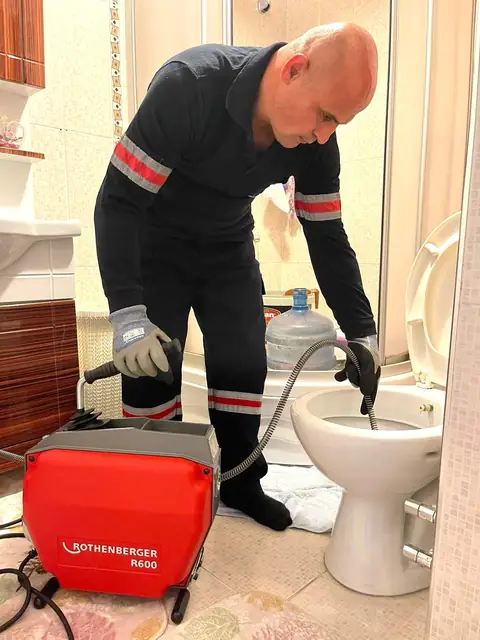
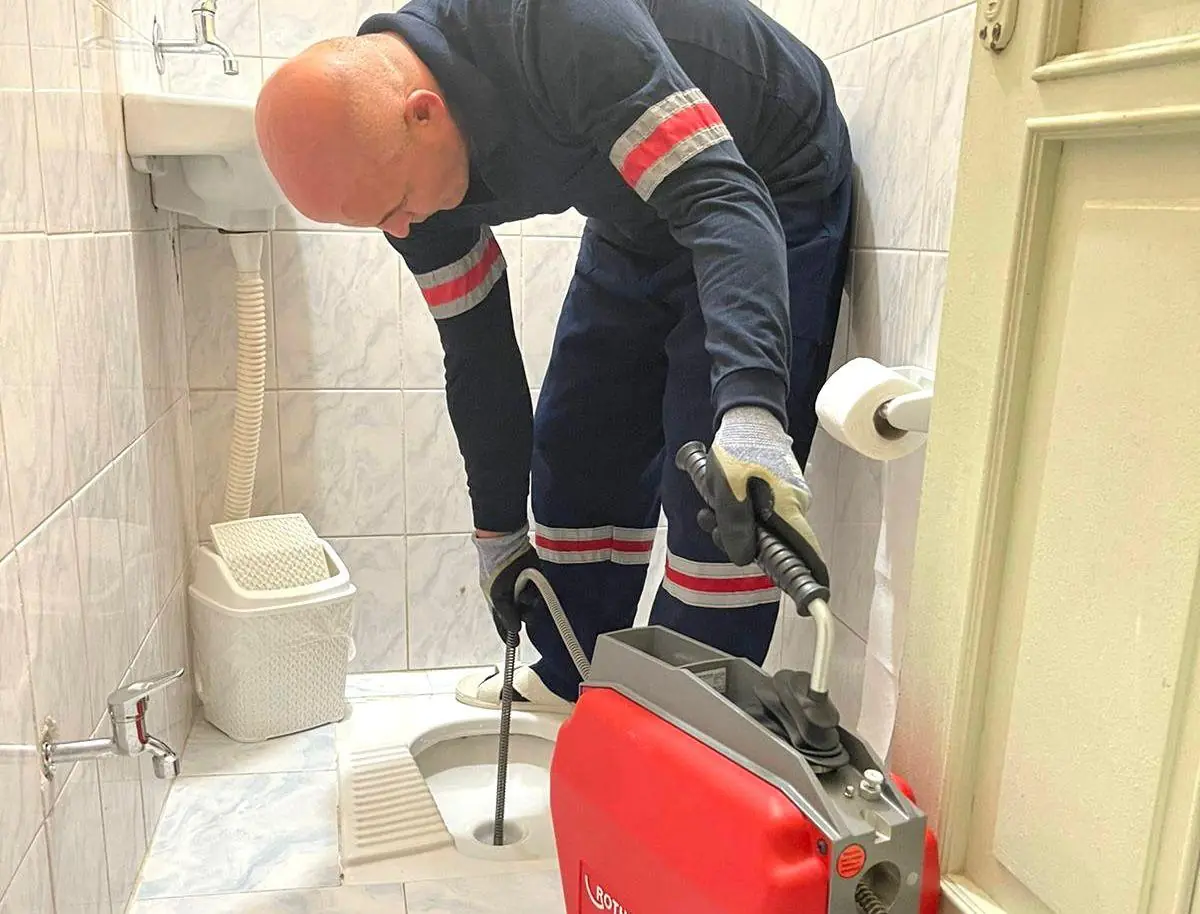
When the methods you tried at home have not worked, the team first puts a camera into the opening and the nearest cleaning point to see whether the blockage is in the trap or further along. A cloth or bag in the trap is caught with a motorised drain snake fitted with a retrieving head and pulled out. Settled material such as sand and mortar is moved with high-pressure water and carried along the line. This way the squat pan stays in place and the floor is not touched.
The camera sometimes also shows that the old bend has cracked or has developed a reverse slope over the years. In that case, what needs to be done is explained to you along with the footage, and the decision is yours. If the blockages keep coming from the pan itself, many families think about converting the squat toilet to a Western toilet later; that decision should not be mixed up with the unclogging job.