Published: 17 October 2026
In short
- If only your toilet is blocked and the other drains in the flat run normally, the problem is most likely inside your flat.
- If water rises in your toilet or floor drain when you have not used any water, the problem is in the shared stack.
- Asking the neighbours above and below you on the same vertical line is the fastest way to find where the blockage is.
- For a stack blockage, tell management in writing which floors are affected and when it started.
- How the cost is shared is usually settled in conversation between residents and management; camera footage makes that conversation easier.
Many people treat a blocked toilet as their own problem straight away and quietly start plunging. But if you live on the ground floor and the problem is in the stack, every flush from the floors above shows up in your bathroom. However much you plunge, the water comes back while you are still working.
Find the blockage with five checks
Do these checks in order and note down the result of each one. The notes will help later when you explain the situation to neighbours or the building manager.
- Turn on the bathroom washbasin tap: if the basin drains normally and the toilet is blocked, the problem is in the toilet itself or in the connection right behind it.
- Run the shower for a short time: if water backs up from the shower drain, the blockage is in the pipe where the bathroom drains join, and it may still be inside the flat.
- If the kitchen drain is also slow, the problem is close to the flat's main drain pipe, at the point where it joins the shared stack.
- Stop using water for a while and watch the toilet: if the water rises or gurgles on its own, water from the floors above cannot get down.
- Ask a neighbour on the same line: if the flats above you have no problem and water is also rising in the flat below, the blockage is in the lower part of the stack.
What does a blockage inside the flat look like?
A blockage inside the flat is usually limited to one point and starts with an event: a wet wipe flushed down the toilet, a toy a child dropped in, too much paper in one go. The water rises only when you flush and stays calm when you are not using it. The neighbours notice nothing.
In this case the problem is your flat's problem, and you do not need to wait for anyone to solve it. If you are a tenant, it is a good idea to tell your landlord, because repeated blockages are sometimes a sign of an old pipe or a connection that has lost its slope, and the landlord will want to know that too.
Signs that give away a stack blockage
A stack blockage does not start in one flat, it builds up in the whole building. Grease, wet wipes and paper pile up over the years at the bottom of the stack, at the bend where it turns into the horizontal line. The symptoms show first on the lowest floors and usually get worse at times when everyone uses water at once, such as morning and evening.
For someone living on the ground floor or garden level, the typical picture is this: dirty water appears in the toilet even though nobody has been in the bathroom, a smell comes from the floor drain, and sometimes water spills onto the bathroom floor. If this is what you are seeing, nothing you do inside your own flat will fix it for good.
What should you tell neighbours and management?
With a stack problem, what wastes the most time is missing information. If you can explain clearly what is happening when you call the manager, the work gets organised much faster. Approach neighbours with information rather than blame: it is rarely possible to know who blocked the stack, and focusing on that only slows things down.
Until the unclogging is done, ask the neighbours on the upper floors to cut back on the washing machine, dishwasher and showers. This small request can stop the flat below from flooding.
- Say when the symptom was first noticed and which drain it appeared in.
- Tell them which floors have symptoms and which do not.
- If water overflowed, take photos and share them with management.
- If you used chemicals yourself, say so; chemicals poured into the stack matter to the team that will work on it.
- If you know which flat or basement has the cleaning hatch, let them know.
How does shared stack work run in practice?
In most buildings, stack unclogging is organised by management or by a resident on the manager's behalf. When the team arrives at the building, the first decision is where to open the stack from. Each stack usually has a cleaning hatch. It is sometimes in the basement, sometimes in the bathroom of a ground-floor flat or behind a cupboard. The manhole in the garden is another access point. If the hatch is inside a flat, the resident of that flat needs to be at home and give permission, and talking about this beforehand makes the job much easier.
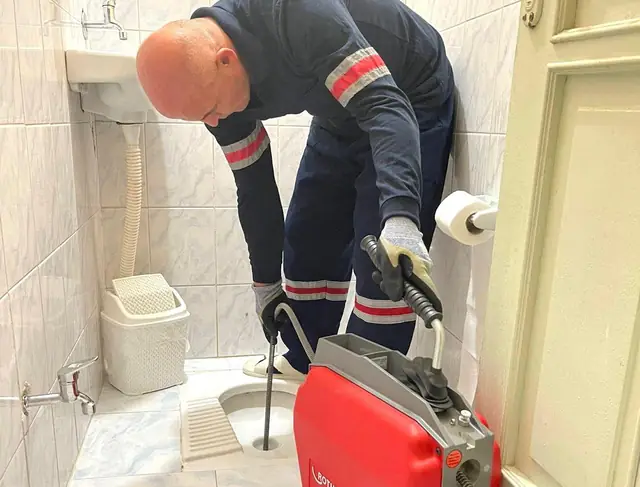
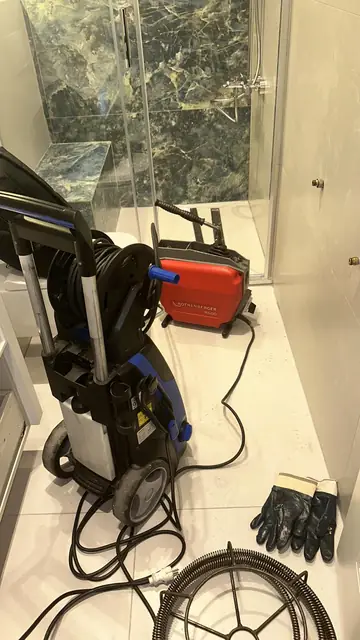
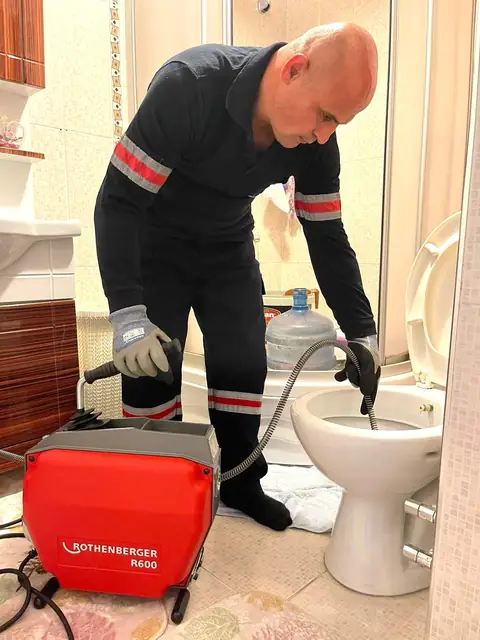
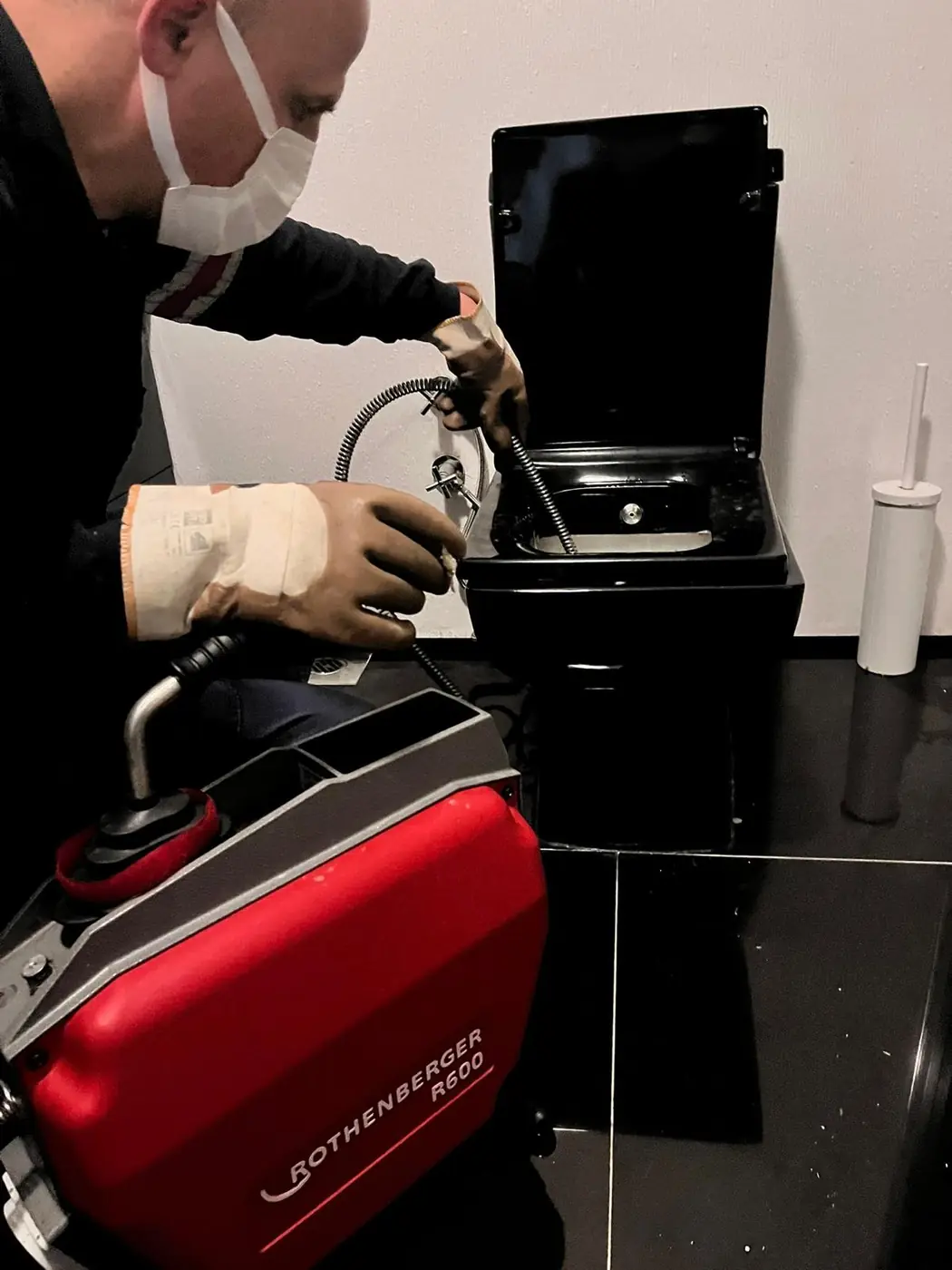
During the work, a camera is put into the stack to see at what level the blockage is and what it is made of. Then the blockage is broken up with a motorised drain snake or a robotic head, the stack is flushed with high-pressure water jetting and checked again with the camera. The recorded footage is passed on to management. This footage lets everyone see with their own eyes whether the blockage is in the shared line or in the connection of a single flat.
How do you talk about cost and responsibility?
The line between the shared stack and the plumbing inside a flat is also the starting point for the conversation about responsibility. In practice, this is mostly settled according to the building's own arrangements, its management plan and the agreement between residents. We do not give legal assessments, but showing the exact location of the blockage with camera footage removes most of the argument.
When stack blockages keep coming back, it helps if management makes an announcement to all residents: simple rules such as no wet wipes or sanitary pads in the toilet and no kitchen grease down the sink protect the whole building. Some buildings prefer to have the stack checked at regular intervals, and if the ground-floor flat often floods, fitting a backflow valve on that flat's connection can also be discussed.