Published: 17 October 2026
In short
- A correctly sized toilet plunger will often clear a toilet blocked by paper and soft waste.
- Hot water and washing-up liquid only help the plunger do its job. They have no effect on wet wipes or hard objects.
- Baking soda and vinegar is a mild cleaning mixture, not a blockage remover.
- A toilet auger with a rubber sleeve is the strongest option at home for blockages the plunger cannot shift.
- Chemical drain openers and wire coat hangers risk damaging the toilet, and their chances of clearing the blockage are low.
This comparison is not meant as a step-by-step how-to guide. For each method it answers three questions: which blockage it works on, where it stops working, and what the risk is. When you decide which method to use, guessing what the blockage is made of matters more than the method itself.
The toilet plunger: the first option, and often enough
A toilet plunger pushes water back and forth to loosen and break up the blockage. It is the home method with the best success rate on blockages made of toilet paper, organic waste and partly wet wipes. A toilet-type plunger with a long neck underneath is far more effective than a flat-rimmed sink plunger, because it seats in the outlet and does not let air escape.
Where the plunger stops working is hard objects. If something like a toothbrush, a shampoo cap or a toy has fallen in, the plunger can wedge it deeper into the bend. Sanitary pads, nappies and cat litter also rarely come out with a plunger. As for risk, the main danger is splashing if chemicals have already been poured into the toilet.
How well do hot water and washing-up liquid work?
Hot water and detergent make soft blockages of paper and faeces slippery and help them break apart. They rarely clear a blockage on their own. Their real benefit is softening the blockage before you plunge. Wet wipes, pads and plastic objects are not affected by detergent.
The risk lies in the water temperature. Hot water from the tap causes no problem. Boiling water, however, can crack the porcelain through sudden temperature change and can soften the seal where the toilet connects to the floor, as well as plastic fittings. Do not pour water from a kettle into the toilet.
Does baking soda and vinegar really unclog a drain?
Baking soda and vinegar fizz, which gives the impression that something powerful is happening. In fact the mixture is a mild cleaner. It can help a little with a thin layer of soap and grease in sink and shower drains. The typical blockages in a toilet, though, are a wad of paper, wipes or an object, and the foam does very little to them.
The risk is low, and it does not harm porcelain or pipes. The downside is that it wastes time: while people wait for the foam to work, the water in the bowl can rise towards the overflow level. If you have already used a chemical opener, do not pour vinegar on top. Mixing an acid with some chemicals can release dangerous gas.
The toilet auger: where the plunger falls short
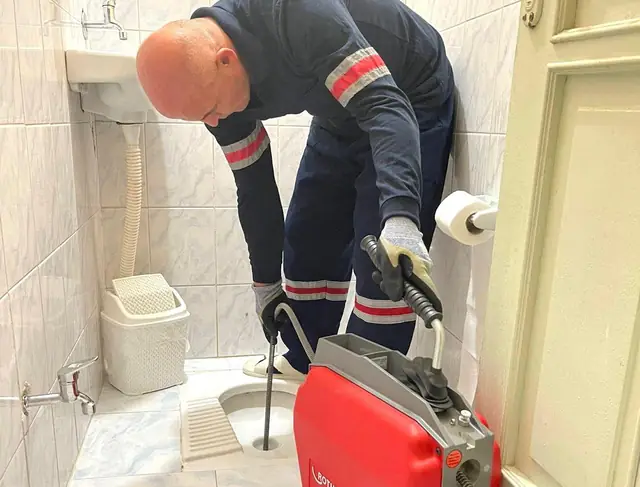
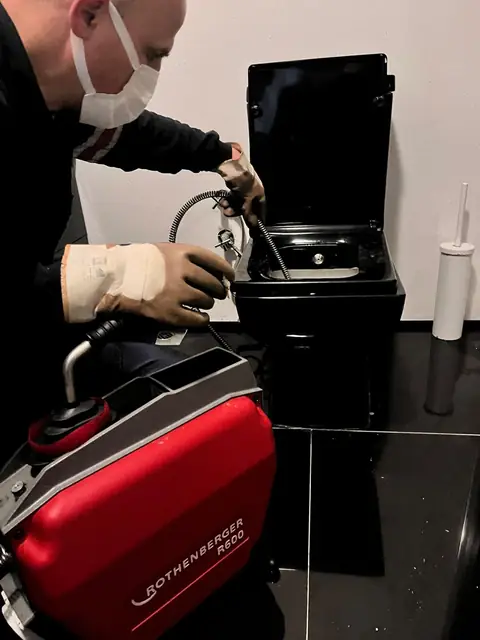
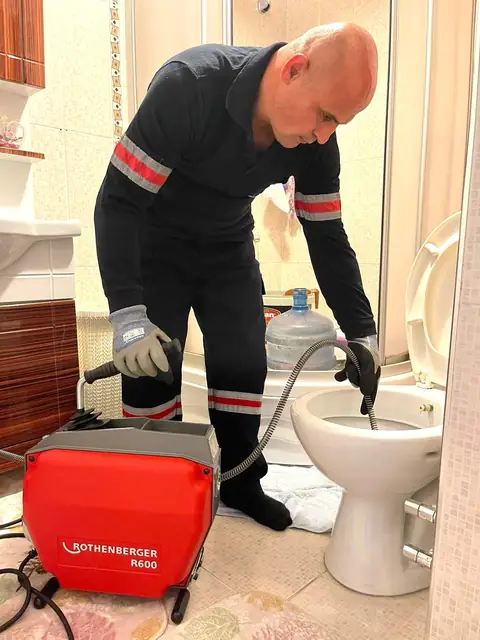
A toilet auger is a flexible wire with a rubber sleeve on its tip and body, turned by a handle. It follows the bend inside the toilet and screws its way into the blockage. On compacted masses of paper and wet wipes that a plunger cannot loosen, and even on some small objects, it is the most effective tool you can have at home.
Where it stops working is beyond the toilet itself. If the blockage has moved past the porcelain into the wall connection or the building's shared stack, the length of a household auger is not enough. As for risk, a wire without a sleeve, or one turned by force, scratches the inner surface of the porcelain. When you feel resistance, turning gently rather than forcing is the only way to protect the porcelain.
Chemical openers and wire coat hangers: why we do not recommend them
Drain openers and similar chemicals are made to dissolve organic build-up such as hair and grease. In a toilet two problems arise. First, the water in the bowl dilutes the chemical and stops it reaching the blockage at full strength. Second, if the chemical does not clear the blockage, it sits in the bowl and every later attempt becomes dangerous: the plunger splashes it, the auger drips it onto you, and the team who come out have to take extra precautions. Hot chemicals also damage PVC fittings and seals. Mixing different products can release toxic gas.
The wire coat hanger is the method people reach for most often and the one that does the most damage. Hard metal scratches the glazed surface of the porcelain, and a scratched surface holds more dirt over time. The tip of a hanger cannot follow the bend, and it usually packs the blockage in tighter. If you have poured chemicals into the toilet, be sure to tell whoever you call.
Side by side: which method for which blockage?
Once you have a guess about what the blockage is made of, deciding gets easier. Often the clue is what went into the toilet just before it blocked: with small children in the house, an object is more likely, while after guests a blockage is more likely to be too much paper or wipes. This summary ranks the methods by type of blockage.
- Too much toilet paper: plunger first, and if needed soften with hot water and washing-up liquid, then plunge again.
- Wet wipes or kitchen roll: the plunger may be limited, and an auger with a rubber sleeve is more effective.
- Hard objects such as a toothbrush, a cap or a toy: do not use a plunger, try the auger carefully, and if that fails, removing the object is a job for a professional.
- Pads, nappies, cat litter: unlikely to come out with home methods.
- The toilet is clear but the bathroom floor drain is also backing up: no home method will work, the problem is in the line beyond the toilet.
- Limescale and slow drainage: baking soda or vinegar helps a little on the surface but will not open a narrow passage.