Published: 17 October 2026
In short
- Most bathtub blockages come from hair wrapped around the plug body and the cross bars beneath it.
- A click-clack plug is unscrewed by turning it while open, while a lever plug is pulled up out of the overflow cover.
- Before using a plunger, block the overflow hole with a wet cloth, otherwise the pressure escapes through it.
- If the bath and the sink share a pipe, water drained from one rises in the other; this shows the blockage is past the point where they join.
- If you have poured in a chemical drain opener, do not plunge and do not unscrew the plug with bare hands.
A bathtub has one more feature that other drains lack: the overflow channel. This small hole in the front wall can house the plug mechanism, and it also acts like an air path that lets the pressure from a plunger escape. Knowing your plug type and what the overflow does helps you finish the job quickly and cleanly.
Which plug mechanism does your bathtub have?
Bath plugs look alike from the outside, but they work differently inside and each one comes out in its own way. If the plug goes up and down when you press it, if the overflow cover has a lever or a turning knob, or if the stopper is attached by a chain, you already know your type.
- Click-clack plug: opens and closes as you press it, and its body is screwed into the drain opening.
- Lever or knob plug: the lever on the overflow cover raises and lowers the plug through a rod that runs down the channel.
- Chain stopper: a separate rubber stopper that sits in the drain opening, usually with a fixed grate underneath.
What will you find when you remove the plug?
Set the click-clack plug to the open position, hold the cover and turn it anticlockwise, and it lifts out. On some models the cover will not turn by hand; in that case, gripping the edge of the body under the cover with a dry cloth stops your hand from slipping. The first thing to come out from underneath is often a grey, slimy bundle of hair, longer than you expected.
With a lever plug, you first undo the screws on the overflow cover. Together with the cover, a bent rod comes up out of the channel, with a weight or a spring on its end. That rod and spring are very good at catching hair, and if you refit them without cleaning them the plug will not open fully and the water will still drain slowly.
A chain stopper is easier, but if the grate under the stopper is screwed down you need to remove that too. You can pull out the hair left behind the grate with a plastic toothed hair strip.
Why shouldn't you ignore the overflow channel?
The overflow channel is a separate path that carries water to the drain when the bath is overfilled, and it joins the main drain pipe under the bath. Because water does not pass through it all the time, soap and mould build up there unnoticed, and over time they cause a smell and narrow the flow at the junction.
As soon as you have removed a lever plug, you can reach into the channel with an old toothbrush. The cover seal is another part to check; a hardened seal can let water leak behind the bath when it is full.
While you clean the channel, do not rush when lowering the lever mechanism's rod back in. If the rod goes in at the wrong angle, the weight on its end will not seat properly in the plug body, and the bath will either never fill or will slowly leak water even in the closed position.
What should you watch for when using a plunger on a bath?
On a bathtub a plunger is almost useless unless the overflow hole is blocked. Each time you press, the plunger pushes water into the pipe, but if the overflow channel is open the pressure escapes up through it and never reaches the blockage. Pressing a wet cloth over the hole, or asking someone to cover it with their hand, changes the result.
- Take out the plug and leave the drain opening uncovered.
- Seal the overflow hole firmly with a wet, folded cloth.
- Leave enough warm water in the bath to cover the rubber cup of the plunger.
- Hold the plunger upright and work it with a steady push and pull motion, then lift it off suddenly on the last pull.
- If the water drains quickly, fill the bath once with warm water and let it empty to flush the line.
What if the bath and the sink are on the same line?
In many bathrooms the bath, the sink and the floor drain join in a single pipe under the floor and run to the shared stack. If the blockage is past the point where they join, then as you empty the bath you will see gurgling, bubbles and dirty water rising from the sink's drain hole or the floor drain.
With this symptom the flow will not improve however thoroughly you clean the bath's own plug, because the restriction is in the shared pipe. If you live on the lower floors and the water in the bath rises when a toilet is flushed, the problem is most likely in the building's shared stack, and it is right to inform the building management.
Where should you stop doing it yourself?
If you have cleaned the plug, brushed the overflow channel and used the plunger correctly, but the water still stands in the bath, the blockage is somewhere hand tools cannot reach. At this stage do not try to open up the area under the bath or break the bath panel; most of the pipework under a bath can be cleaned by reaching it through the drain opening and, where there is one, the side access hatch.
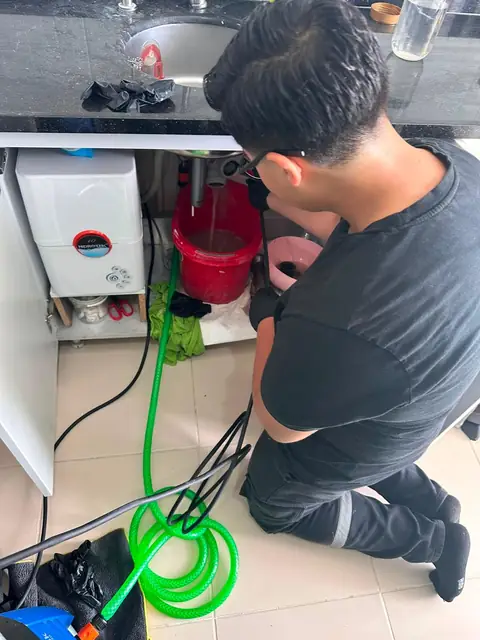
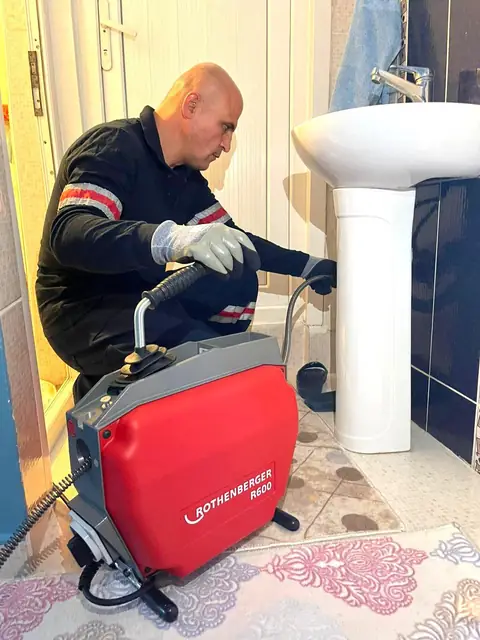
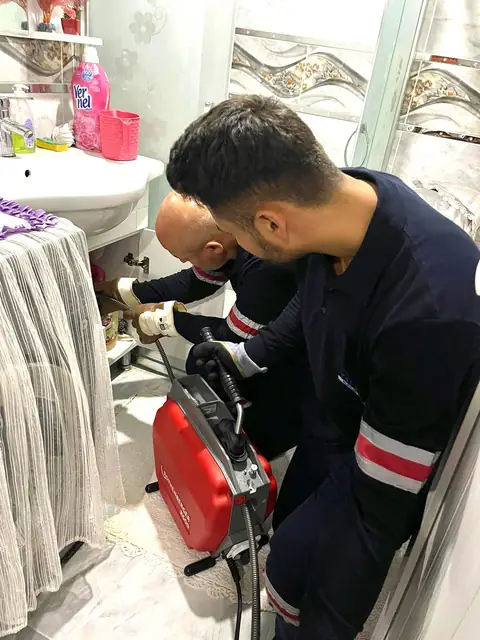
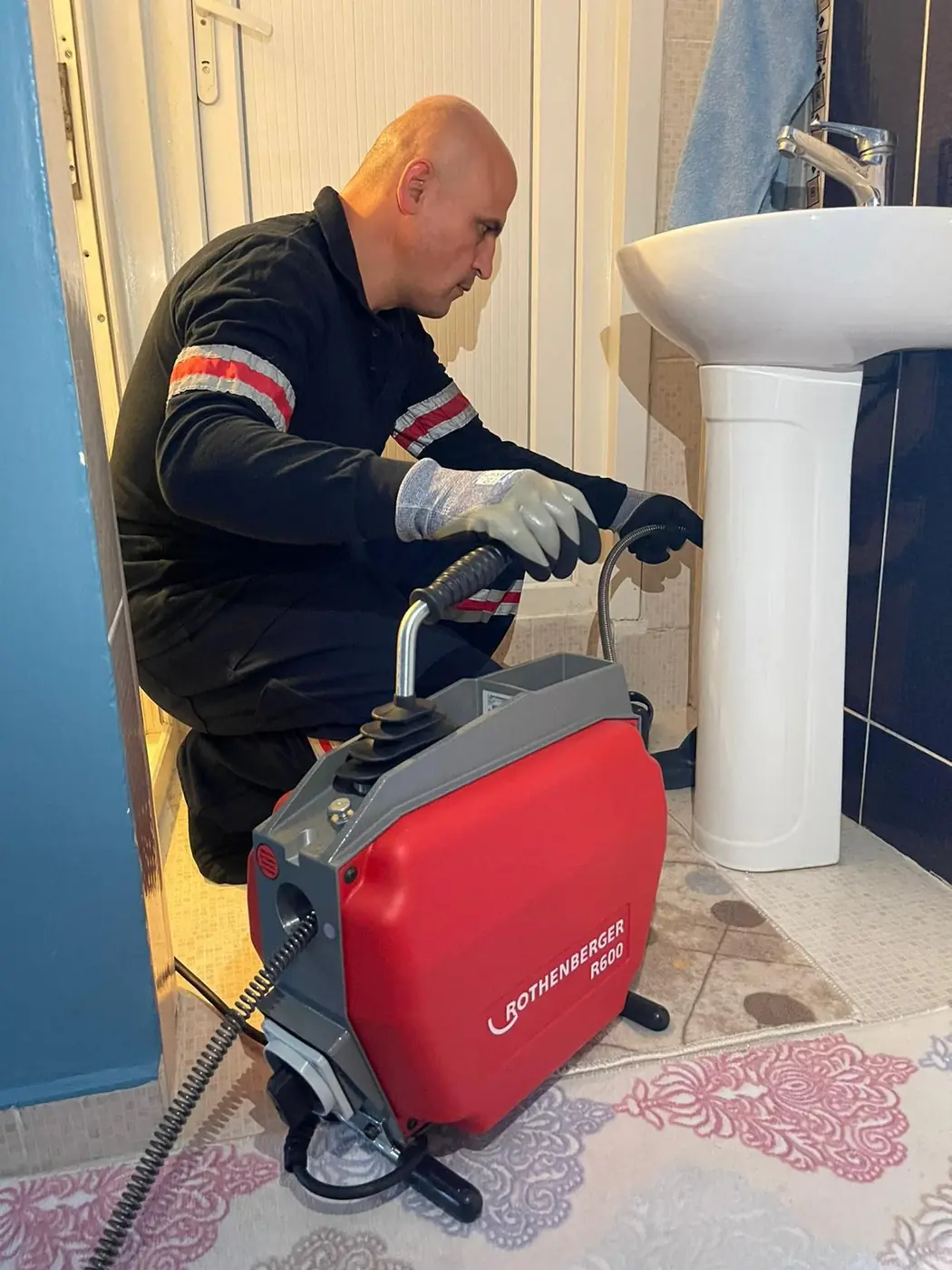
The Cantley team sends a camera in through the drain opening to show whether the blockage is in the trap, the junction elbow or the shared stack connection. Hair and soap build-up is cleared with a motorised drain snake, hardened deposits with high-pressure water jetting, and the bath is not moved from its place.
- A chemical drain opener has been poured into the drain and the water is still standing
- Water comes up from the sink or floor drain while you empty the bath
- The same bath blocks again at short intervals
- Damp is appearing behind the bath or on the ceiling of the flat below