Published: 17 October 2026
In short
- If your shower tray drains slowly, the first place to look is the odour-trap chamber directly under the cover.
- If the water waits above the drain, the problem is the drain. If it pools in the corners and never reaches the drain, the problem is the slope.
- In long shower channels, hair collects in a removable part under the grate and can be cleaned by hand.
- If a newly built shower is slow, pieces of grout, mortar or silicone may have got into the pipe.
- Removing hair once a week and rinsing the chamber once a month prevents most slow drainage in the first place.
The symptoms of these three situations look alike, but the solutions are very different. Identifying your shower's drain type first, then noticing where the water waits, will largely show you where the problem is before you call a technician.
Which drain type does your shower have?
Ready-made shower trays usually have a round cover with a low-profile trap underneath. Because the tray sits close to the floor, these traps are made short and the water seal inside is small. A small chamber narrows even with a little hair.
Tiled walk-in showers without a tray use either a square floor drain set into a corner or a long shower channel running along the wall. The visible part of a shower channel is a long grate; the actual odour-trap part sits under the grate, at the outlet at one end of the channel.
- Tray drain with a round cover: the cover lifts off by hand or by turning, and there is a plastic odour-trap cup underneath.
- Square floor drain: when the grate is lifted, you see the chamber inside and, if there is one, the odour-trap membrane.
- Long shower channel: once the grate and the cover plate under it are lifted, the fitted part at the outlet comes into view.
Where is the water waiting? Telling a blockage from a slope problem
The easiest test is to leave the shower running for a few minutes and watch how the water behaves. If it forms a small pool above the drain and goes down slowly from there, the drain has narrowed. If the water runs quickly towards the drain but stays as a thin layer in one corner of the shower, the problem should not be looked for inside the pipe.
In a tiled floor, the surface must be laid with a slight slope towards the drain. If the slope is insufficient or laid the wrong way round, water does not reach the drain, dries in the corners and over time darkens the grout lines. No unclogging work will fix this; the fix belongs to the floor work itself.
- Water rises over the drain and you hear a gurgling sound: the chamber or the pipe has narrowed.
- Water runs to the drain but a pool stays in the corner: the floor slope is insufficient.
- A marble you place on the floor rolls away from the drain, not towards it: the slope has most likely been reversed.
- Water rises in the shower drain when the sink or toilet is used: the blockage is in the shared line, further along.
Why do hair and soap build up so quickly?
Hair alone does not slow the water much. What turns it into a lasting plug is the greasy film left by soap, shampoo and conditioner. This film sticks to the chamber wall, every strand of hair that arrives catches on it, and within a few weeks the mouth of the chamber is covered by a felt-like mass. In homes where someone with long hair showers every day, this process is much faster.
The limescale left by Istanbul's hard water also plays a part. When soap residue mixes with limescale, it forms a grey, soap-like deposit that narrows the inner wall of the chamber. In shower channels, the same build-up can also be seen on the underside of the cover plate.
Where should you look if it started after renovation?
Slowness that begins shortly after a bathroom has been renovated is most often caused by construction debris. If grout filler, tile adhesive and mortar get into the drain during the work, they travel with the water to the bends of the pipe and harden there. Pieces of silicone catch in the chamber and act like a net that holds hair.
Another possibility is that the pipe under the tray has not been connected with enough fall. If the pipe was laid flat or almost flat so as not to raise the tray, the water runs slowly through that section and sediment builds up again quickly. Neither of these two situations can be solved at home; looking inside the pipe with a camera shows which one applies.
- If you see white, stone-hard pieces in the chamber, mortar or grout has got in.
- If the same slowness returns a few days after cleaning, the fall of the pipe may be insufficient.
- If the drain position was moved during the renovation, the new bends and the longer horizontal run make the slowness worse.
A cleaning routine you can follow at home
Most slow drainage in a shower can be prevented with small but regular maintenance. If the hair collected in the chamber is removed before it felts, the soap film has nowhere to cling. Lukewarm water and a brush are enough for this; boiling water should not be used, because it can soften the plastic chamber and the seals.
Baking soda and vinegar only affect a light film of soap and grease. They do not break down felted hair or a piece of mortar; for those, mechanical cleaning is needed first.
- Every week: lift the cover and remove the visible hair by hand or with a glove.
- Every month: take out the odour-trap cup, wash it with lukewarm water and an old toothbrush, and put it back in place.
- If you have a shower channel, lift the grate and the cover plate and rinse the channel underneath with lukewarm water.
- Pouring a bucket of lukewarm water into the tray after a shower reduces the thin soap film that sticks to the chamber.
- For users with long hair, placing a fine-holed hair catcher over the cover makes the job easier.
When should you leave it to a professional?
If the chamber is perfectly clean and the water still drains slowly, the narrowing is further along than the chamber. If the sink or toilet also show symptoms along with the shower, the problem is in the bathroom's shared pipe or in the building's shared stack. From this point on, forcing a drain snake through can break the chamber or push the blockage further in.
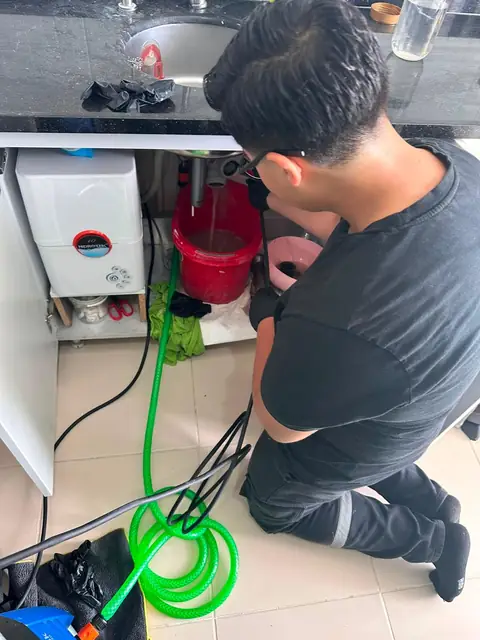
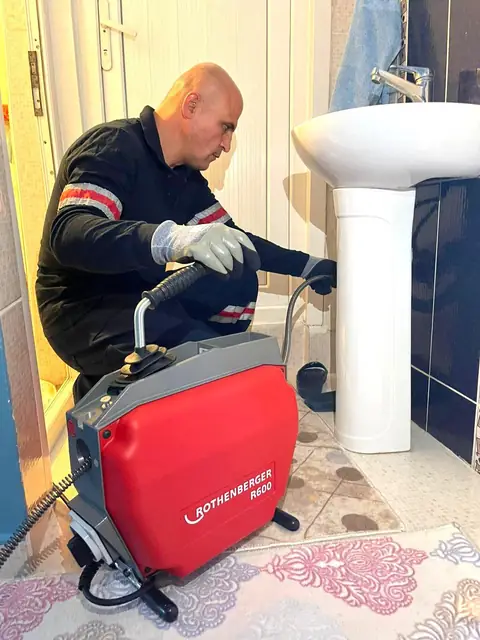
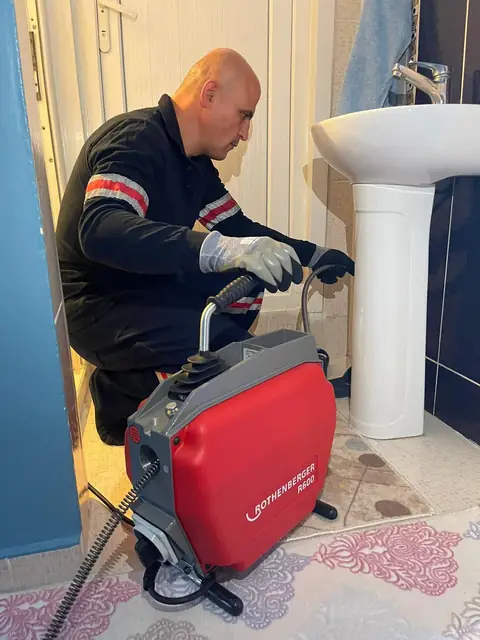
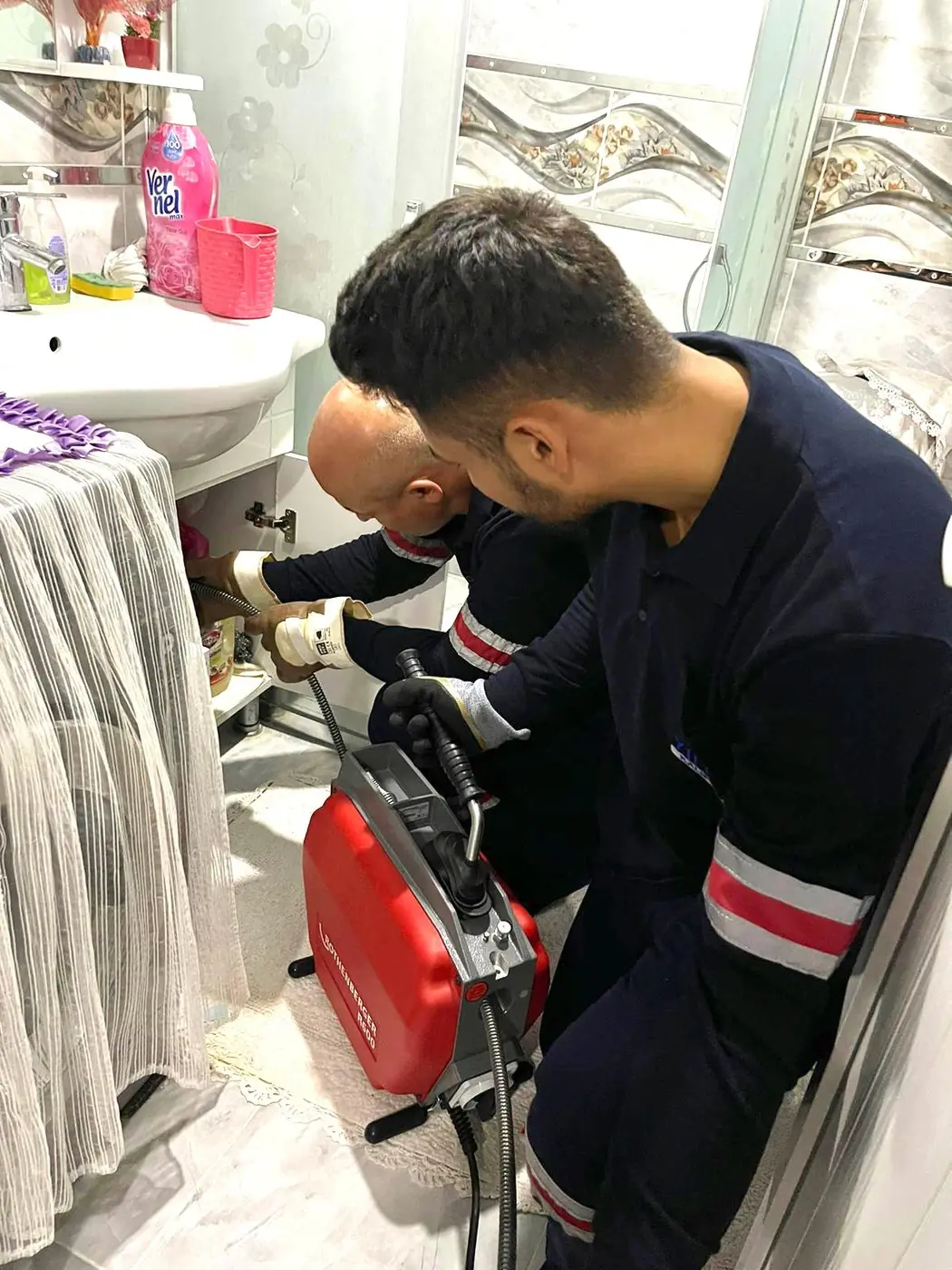
With a camera inspection, the location and type of the blockage can be seen, and then the inside of the pipe is cleaned with a motorised drain snake or high-pressure water jetting. With these methods, the shower is unclogged without breaking tiles.