Published: 17 October 2026
In short
- If the water has risen, do not flush a second time. Close the cistern valve.
- Water that rises and then drains slowly means a partial blockage. Water that does not drain at all means a full one.
- Gurgling in the shower or dirty water in the sink means the restriction is further along than the toilet.
- If water is also rising in the flats below, the problem is in the building's shared stack and management should be told straight away.
In every case the first step is the same: do not flush again and close the cistern valve. What comes next depends on the sign you see. Telling the signs apart helps you take the right step and also lets you describe the situation clearly to the technician.
What to do right away while the water is rising
After you flush, some water keeps running into the bowl while the cistern refills. If the water is close to the rim, cutting off that flow prevents an overflow, and a few small steps are enough.
- Take your hand off the button and do not press it again to see the result.
- Turn the cistern's isolation valve clockwise to close it. If the valve is stuck, lift the cistern lid and hold the float up by hand.
- If the water is near the rim, lay a towel on the floor and use a container to scoop some of the bowl water into a bucket.
- Do not use the other taps in the home, and stop the washing machine and dishwasher.
What does it mean if the water rises and drains slowly?
This picture shows a partial blockage in the toilet's bend or in the connection right behind it. Paper, wet wipes or limescale have narrowed the passage, so the water finds its way but slowly. It is usually an early stage of blockage, and if the other drains run normally, it can be cleared at home with a plunger used correctly.
This sign is easy to ignore because the toilet still seems to work. In fact, every use leaves a little more waste caught at the narrow point, and one day the water will not go down at all. If the water drains slower each time than the last, you have to accept that the problem will not go away on its own.
To guess the cause of a partial blockage, look at the last few days. If you have had guests, if the children have started using the bathroom on their own, or if someone at home is ill, paper and wipe use may have gone up. If there is no such change and the flow has been getting slower for weeks, limescale or grease built up on the pipe wall are the more likely causes.
How serious is it if the water does not drain at all?
If the water does not drain at all, the passage has closed completely, and how serious it is depends on whether the blockage is in the toilet or further along. If the sink, shower and kitchen drain normally, the problem is most likely inside the toilet itself and is still at a stage that can be solved at home.
If an object has recently fallen into the toilet, or something that swells, such as a sanitary pad or a nappy, has been flushed, it is better to ask for help than to work at it with a plunger, because this kind of waste wedges tighter the more it is pushed. If the water has not moved at all even after waiting a long time, stop using the toilet.
What do shower gurgling and water in the sink show?
The toilet is not a system on its own. The pipe behind it joins the other bathroom drains and connects to the building's shared stack. So when you flush, what happens elsewhere in the home tells you the location of the restriction better than what you see in the toilet.
- Gurgling from the shower drain or bath: The water leaving the toilet cannot move on and pushes air into the bathroom's shared line. The restriction is where the bathroom drains join or beyond it.
- Dirty water appears in the sink or shower drain: The pipe beyond the toilet has closed up, and the water is coming back out of the lowest outlet.
- The toilet bubbles by itself and the water level goes up and down: The stack's ventilation may be faulty or a narrowing may have started in the stack. It becomes more noticeable when water is used in another flat.
- All drains are slow, the kitchen included: The problem is in the home's main connection or in the line outside the building.
If the neighbours have signs too, look at the stack
If water rises in the toilets of the ground-floor or basement flats, and it gets worse as water is used on the upper floors, the building's main vertical pipe is blocked. Work done in a single flat does not fix this. As long as the upper floors keep using water, the flats below keep overflowing.
Tell the management or the caretaker straight away and ask the upper floors to use less water for a while. The stack is cleared by going in through its cleaning hatch or the manhole in the basement. If the ground floor is often affected and the shared line has no backflow valve, it is sensible to also discuss fitting one after the unclogging is done.
What not to do with this sign
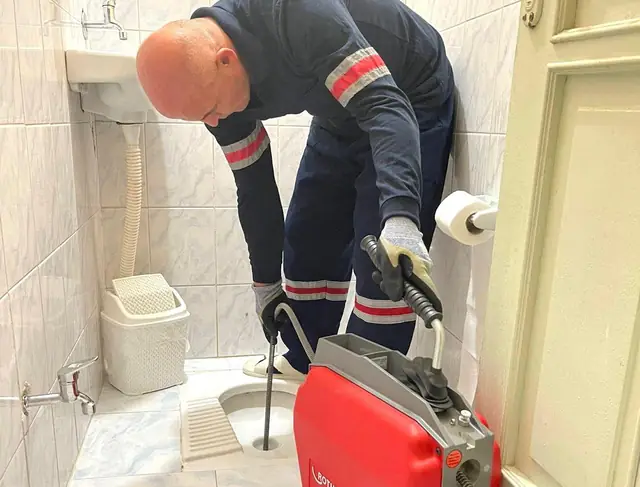
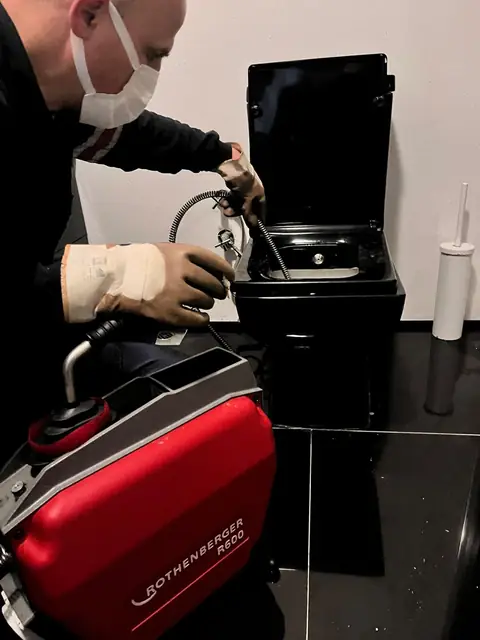
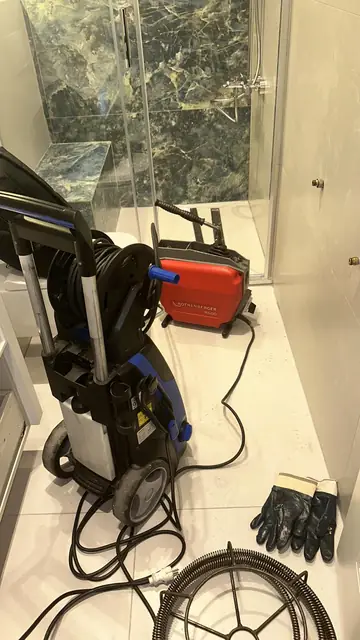
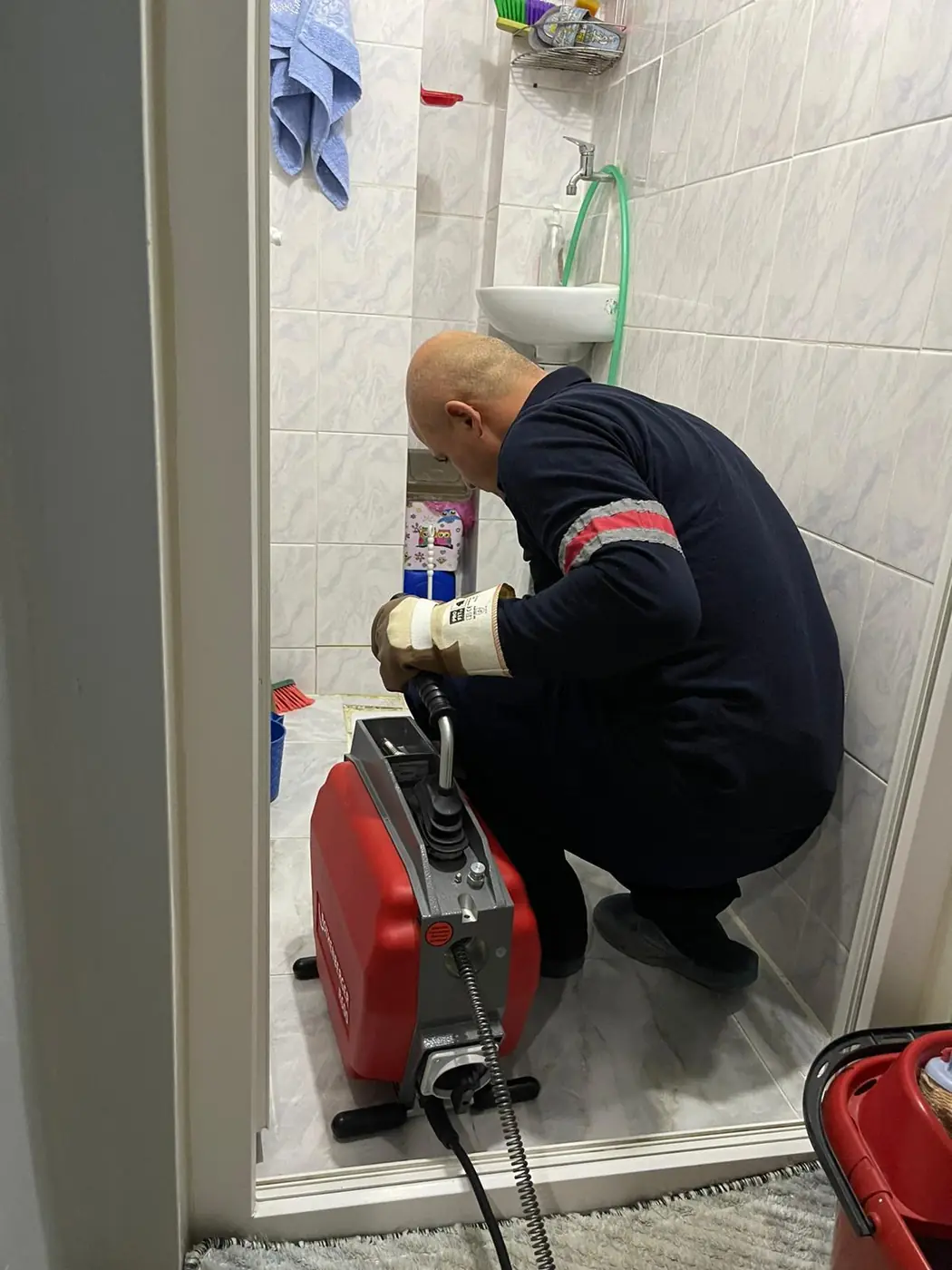
If the water only rises in the toilet and drains freely after the plunger, the problem has most likely been solved. If the same sign comes back soon, shows up in more than one drain, or comes with a sewer smell, the Cantley team inspects the line with a camera, shows you where the restriction is and clears it with a drain snake or pressurised water. Until then, avoid the following.
- Flushing again to check whether the water has drained.
- Pouring boiling water: porcelain can crack and plastic connections soften. If needed, warm tap water is enough.
- Pouring chemical drain opener into the toilet: it gets diluted in the bowl water, does not clear the blockage and makes plunging dangerous afterwards.
- Plunging while water is coming up from other drains: the pressure pushes dirty water out of the shower or sink.
- Running the washing machine or dishwasher while the neighbour downstairs is reporting an overflow.