Published: 17 October 2026
In short
- If something has fallen in, do not flush and close the cistern valve straight away.
- If you can see the object, grip it with a glove and lift it straight up. Never push it further in.
- With a hard object, a plunger and a wire drive it deeper into the bend.
- If you cannot see the object but the water drains, the danger has not passed. A blockage can appear days later.
- Once the plumber has located it with a camera, they can usually remove the object without lifting the toilet.
In homes with children the usual culprits are toys, toothbrushes and small caps. For adults it is phones, glasses, combs and toilet freshener holders. Whichever it is, the order of steps is the same. What decides the next move is how hard the object is, how big it is and how far it has travelled.
What to do first, in order
In a panic, the first reaction is often to press the flush. Instead, work through the steps below in order. Each one keeps the object where it is and keeps you safe.
- Do not flush. Leave a note on the bathroom door so that others in the home do not flush either.
- Close the isolation valve that feeds the cistern. With a concealed cistern, remove the flush plate and look behind it.
- Put on a waterproof glove that reaches your elbow. If you have an open cut on your hand, do not attempt this.
- If the phone fell in while charging, unplug it from the socket before you touch the cable.
- Shine a torch into the toilet outlet and decide whether the object is visible.
How to remove an object you can see
Grip a visible object with a glove and lift it straight up. Do not try to move it by pushing with your fingers. If the bowl is full, first scoop some of the water into a bucket with a container. That gives you a clearer view of the object and lowers the risk of overflow. For small items that are in plain sight but just out of reach, a long pair of kitchen tongs helps. Hold the object on both sides with the tongs without scraping them against the porcelain.
A slippery, heavy object such as a phone usually sits half submerged at the mouth of the bend. Catch it by the edge first, then turn the body to the angle that lets it come out of the curve and pull. If you feel resistance, do not force it. Pulling hard on a wedged object can break a ridge inside the porcelain or lock the object in more firmly.
Why you should not use a plunger or a wire
A plunger and a wire do not bring the object back. They push it forward. A toilet plunger is made to loosen a soft blockage in the bend with water pressure. With a hard object, every push sends it a little further into the curve and finally wedges it in the narrow passage at the back of the porcelain. A flexible wire either slides past the object or strikes it and drags it as far as the pipe inside the wall.
An object that stays inside the porcelain is a job a plumber can usually do without moving the toilet. An object that has gone into the pipe becomes a new snag point, and the paper and waste that follow catch on it. A chemical drain opener is no answer either. It does not dissolve plastic or metal, and all it leaves in the bowl is a liquid that makes it unsafe to put your hand in.
You cannot see it but the water drains: what does that mean?
If the water drains, the object has most likely passed the bend, or it is lying on its side in the curve in a way that lets some water through. In both cases the danger has not passed. A small toy, cap or toothbrush may let water by for a while. Then the paper that follows catches on it, and the blockage shows up a few days later, at a moment nobody expects. If the object has travelled further down the pipe, it can also catch at the turn of the building's shared stack.
In this situation, having a camera look before you carry on using the toilet can spare you an overflow into the flat below. If the water drains more slowly than before, the sound when it flushes has changed, or the water level in the bowl looks different, the object is most likely still inside.
How a plumber removes the object without lifting the toilet
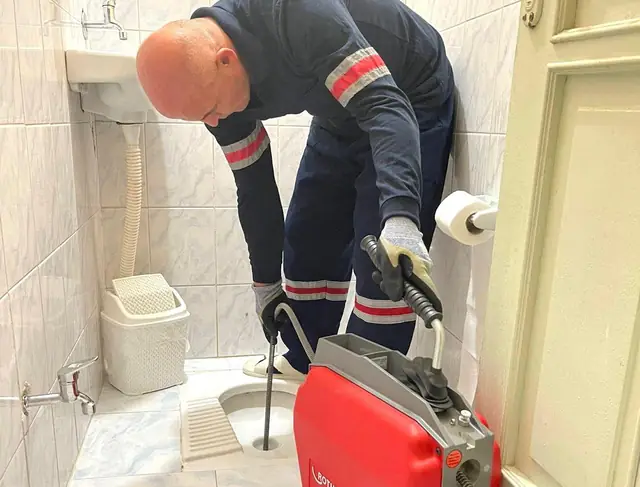
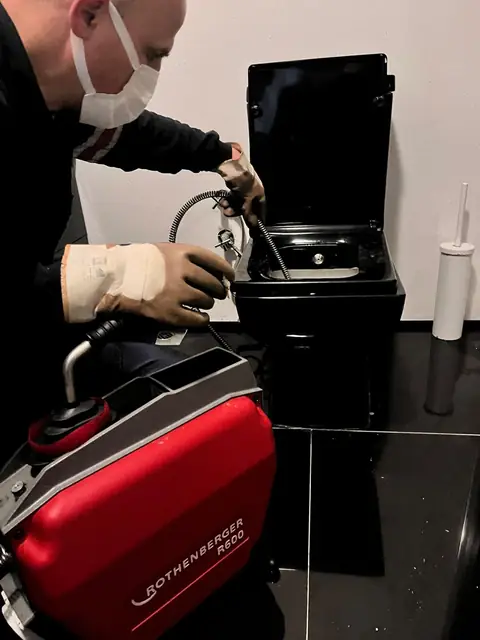
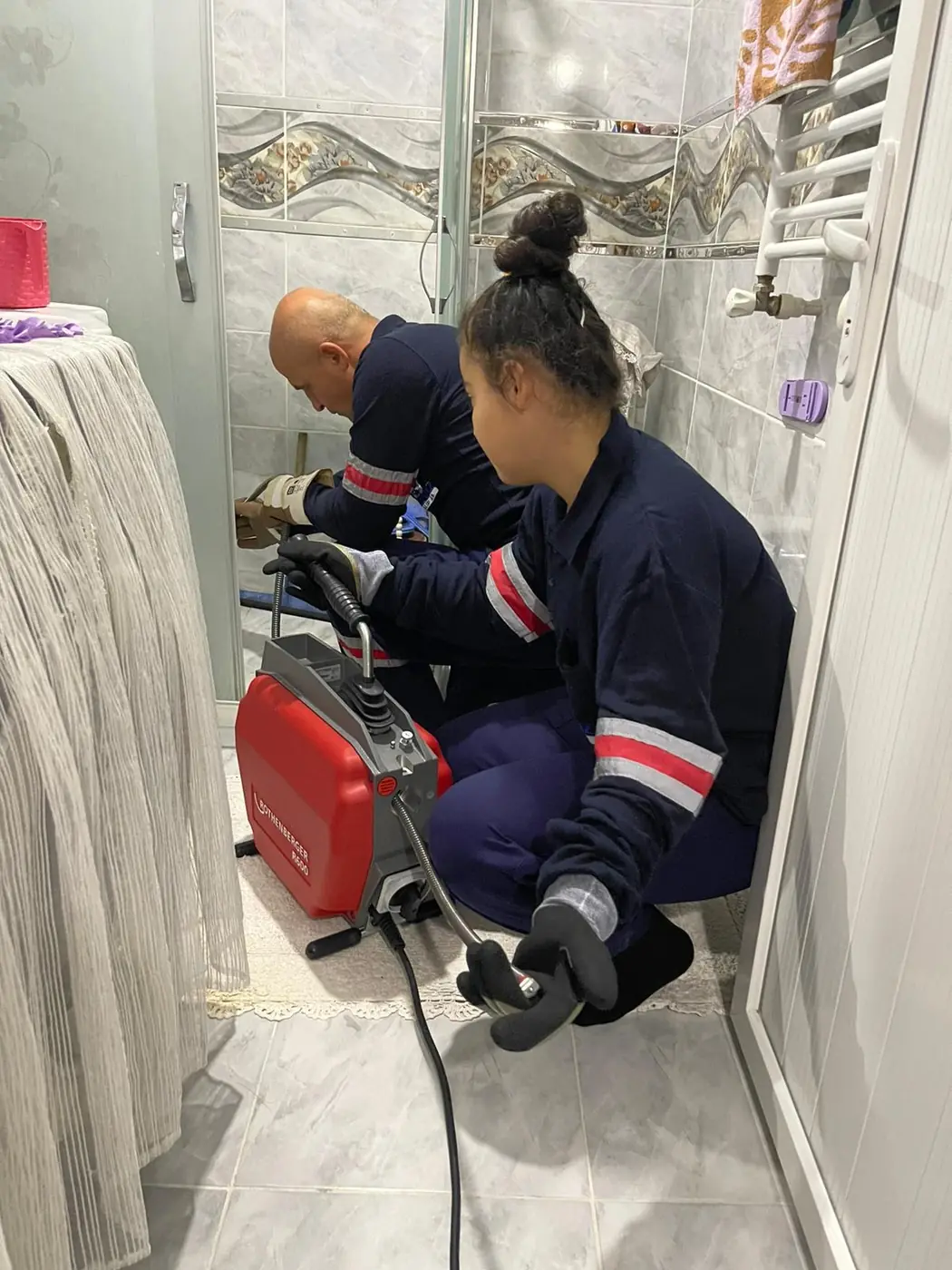
The Cantley team first feeds a thin camera in through the toilet outlet and sees where in the bend the object sits and at what angle. If it is inside the porcelain, it is gripped with rubber-coated snake attachments that do not scratch the porcelain and drawn back out. If it has moved into the pipe in the wall, it is usually reached through a cleanout cover or the next access point on the line.
Lifting the toilet only comes into question if the object is wedged in the porcelain's own passage and cannot be removed any other way. Even then, the decision is made together with you, after the camera footage has been shown to you. A phone that has stayed in water for a long time may not work once it is out. The plumbing team's job is to retrieve the object and get the line open again.
How to stop it happening again
Most things that fall into the toilet come from the cistern lid or from shelves on or right next to it. A few habits prevent almost all of these accidents.
In workplaces and shared café toilets, the items that fall in tend to be keys, lighters and earphones. In places like these, a small shelf fixed to the wall away from the toilet gives people a safe place to leave their things and stops the cistern lid turning into a place to leave belongings.
- Do not leave a phone, glasses or a jar of cream on the cistern lid or on a shelf above the toilet.
- If you carry your phone in a back pocket, take it out and put it on the counter before you sit down.
- In homes with small children, keep the toilet lid closed and use a lid lock.
- Check the hangers of any freshener or cleaning holders hooked on the rim regularly. A loose hanger drops the holder into the bowl.
- Keep items like toothbrushes and combs in a cup next to the washbasin, not in a cabinet above the toilet.