Published: 17 October 2026
In short
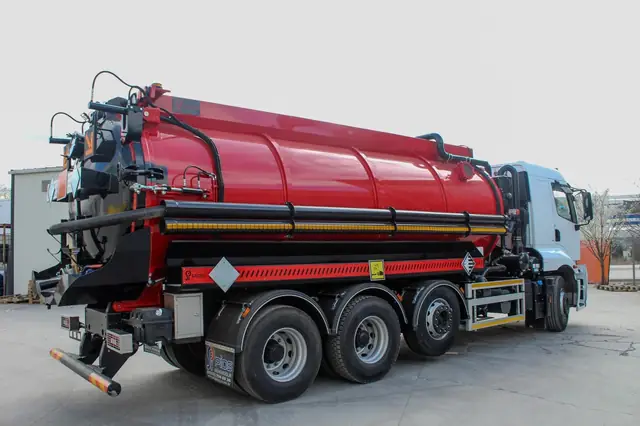
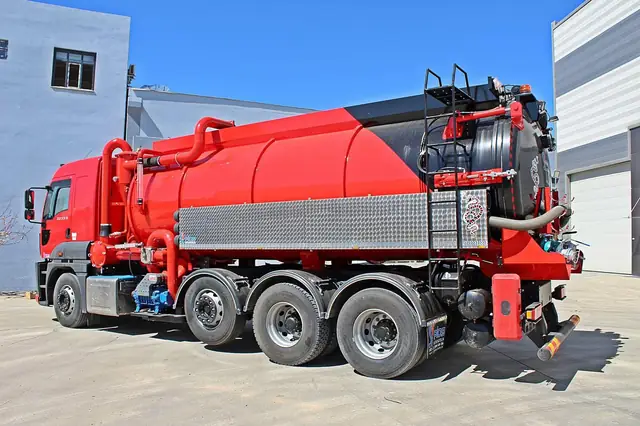
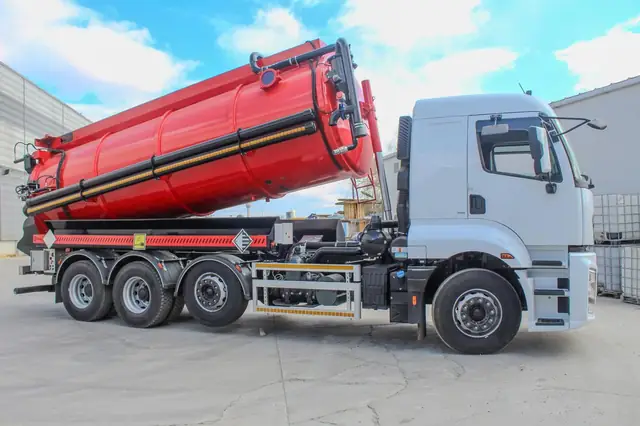
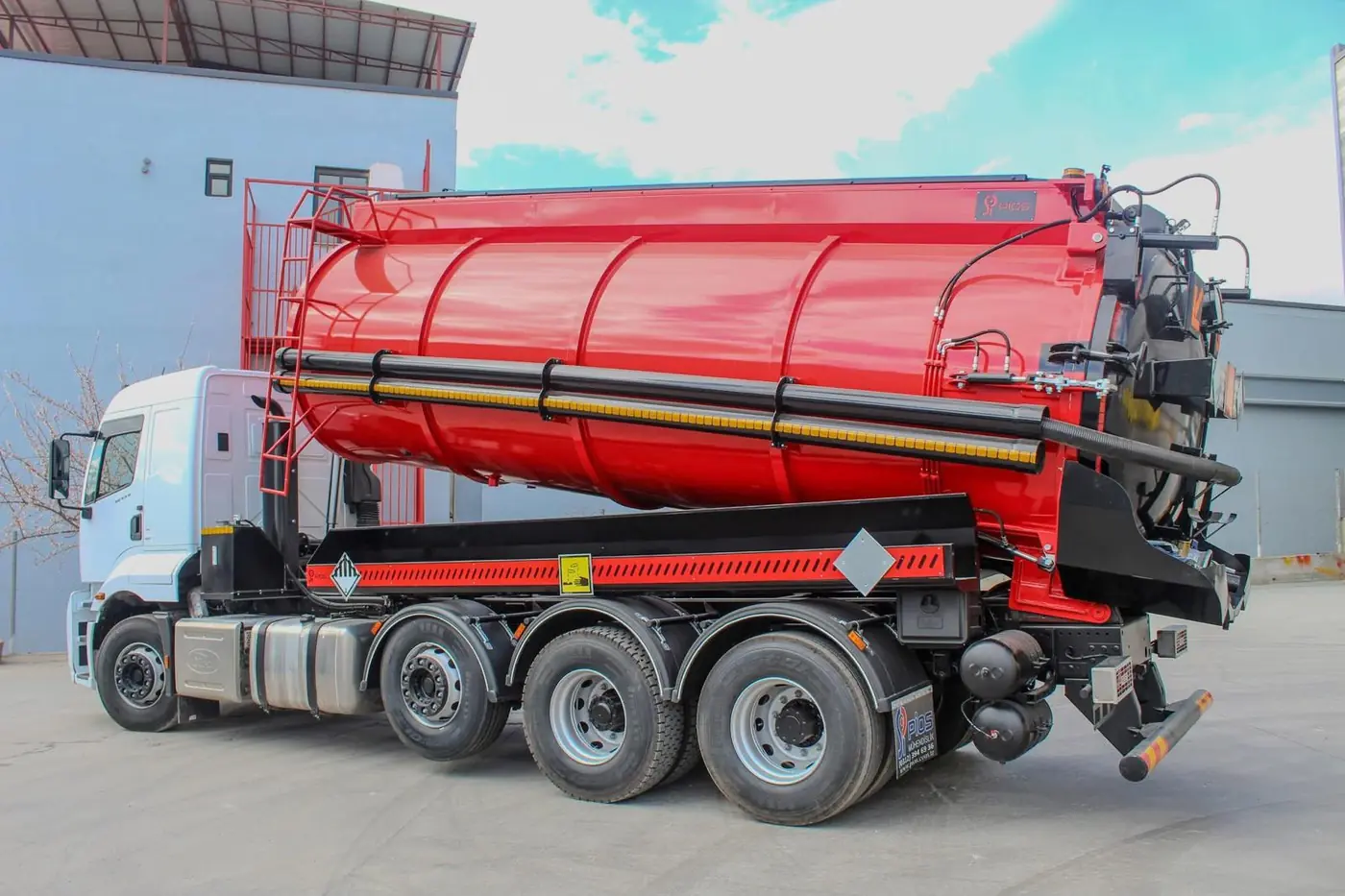
- A vacuum truck has a vacuum pump and a sealed tank, and it draws liquid waste in through a hose.
- A full septic tank, an overflowing manhole, a grease trap or a flooded basement is a job for a vacuum truck.
- When a single sink, toilet or in-flat drain is blocked, you usually do not need a vacuum truck. A drain unclogging crew is enough.
- The waste in the tank goes to an authorised discharge point or a licensed disposal facility.
In everyday speech, any sewer problem is sometimes called a vidanjör job, but what the vehicle does is limited to a specific area. When the sink or bathroom drain in a home is blocked, there is usually no need for a truck to turn up at your door. Knowing which job belongs to the truck and which to a drain unclogging crew makes it easier to ask for the right help on the phone.
What is on a vacuum truck?
The principle is similar to drinking through a straw. The pump removes the air from the tank, the inside of the tank stays at a lower pressure than the outside, and whatever the end of the hose touches is drawn in. Once the tank is closed, the waste does not spill on the road and the smell does not escape.
Vehicles differ in size and equipment, but the basic parts are the same on all of them. Combination trucks add pressurised water equipment for washing out the line.
- Vacuum pump: empties the air from the tank to create suction.
- Sealed tank: carries the collected waste without spilling it on the road or releasing odour into the surroundings.
- Suction hose: a thick hose, made of sections that can be joined, lowered into the tank, manhole or flooded area.
- Control panel: the section where the operator starts and stops suction and watches how full the tank is.
- Pressurised water equipment: found only on combination trucks and used to wash the inside of pipes.
What waste does a vacuum truck pull?
The vehicle can pull almost any waste that flows or has the consistency of sludge. It is important to say what type of waste it is from the start, because greasy waste, household waste water and construction site water are taken to different places.
Stones, pieces of rubble or large solid objects can block the hose. Material like this has to be separated first, and the crew will tell you when they see it on site.
- Dirty water and the thick sludge that settles at the bottom of a septic tank
- Waste water, sand and sediment collected in building manholes and inspection chambers
- Greasy waste in the grease traps of restaurants and food businesses
- Muddy water that fills a basement, shelter or closed car park after a downpour
- Cloudy water collected on construction sites and the liquid waste tanks of workplaces
Vacuum truck or drain unclogging crew?
The question that separates the two is simple: is the problem water collecting somewhere, or a blockage inside the pipe stopping the flow? Emptying collected water is the vacuum truck's job. Finding the blockage and clearing it is the job of the crew working with cameras and drain snakes.
Some jobs need both. If the manhole in the garden is full to the brim, the water is pulled out first and the line is cleared afterwards. In a manhole that will not empty, you cannot see which side the blockage is on.
- Kitchen sink, bathroom drain or toilet blocked: drain unclogging crew
- One drain in the flat running slowly: drain unclogging crew
- Septic tank full or leaking from its cover: vacuum truck
- Garden manhole overflowing and the main line also blocked: vacuum truck first, then line clearing
- Car park or basement under water: vacuum truck
- Restaurant grease trap full: regular emptying with a vacuum truck
What happens when the vacuum truck arrives?
The vehicle pulls up at the most suitable spot closest to the cover, and the crew first looks at the surroundings: where the hose will run, how heavy the cover is, whether the footpath will be blocked. Once the hose is lowered into the tank or manhole, the pump starts and you hear the steady hum of the motor. There may be a slight smell during pumping, but because the tank is closed, the smell stays around the cover.
When the tank or manhole is empty, the crew looks inside and sees the sludge left at the bottom and the build-up on the walls. This is a good chance to see whether the structure is sound and when the next pump-out may be needed. When the job is done, the cover is put back in place and the ground the hose touched is cleaned.
Where does the pumped waste go?
The journey of the waste taken into the tank ends at an authorised discharge point or a licensed disposal facility. There the waste is treated or processed in the way that suits its type, and greasy waste goes to a facility that accepts that type.
Emptying a tank into a storm drain grate, a stream or an empty plot of land does serious harm to the environment and can also put the person who ordered the pump-out in a difficult position. So when you call a vacuum truck, it is reasonable to ask where the waste will be taken. A properly run crew will answer this question easily.
What not to do yourself while waiting for the crew
Faced with a full tank or an overflowing manhole, it is natural to want to do something. Still, some actions do not solve the problem and put you and the crew who will do the pump-out at risk.
- Do not climb down into a manhole or septic tank, and do not put your head inside. Toxic and suffocating gases build up in enclosed spaces.
- Do not try to lift heavy concrete covers on your own. It is enough to show where the cover is.
- Do not pour caustic soda, bleach or drain opener into a full tank. It does not dissolve the waste and puts the crew at risk during pumping.
- Do not touch overflowing waste water with bare hands, and keep children and pets away from the area.