Published: 17 October 2026
In short
- A combination vacuum truck puts vacuum suction and high-pressure water line flushing on a single vehicle.
- A standard vacuum truck empties accumulated waste, but it cannot strip off grease and sludge stuck to the pipe wall.
- A combination truck is needed for lines that are both full and blocked, for grease-carrying connections and for manholes clogged with sludge.
- A standard vacuum truck is enough just to empty a septic tank pit; the type of job decides the vehicle.
This difference looks small on paper, but on site it changes the result. A line that has been emptied but not flushed can fill up again quickly. Knowing what each truck does and when each one is chosen helps you ask the right question on the phone.
Where does a standard vacuum truck fall short?
A standard vacuum truck is built to take the contents of a volume. In a septic tank pit, a flooded basement or the chamber of a grease trap that is enough, because the waste sits freely and the hose reaches it directly.
The trouble starts when the waste is jammed inside the pipe. Water drawn out of a manhole does not touch the layer of grease, the sand and the hardened sludge sitting in the line between two manholes. The line eases for a while, then blocks again at the same narrow point, and residents often describe this cycle as: the truck came, but the manhole overflowed again.
What extra does a combination truck have?
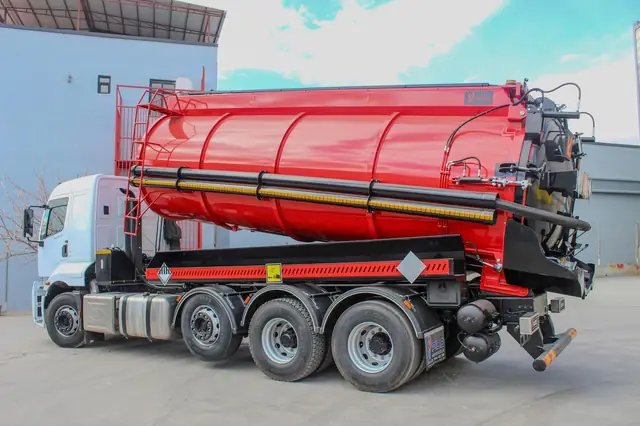
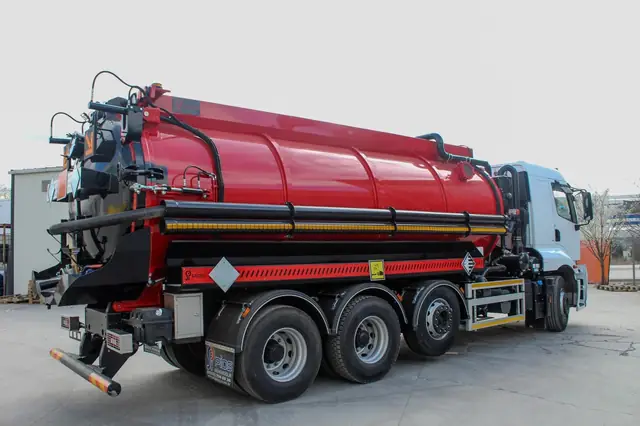
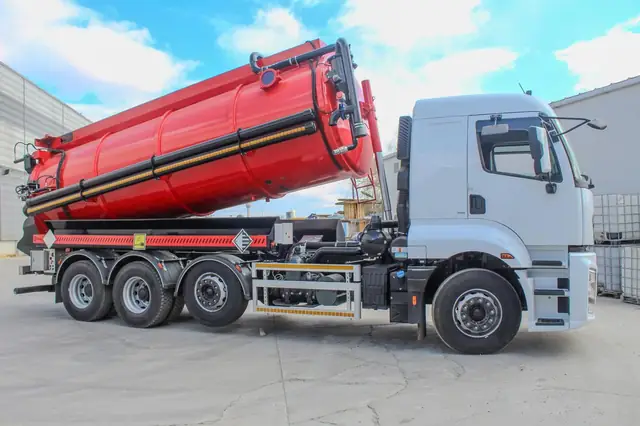
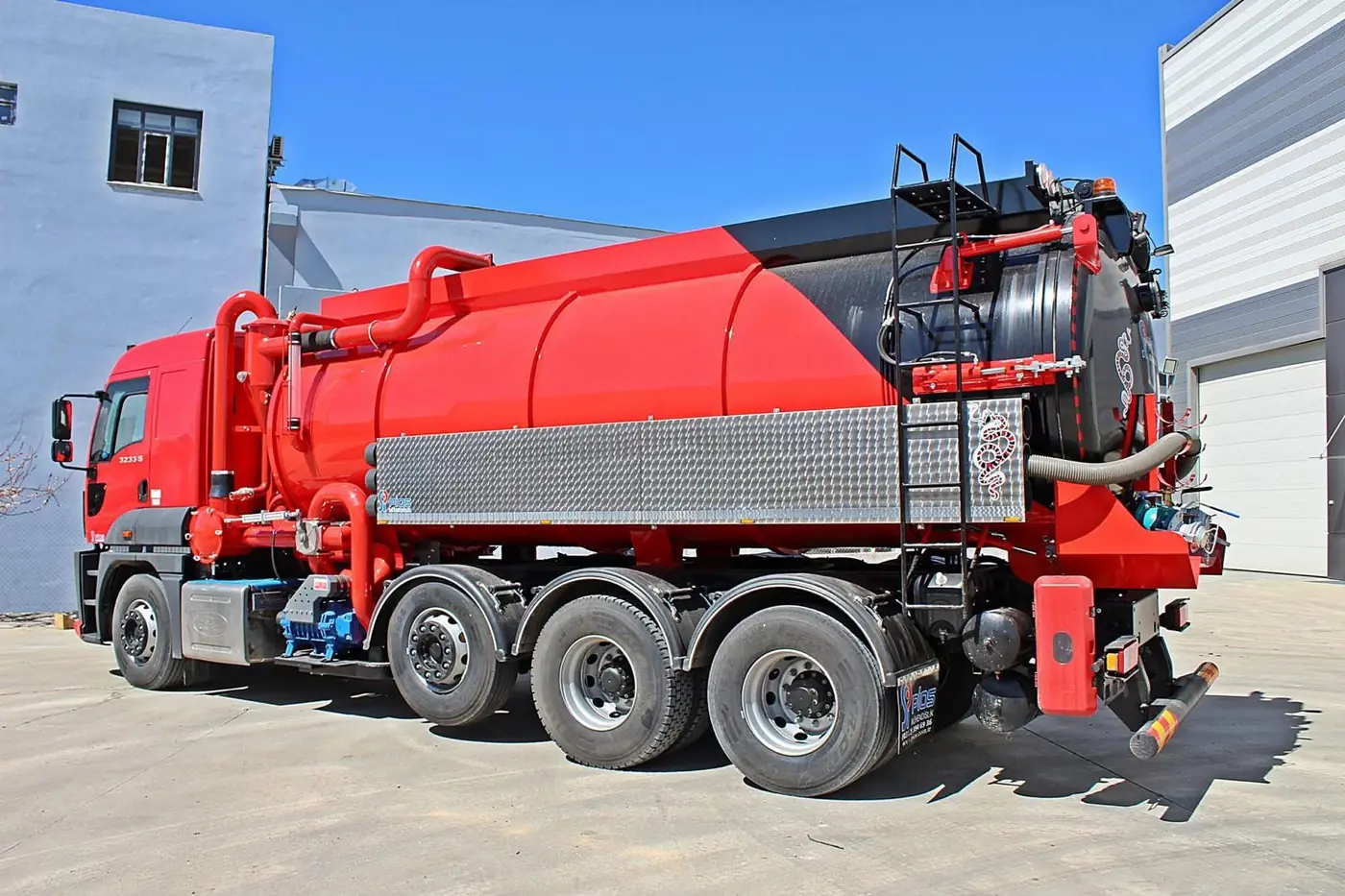
A combination truck has a clean water tank set aside for flushing. A high-pressure pump sends this water to a thin, durable hose wound on a reel. The flushing nozzle at the end of the hose has holes that face backwards; as the water jets out behind it, the nozzle pulls itself forward inside the pipe and scrapes away the build-up wherever it passes.
- Clean water tank: carries the water needed for flushing.
- High-pressure pump: feeds the water into the flushing hose at strong pressure.
- Reel-mounted flushing hose: a flexible hose that travels from the manhole into the line.
- Flushing nozzles: heads that spray in different patterns for grease, sand or hard deposits.
- Vacuum system and waste tank: collects the loosened waste, as in a standard vacuum truck.
Which jobs call for a combination truck?
What these jobs have in common is that they need both emptying and cleaning. If your situation resembles one of the following, be sure to say so on the phone.
The last item is especially important. A line that is emptied often but never flushed shows that the build-up inside gets a little thicker every time.
- The building's main sewer line is blocked and the manholes are full of wastewater
- A layer of grease has narrowed the pipe at a restaurant, bakery or canteen connection
- The bottom of the manhole is full of sand, sludge and stone fragments, and the inlet and outlet openings cannot be seen
- Car park and garden channel drains are blocked with leaves, soil and sand
- The same line keeps overflowing again and again at short intervals
How does a combination job go on site?
The order of the work matters. Feeding pressurised water into a full manhole makes it overflow, so emptying always comes before flushing.
- The crew opens the manhole and checks the water level; if the manhole is full, it is emptied by vacuum first.
- Once the manhole is empty, the inlet and outlet openings of the line become visible and it is clear in which direction the blockage lies.
- The flushing hose is fed into the line, and the pressurised water strips the build-up off the pipe wall and drives it towards the manhole.
- The sludge and grease dropping into the manhole are drawn up by the vacuum hose at the same time.
- Flushing is repeated until the line runs clear, and if needed the inside is checked with a camera.
- Finally the bottom of the manhole is cleaned, the cover is closed and the surroundings are rinsed.
Do you need a combination truck for every job?
No, a combination truck is not the answer to every job. To empty a full septic tank pit or to pump out a basement flooded by rainwater, a standard vacuum truck is enough; the flushing equipment has nothing extra to do there.
If the cause of the blockage is a tree root that has entered the pipe, or a collapsed or broken pipe, pressurised water alone is not the solution either. In such cases the line is inspected with a camera, the root is cut with motorised machines, or replacing the damaged section is discussed.
Keeping a flushed line clean for longer
Combination flushing opens the line and cleans the walls, but if the habits that created the build-up continue, the same picture comes back over time. In kitchens that send grease down the line and in crowded buildings in particular, the life of the line depends on everyday use after the flushing.
For restaurants and food businesses, putting the grease trap pump-out and the flushing of the connection line on a schedule is much less trouble than calling after an overflow has happened. In apartment buildings, it helps when the management tells residents what must not go down the line.
- Collect used frying oil in a bottle with a lid instead of pouring it down the drain.
- Do not flush wet wipes, pads or rags down the toilet; they combine with grease and form a thick plug in the line.
- Sweep the leaves and sand off garden and car park grates regularly.
- Have the grease trap pumped out before it fills, and have the connection pipe checked during the pump-out.
How do you explain the need for a combination truck on the phone?
You do not need to know which truck is required, but the information you give makes the decision easier. Before calling, get the answers to these questions clear in your mind.
- Is the overflowing place a septic tank pit, a manhole or a channel drain?
- Has it been emptied before, and did the line still not flow after the water was drawn out?
- Is a kitchen, restaurant or canteen that sends grease connected to the line?
- How often does the problem repeat?
- Where is the manhole cover, and what is the nearest point the truck can get to?