Published: 17 October 2026
In short
- A washing machine pumps out water at a high flow rate, and a narrow or dirty drain cannot keep up with it.
- Lint and fibres shed from fabric combine with detergent residue and form a felt-like layer inside the pipe.
- Too much powder detergent leaves a hardened deposit in the drain pipe and causes overflowing foam.
- A hose pushed too deep into the drain pipe, or connected too low, leads to overflow and backflow.
- A lint filter on the end of the hose and the right amount of detergent largely prevent the problem.
Where and when the overflow happens tells you a lot about the cause. Is the water spilling from the mouth of the vertical drain pipe behind the machine, rising through the trap of the sink it is connected to, or coming up through the floor drain in the bathroom? Once you know this, it is much easier to rule out the causes one by one.
Where exactly is the water overflowing from?
The place where the water overflows shows how close the problem is to the machine. Running the machine once more and standing next to it while it drains is enough to answer this question.
- From the mouth of the vertical pipe behind the machine: the problem is usually in that pipe itself, either lint build-up or a pipe that is too narrow.
- From the trap of the sink the machine is connected to: the shared trap or the pipe in the wall has narrowed.
- From the floor drain or shower tray: the blockage is in the shared line where the bathroom drains join.
- If the neighbour downstairs complains: the narrowing is in the building's shared stack.
Lint and fibre build-up
With every wash, cotton, polyester and wool fibres shed from the fabric and go down the drain with the water. Each fibre is tiny, but they tangle together at the bends of the drain pipe and gradually form a felt-like layer. Towels, blankets and newly bought clothes shed especially a lot of lint, and in homes with pets the build-up is even faster.
The machine's own pump filter also catches some of these fibres. If this filter is not cleaned, the machine cannot empty fully, and when it is cleaned regularly, the fibres it catches do not reach the drain. On most machines the filter sits behind a small cover at the front bottom corner. Unplug the machine before opening it, and because water will come out, put a wide container and a towel underneath.
Detergent and fabric softener residue
Powder detergent used in excess does not dissolve completely in water, and it hardens on the pipe wall by combining with limescale. On short, low-temperature programmes, the detergent dissolves even less well. Liquid fabric softener leaves an oily residue that sticks fibres together and helps the lint mass cling on more tightly.
Heavy foam is another cause of overflow. When laundry washed with too much detergent is drained, the foam fills the drain pipe and the water is pushed back up before it can go down. In this case you see foam rather than water spilling from the mouth of the pipe.
Is the drain connection suitable for the machine?
In some homes the washing machine was installed later, so the hose is connected to a thin pipe meant for a sink or to a short drain opening. This connection cannot take the water the machine pumps out fast enough, and the water overflows from the opening. A separate, sufficiently wide vertical pipe for the machine, or a trap with a washing machine connection, solves this problem.
The height of the hose and how far it is pushed into the pipe also matter. If the hose is pushed too deep into the drain pipe, there is no air gap left, the water overflows, and dirty water is more easily drawn back into the machine. If the hose is connected too low, water in the drain can seep back into the machine. For the right height, check the measurements in your machine's manual.
When the blockage is further down the line
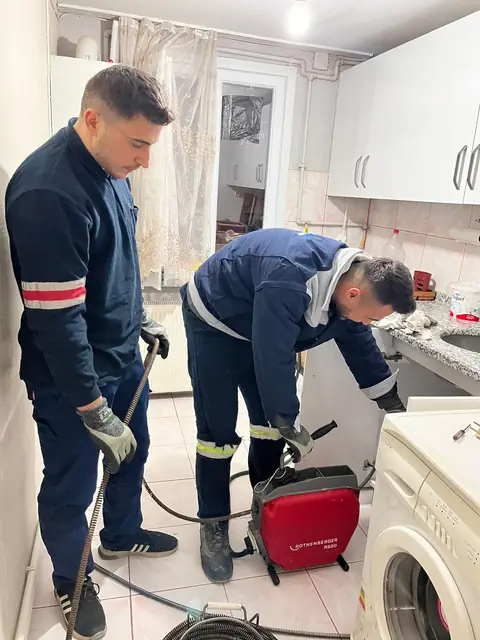
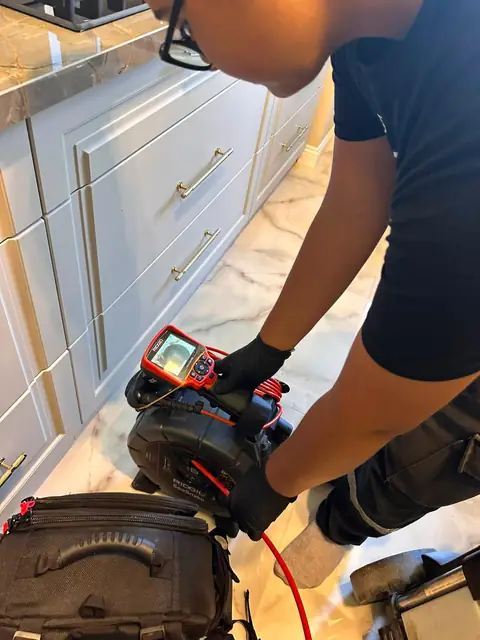
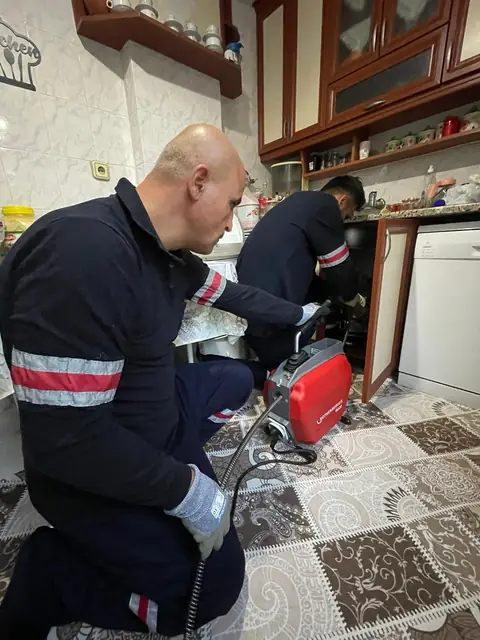
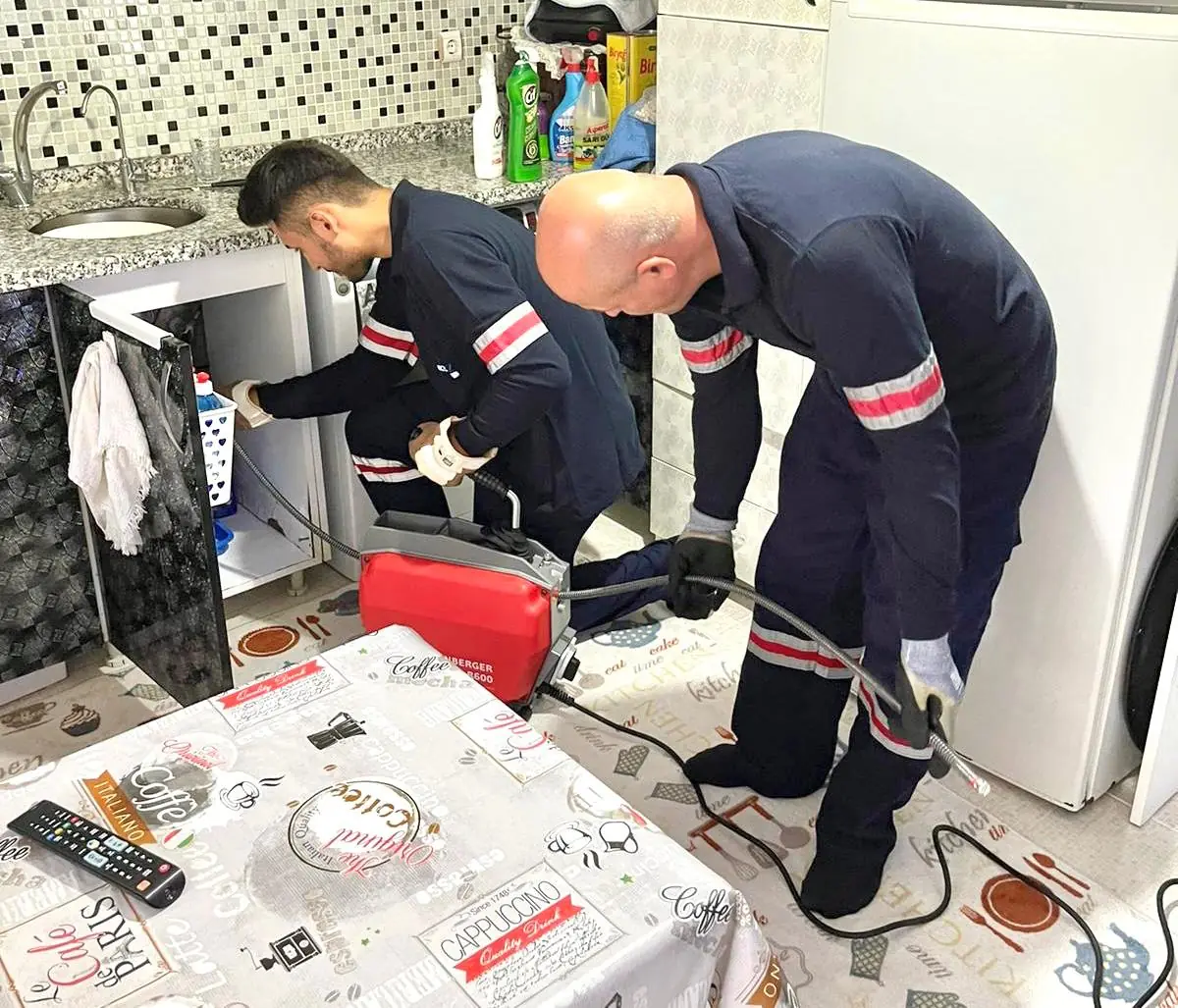
If the overflow continues even after you have cleaned the drain pipe and the trap, the narrowing is inside the wall, in the shared pipe where the bathroom and kitchen drains join. In that case the machine's water comes out of the first open point it finds, which is the lowest drain in the home. A line like this needs to be inspected with a camera and cleared with a snake or with pressurised water. The work is done without breaking tiles or walls, through the existing drain openings.
In older buildings, the pipe that the washing machine drain connects to often runs into the old cast iron line of the bathroom, and the inside of this pipe has narrowed over the years with rust and limescale. Lint and detergent residue cling easily to this rough surface. If the same overflow has happened several times, putting a camera into the pipe shows whether the problem is a build-up or the pipe itself.
What you can check at home, step by step
Do not pour a chemical drain opener into the drain pipe. It can damage the machine's hose and seals, and if it does not work, burning liquid stays in the pipe.
- Unplug the machine, open the pump filter and clean the fibres out of it.
- Take off the drain hose and look for lint or residue at its end and inside it.
- Check how far the hose is pushed into the drain pipe and make sure it is not kinked anywhere.
- Look into the mouth of the vertical pipe with a torch and remove any visible lint mass with a glove.
- If the machine is connected to the sink trap, remove the trap over a bucket, clean it and check its seals.
- Run water into the other drains in the bathroom. If they are slow too, the problem is in the shared line.
Habits that prevent overflow
Lint and residue arrive in small amounts with every wash, so prevention also consists of small but regular steps.
- Fit a mesh-style lint filter on the end of the drain hose and replace it when it fills up.
- Use detergent according to the amount on the packaging, and reduce it for lightly soiled laundry.
- If powder detergent leaves a lot of residue, try liquid detergent.
- Clean the pump filter at regular intervals.
- Wash towels and blankets that shed a lot of lint separately from other laundry.