Published: 17 October 2026
In short
- A grease blockage usually shows itself as a flow that slows over weeks, not all at once.
- Hot water softens solidified grease and carries it to a colder point further along the line.
- A drain snake punches a hole through the grease mass just big enough for water to pass, while the layer on the inside of the pipe stays in place.
- The method that strips grease off the pipe wall and flushes it out of the line is high-pressure water jetting.
- Wiping grease from pans with paper and collecting waste oil in a bottle stops blockages at the source.
Your kitchen drain carries grease from washing-up water and frying pans a little further along every day. As the grease cools in the pipe, it first becomes a thin film and then a soap-like crust. Food crumbs and starch cling to this crust, and the inner diameter of the pipe narrows without any sign from the outside. Knowing which method works and why makes it easier to make the right decision and to avoid facing the same problem again.
How can you tell the blockage is caused by grease?
You can usually tell a blockage is grease from the way the flow gradually gets worse. An object that falls into the drain can cut off the water at once, but grease first makes the washing-up water sit in the bottom of the sink a little longer each day. If two or three of the signs below appear together, the problem is most likely a grease build-up.
- The water drains more slowly week by week, but never stops completely.
- A smell of sour food or stale grease comes from the drain opening.
- There is a whitish, waxy layer around the strainer ring and inside the trap.
- The sink has been unblocked before, and the same symptoms returned after a while.
- In cold weather, when the pipes are cool, the flow gets noticeably worse.
Why does hot water only give temporary relief?
Hot water does not remove grease from the pipe. It softens it for a while and pushes it a few metres further along. Water that stays warm just below the sink cools quickly in the horizontal section inside the wall that runs towards the shared stack. The softened grease solidifies again at exactly this cold point, and this time it builds up somewhere harder to reach from your home. The sink improves for a few days, then the blockage comes back, now further away from the trap.
That is why hot tap water with washing-up liquid is a first step you can try for a slight slowdown, not a lasting fix. Never use boiling water: PVC drain pipes and the seals at the joints soften at high temperatures, and leaks can start at the connections.
What does a drain snake do inside a grease blockage?
A drain snake passes through the middle of the grease mass and opens a narrow channel for the water, leaving the layer on the inside of the pipe largely in place. A grease blockage does not behave like a hard object. It has a paste-like consistency, and as the cable advances it is pushed towards the sides. The water flows again, so the job looks finished, but the grease left on the pipe wall keeps catching new residue.
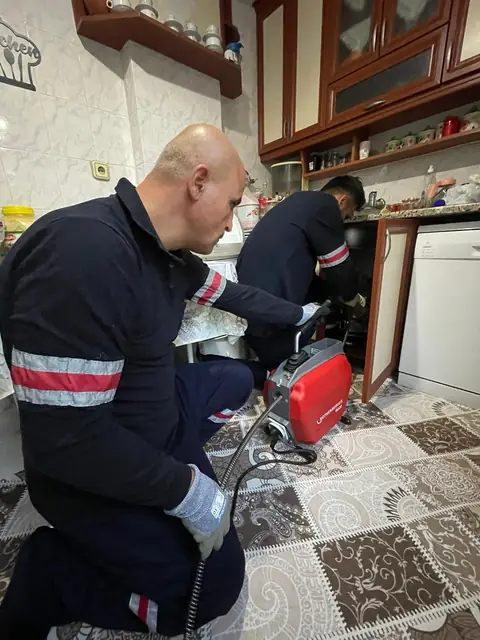
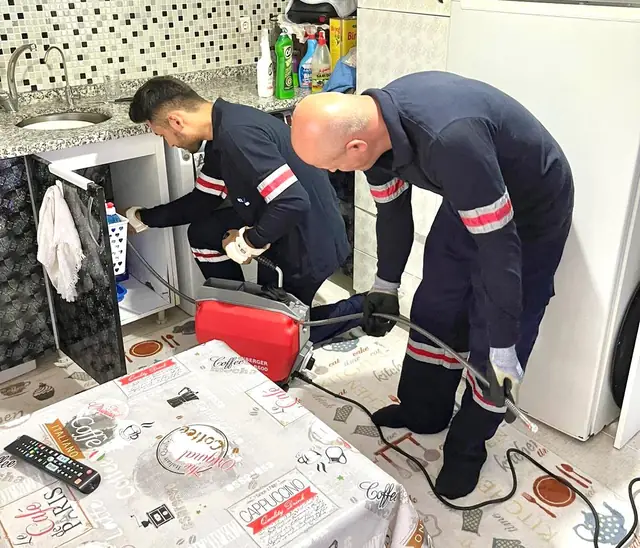
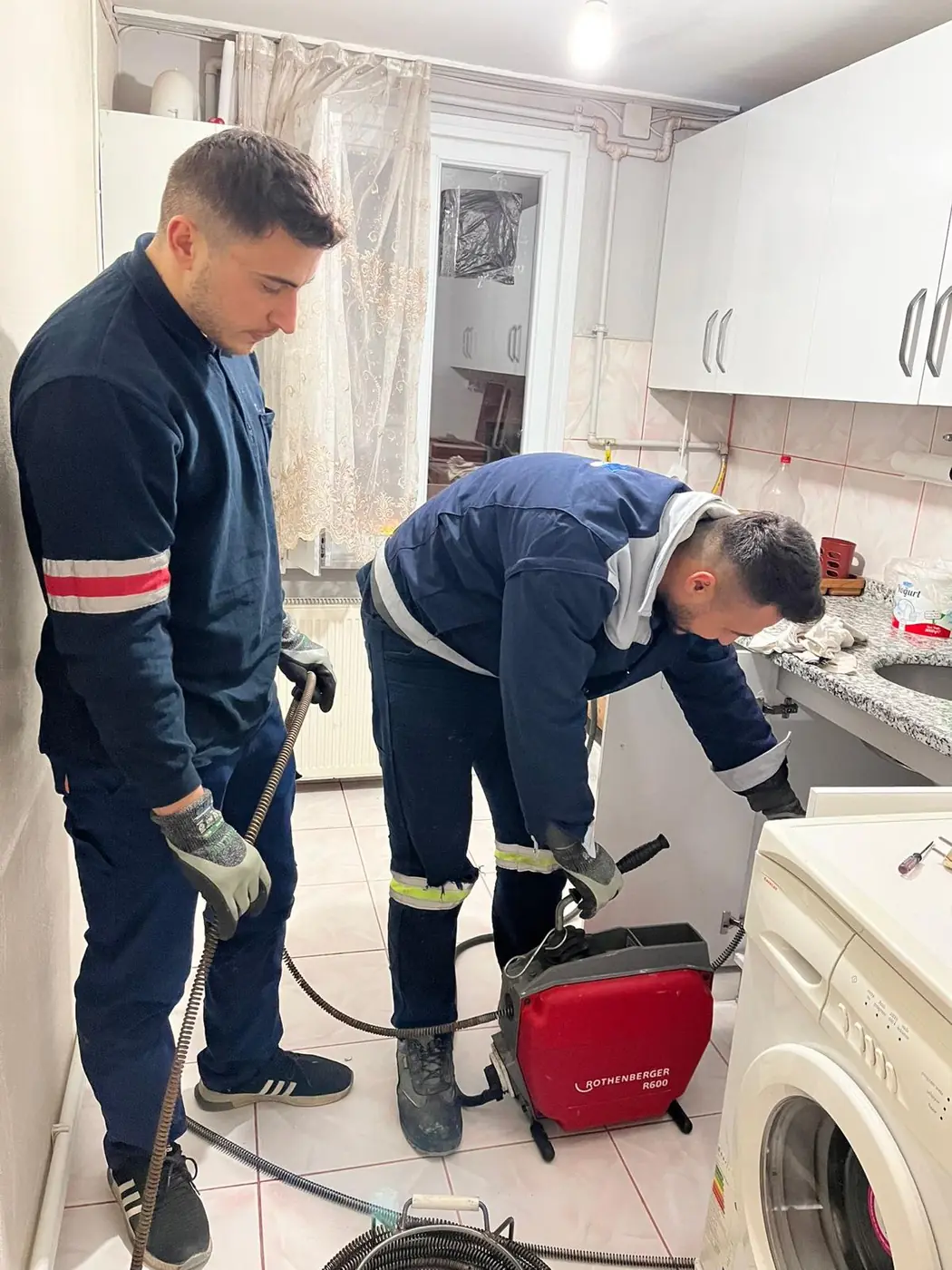
A snake works very well on single-point obstructions such as wet wipes, hair or an item that has fallen into the drain. Used alone on a long line narrowed by grease, it becomes the cause of repeat blockages. On greasy lines we mostly use the snake as a preparation step that opens the way before the pressurised water.
How does high-pressure water strip grease from the pipe?
High-pressure water is sprayed backwards and sideways from a special nozzle that travels along the line, washing the whole circumference of the pipe, scraping the grease off the wall and carrying it down the line. The rear-facing jets pull the hose forward, and the side-facing ones sweep the pipe surface. So it does not just open the middle of the blockage: the entire crust that has formed over months is stripped away.
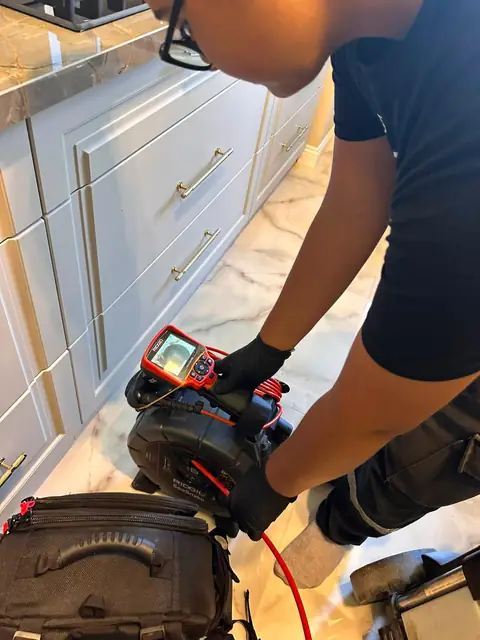
On a kitchen line full of grease, the work usually starts with removing and cleaning the trap, and then the line is flushed from the connection in the wall. If the blockage keeps repeating or the layout of the line is unclear, we look inside the pipe with a camera. This shows where the grease is concentrated and whether there is a fault in the slope or at a joint. All of this is done through the existing drain opening, without breaking tiles or walls.
What can you try at home, and what should you avoid?
For a slight slowdown there are a few safe steps you can take at home. If water is standing in the sink or other drains are also affected, it is better to stop trying.
If you have used a chemical, be sure to tell the team that comes to unclog the drain, because that liquid can splash onto skin and eyes when the trap is removed.
- Worth trying: plenty of washing-up liquid followed by hot tap water, if the flow is only slow.
- Worth trying: baking soda and vinegar for a thin film of soap and grease. The effect is weak on a thick blockage.
- Worth trying: a sink plunger, when there is enough water to cover the plunger and no chemical has been poured into the drain.
- Avoid: boiling water, which can damage PVC drain pipes and seals.
- Avoid: chemical drain openers. They can splash and burn, can damage the pipe, and if they fail they make the water in the sink dangerous.
- Avoid: mixing different drain openers or poking the drain with a wire coat hanger.
How do you prevent grease build-up in the kitchen?
The surest remedy for a grease blockage is to keep grease from ever reaching the drain. A few small habits help keep the line clean for a long time.
- Wipe pans and pots with a paper towel before washing them, and put the paper in the bin.
- Pour leftover frying oil into a plastic bottle once it has cooled, and take the bottle to a waste oil collection point when it is full.
- Put a fine-mesh strainer in the sink outlet, and empty the crumbs it collects into the bin at the end of the day.
- Scrape plates into the bin before putting them in the dishwasher, because the machine's water goes down the same drain.
- If there is a corrugated flexible hose under the counter, consider replacing it with a straight pipe connection.
- If the lower floors often get blocked, talk to building management about flushing the shared kitchen line regularly.