Published: 17 October 2026
In short
- If the sink is also slow or gurgling, the problem is most likely in the shared drain.
- If the sink drains normally and only the machine holds water, check the filter and the hose first.
- Unplug the machine and lay a towel on the floor before you take out the filter.
- A kinked drain hose, or one that does not form a loop under the worktop, upsets draining.
- If the pump hums but no water comes out at all, that is a job for the machine's service technician.
Making this distinction stops you wasting time by calling the wrong person. If a part in the machine has failed, unclogging the drain will not help. If the drain is blocked, fitting a new pump to the machine will not solve the problem either. When you work step by step, it usually becomes clear which one you are dealing with.
Which side is the problem on, and how do you tell?
You can tell which side the problem is on by comparing what you see when the machine drains with what you see when you use the sink. The first three signs point to the drain, and the last three point to the machine.
To make this comparison easier, pour a bucket of water into the sink and then run the machine on a drain-only programme straight afterwards. If the sink swallows the bucket of water easily but water rises from the sink once the machine starts, the line cannot cope when the two flows join, and the narrowing starts after the trap.
- Drain: grey water rises from the bottom of the sink while the machine is draining.
- Drain: the sink has also been emptying slowly lately, or the drain opening gurgles.
- Drain: there is dampness, dripping or a dried water mark around the trap.
- Machine: the sink drains freely but water stays at the bottom of the tub.
- Machine: you hear a hum from under the machine while it drains, and the water does not move.
- Machine: the programme stops silently at the draining stage, or a warning appears on the display.
Check the machine's filter first
The most common cause on the machine side is the filter at the bottom of the tub filling up with food scraps, glass fragments or bits of label. When the filter is full, water cannot reach the pump properly and sits at the bottom of the tub. The position of the filter and the way you remove it vary by model, so it is best to check your user manual, though the general order is similar for most machines.
- Unplug the machine or switch off the fuse it is connected to.
- Take out the lower rack, remove the water left at the bottom with a bowl and a sponge, and lay a towel in front of the machine.
- Remove the filter by turning or lifting it out, as described in the manual.
- Wash it under the tap with a soft brush and washing-up liquid.
- Wearing gloves, remove any debris left in the recess where the filter sits, and be careful of glass fragments.
- Seat the filter fully and lock it, then run a short programme and watch the draining.
When does the pump become a suspect?
If the filter is clean but the machine still does not drain and the sink runs freely, the drain pump is next. Hearing a hum from under the machine during draining without hearing the sound of water can mean the pump cannot turn or that something is stuck in it. No sound at all is a sign of an electrical problem or a pump failure.
The pump and the electronic control board are internal parts of the machine, and the machine's service technician should deal with them. A drain unclogging crew cannot help you in this case, so it is important to check the filter and the sink first to avoid an unnecessary expense.
If the machine stops draining halfway and shows a warning, make a note of it and tell the service technician when you call. Because the meaning of a warning changes by brand and model, comparing the code on the display with the manual helps you work out more quickly whether the fault is in the pump or in another part.
The drain hose may be kinked or at the wrong height
If the machine was recently installed or the space under the worktop was rearranged, check the drain hose. When the machine is pushed into place, the hose can fold at the back or get crushed under a cabinet foot. A folded hose narrows the passage of water, and the pump struggles to push the water out.
The second critical point for the hose is its height. Before it connects to the trap, the drain hose should be fixed so that it loops upwards under the worktop. This loop stops dirty water from the drain flowing back into the machine. If the hose lies on the floor, or connects to the trap below its own level, water from the sink seeps into the machine and foul-smelling water collects in the tub. Follow the measurement in your machine's manual for the height of the loop.
What does the machine do when the shared trap is blocked?
If the sink and the machine are connected to the same trap, and the trap or the wall pipe after it narrows with grease, the water the machine pushes out has nowhere to go. The pump runs and some of the water goes down, but the rest rises into the sink or stays in the machine. Some machines stop the programme halfway and show a warning in this situation. What needs to be done here is to clear the line rather than fiddle with the machine.
The side spigot of the trap, where the machine's hose is attached, can also be blocked on its own. If only this spigot is blocked, the sink drains freely while the machine cannot empty. On some trap models, the thin membrane inside this spigot is left uncut during installation, and a newly fitted trap can show the same symptom.
If you are going to take the trap apart yourself, put a bucket under it, loosen the machine's hose clamp and detach the hose, and undo the nuts by hand. After cleaning, make sure the seals are properly seated, tighten the nuts by hand again and test the machine with a short drain.
Who should you call?
Once you have compared the symptoms, the decision usually makes itself.
- The filter is clean, the hose is straight, the sink drains freely but the machine still does not drain: the machine's service technician.
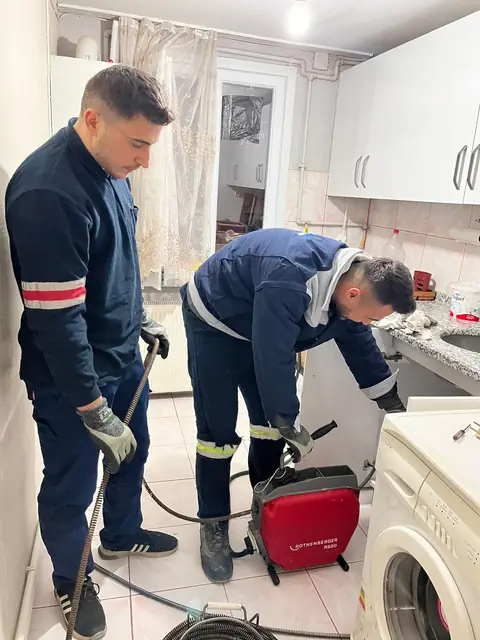
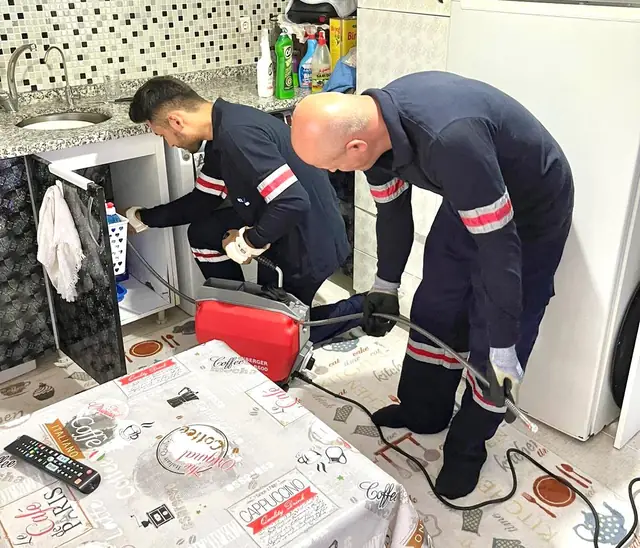
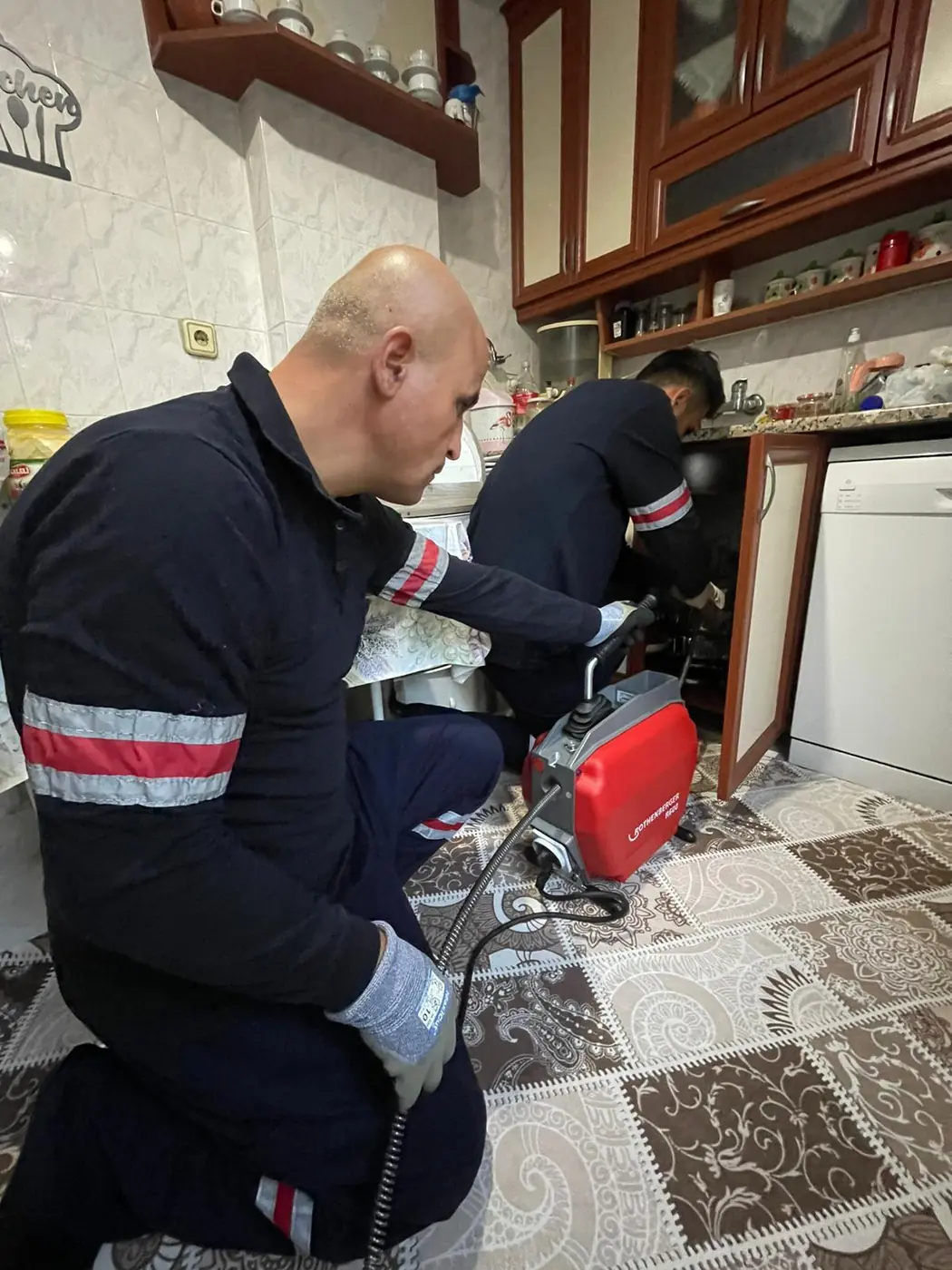
- The sink is also slow and water comes up into the sink while the machine drains: drain unclogging.
- You took the trap apart and cleaned it, but water still rises: the blockage is inside the wall, so call a drain crew.
- Kitchen water is also backing up in neighbouring flats: a drain crew and building management for the shared line.