Published: 17 October 2026
In short
- Roots do not break through pipes. They follow moisture and warm air, and enter through loose joints and hairline cracks.
- Old concrete and clay pipes are far more exposed to roots than PVC lines with sealed gaskets.
- A camera image shows which joint the root is in and how much it has narrowed the pipe.
- A root cleared with a cutting head grows back through the same gap if the joint is not repaired.
- The lasting fix is to replace the section the root entered with new, watertight pipe.
In Istanbul, in older apartment buildings with gardens, in houses facing tree-lined streets and in the grounds of housing complexes, the building's line often runs underground just a few steps from the trees. If these lines were originally laid with concrete or clay pipes, every joint is an open invitation for a root. The process is quiet, and most homeowners only notice it at the first serious blockage.
How does a root reach the inside of the pipe?
A buried drain pipe constantly gives off a little moisture and warmth into the ground around it. Waste water is usually warmer than the surrounding soil, and the water that seeps from the joints feeds the soil nearby. The fine roots of the tree grow towards this damp zone, wrap around the outside of the pipe and find the source of the leak.
A very small opening is enough for a root to get in. In old lines the pipe sections were joined end to end with mortar, and over time that mortar crumbles. When the ground settles, one section drops slightly and the joint opens. The root enters through this gap and branches freely in the water flowing inside.
- Joints with crumbled mortar or no gasket at all
- Pipe sections that have slipped apart because of ground settlement
- Hairline cracks caused by vehicle loads or nearby excavation
- Pipe ends where the seal has failed at the point they enter the manhole wall
Which pipes are more vulnerable to roots?
Root problems are most common in concrete and clay pipes. Because these pipes were laid in short sections, there are many joints along the line, and each joint is a weak point. Over time the material itself also becomes porous and releases moisture to the outside more easily.
PVC pipes with gaskets are much more resistant to roots, because their joints fit together watertight. Even so, if a gasket has shifted in a carelessly laid PVC line, or the pipe has broken at some point, roots can find a way in there too. What matters is less the name of the material than whether the joint leaks.
Signs that there are roots in your pipe
A blockage caused by roots behaves differently from one caused by kitchen grease or wipes. A root mat works like a sieve: it lets water through for a while but catches the paper, hair and sediment that pass through it. So the line does not shut off suddenly. It gets slowly worse over weeks and months.
- Drains on the garden level or ground floor emptying more and more slowly over several months
- A line that was cleared blocking again with the same symptoms after a while
- Thin fibres hanging from the mouth of the inlet pipe inside the garden manhole
- Soil that stays constantly damp along the strip where the line runs, or grass that is clearly lusher than the area around it
- Blockages becoming more frequent in spring and summer, when trees grow fastest
What does a root look like on the camera?
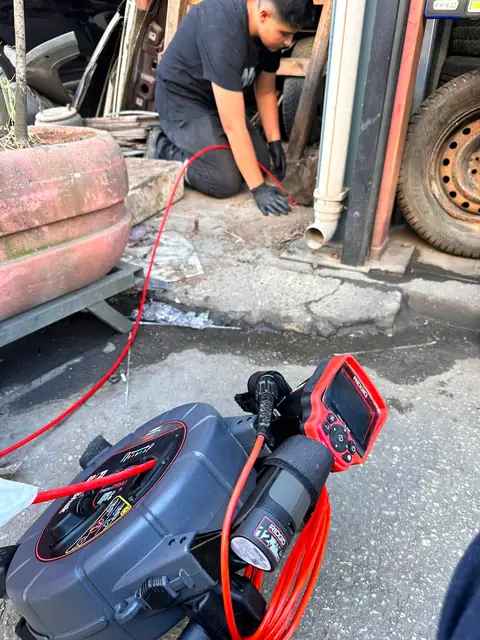
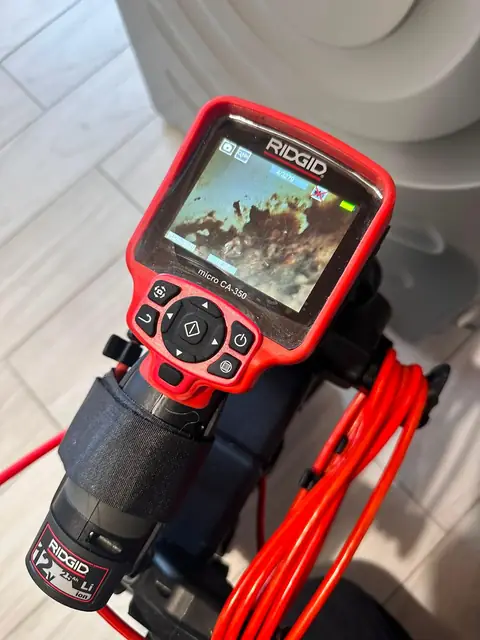
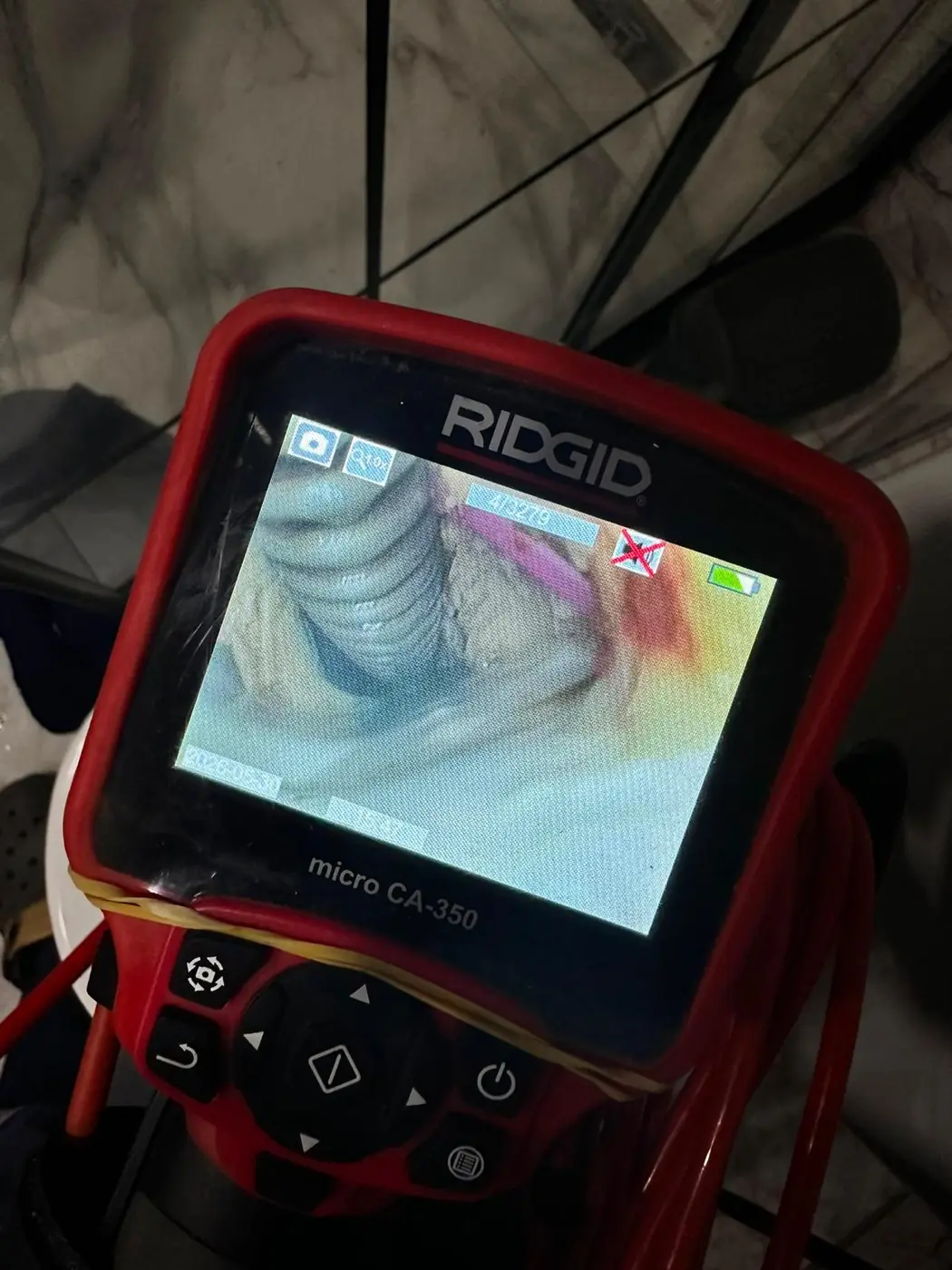
When the camera enters the pipe, a root appears either as a fringe hanging in from the joint or as a brown, fibrous mass filling the cross-section of the pipe. In the early stage only a few thin strands show on the screen. In an advanced case the root can form a long tail inside the pipe. Because the image shows which joint the root is in and how far it is from the entry point, there is no guesswork about where to work.
The same image also shows the condition of the pipe itself. You can see clearly on the screen whether the joint the root entered has only opened slightly, or whether it has broken and moved out of place. This information is what decides whether cutting will be enough or that section needs to be replaced.
Why does a root grow back after it is cut?
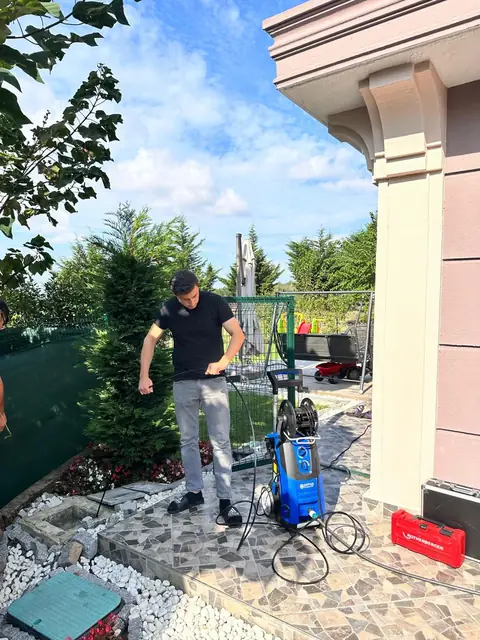
Roots in the pipe are cleared with special cutting heads that rotate as they move along the line. Fitted to a motorised machine, the head scrapes the inner wall of the pipe and cuts the root hanging inside right back to the joint. Pressurised water then washes the cut pieces out of the line. When the work is finished, the line is run through with the camera again and you can see on the screen that the cross-section has opened up.
However, the cutting head only removes the part that is inside the pipe. The main body of the root stays in the soil, and the gap at the joint stays exactly where it was. As long as the tree is alive, it sends new shoots from the cut end and reaches in through the same gap again. For this reason cutting is a maintenance job. When the root will cause trouble again depends on the species of the tree, the condition of the joint and the season.
The lasting fix: renewing the section the root entered
The way to end a root problem for good is to remove the joints the roots are entering through. Once the camera shows which section is affected, in many cases only that section is dug out instead of the whole line, and watertight PVC pipe with gaskets is laid in its place. Because the new section gives off no moisture, the root no longer heads for the pipe.
Where renewal cannot be done straight away, for example when the building management is still at the decision stage, regular camera checks and root cutting keep the line open. In this interim period, cutting is planned before the roots close the line completely, so that there is no sudden overflow in the basement.
- If the root is at a single joint: replace only that short section
- If there are roots at many joints along the line: relay the long affected section from scratch
- If a decision is pending: camera checks and root cutting at set intervals
Which trees near the line cause problems?
In general, fast-growing, water-loving trees spread their roots over a wide area and reach drain lines more often. Large trees such as willow, poplar and plane are the ones that need the most attention in this respect, and the fig is also known for its roots seeking out moisture. Small ornamental plants and low shrubs generally carry less risk.
Before planting a tree in your garden, it is wise to find out where the building line and the manholes run. Cutting down an existing tree, on the other hand, is often unnecessary, because the source of the problem is the old, leaking pipe more than the tree. A watertight line can sit next to a tree for a long time without trouble.