Published: 17 October 2026
In short
- Inside the trap, grease rises and forms a layer, food scraps settle on the bottom and only the water in the middle flows on to the line.
- The cleaning interval depends less on the calendar and more on how busy the kitchen is, what is on the menu and how large the chamber is.
- Noting the layer thickness during the first few months is the most reliable way to find the right cleaning interval for your business.
- Hot water and detergent melt the grease and carry it further down the line, where it cools and solidifies again.
- Greasy waste taken from the trap should be collected in sealed containers and never poured back into any drain.
Its job looks simple, but when maintenance is neglected it sets off a chain of blockages that runs from the restaurant's own drains to the building's shared line. How often it needs cleaning also differs from one business to the next, and to find the right interval you first need to know what goes on inside the unit.
How does the water separate inside the chamber?
When warm water from the kitchen enters the trap, its speed drops suddenly. In the slower water, grease and droplets of cooking oil rise and form a layer on the surface, while heavy pieces such as rice, breadcrumbs and vegetable scraps settle on the bottom. The baffle plates inside stop the water running in a straight line from inlet to outlet and give it time to separate.
The outlet pipe is positioned so that it takes water from the middle layer of the chamber. That way the water going on to the line carries neither the grease from the surface nor the sludge from the bottom. This arrangement only works while both layers stay below a certain thickness. When the surface grease thickens downwards or the sediment at the bottom rises, the middle layer narrows and grease starts to slip into the outlet pipe.
Which kitchens use a grease trap?
Every commercial kitchen that fries, grills, cooks doner or pide, or makes desserts and pastry produces greasy water. Restaurants, cafés, hotel kitchens, school and factory canteens, patisseries and catering kitchens are the places where traps are most widely used. In cafés, milk, cream and butter also leave more grease behind than people expect.
Home kitchens usually have no trap. At home, wiping the pan with a paper towel and collecting used cooking oil in a bottle is a good enough habit to keep grease out of the drain. In businesses, the type of trap is chosen according to the size of the kitchen and whether there is room under the floor.
- Under-counter traps: connected right under the sink in small cafés and kiosks, and can be emptied often by staff.
- Below-floor traps: large chambers with the lid at floor level, collecting several drains in busy restaurants and canteens.
- Outside traps: fitted on the line before it leaves the building, in businesses with a garden or car park.
Signs that a trap is starting to fill up
A trap does not fill up overnight. The symptoms usually follow one another over a few days. If staff who notice them report it to the manager straight away, an overflow in the middle of service can be avoided.
- Floor drains in the kitchen bring up water during busy hours.
- Sinks and the dishwasher drain more slowly than usual.
- A sour or rotten egg smell comes from around the trap lid.
- When the lid is opened, the grease layer on the surface looks hard and thick.
- Lumps of grease float in the manhole after the trap outlet.
What determines the cleaning interval
There is no single frequency that suits everyone. A grill restaurant that is full every evening and a small café serving only breakfast build up grease in their chambers at very different speeds. Small under-counter traps are often emptied by staff as part of a weekly routine, while large below-floor chambers are cleaned less often but at planned intervals.
The practical way to find the interval for your business is to open the lid regularly during the first few months, measure the thickness of the surface grease and the sediment at the bottom, and write it in a logbook. The date that marks the point just before the layers begin to narrow the middle zone is your cleaning interval. Review it again when the menu changes, when a new fryer is added or when customer numbers rise in the summer season.
- Number of daily portions and how busy service is
- Share of fried, sautéed and buttery dishes on the menu
- Volume of the chamber and how many drains it serves
- How well plates are scraped before they reach the sink
- Whether hot water from the dishwasher goes straight into the trap
What does a neglected trap cost the kitchen and the building?
Grease that escapes from a full trap travels down the line with the warm water and sticks to the pipe walls as the pipe cools. Over time, crumbs, soap and sediment collect on top of it and the inner diameter of the pipe narrows. In the end the blockage shows up as dirty water coming back through the floor drain in the restaurant's own kitchen. If the business is in the same building, neighbouring shops and flats are also affected through the shared line.
In a chamber that is left uncleaned for a long time, food scraps rot and foul-smelling gases form. These gases corrode the surface of the concrete chamber and the metal lids, and the smell around the lid can reach from the kitchen into the dining room. The built-up waste also attracts cockroaches and rodents, which is why the area around the lid is one of the first places looked at in a hygiene inspection.
How is a grease trap cleaned, step by step?
Cleaning is done when no water is flowing from the kitchen, preferably after service has closed or before opening. When the lid is opened, the area is ventilated so the gas inside can disperse, and the work is done without leaning into or entering the chamber. The grease and sludge that are collected go into sealed containers. The waste oil is set aside to be handed over to companies authorised to collect it, and is never poured into a sink, a toilet or a street grate.
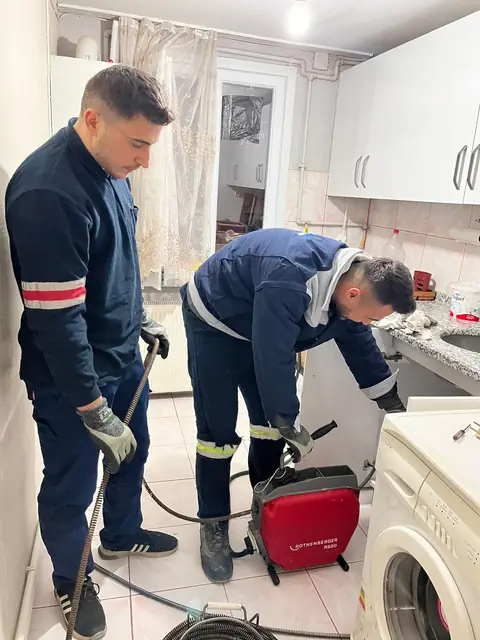
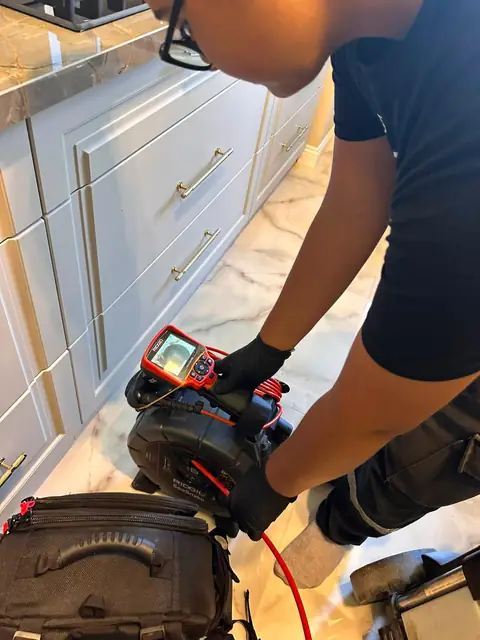
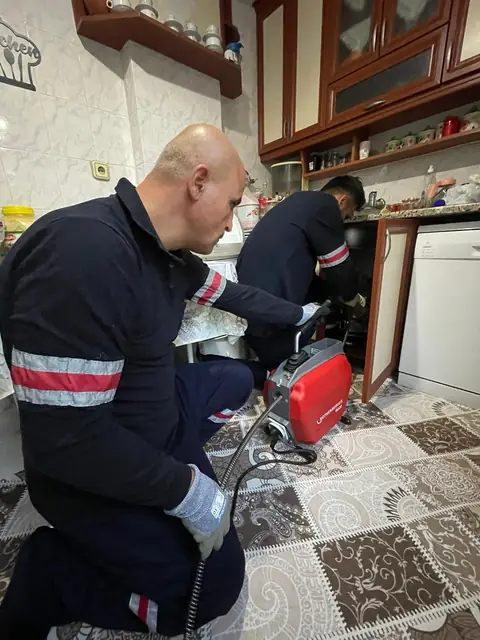
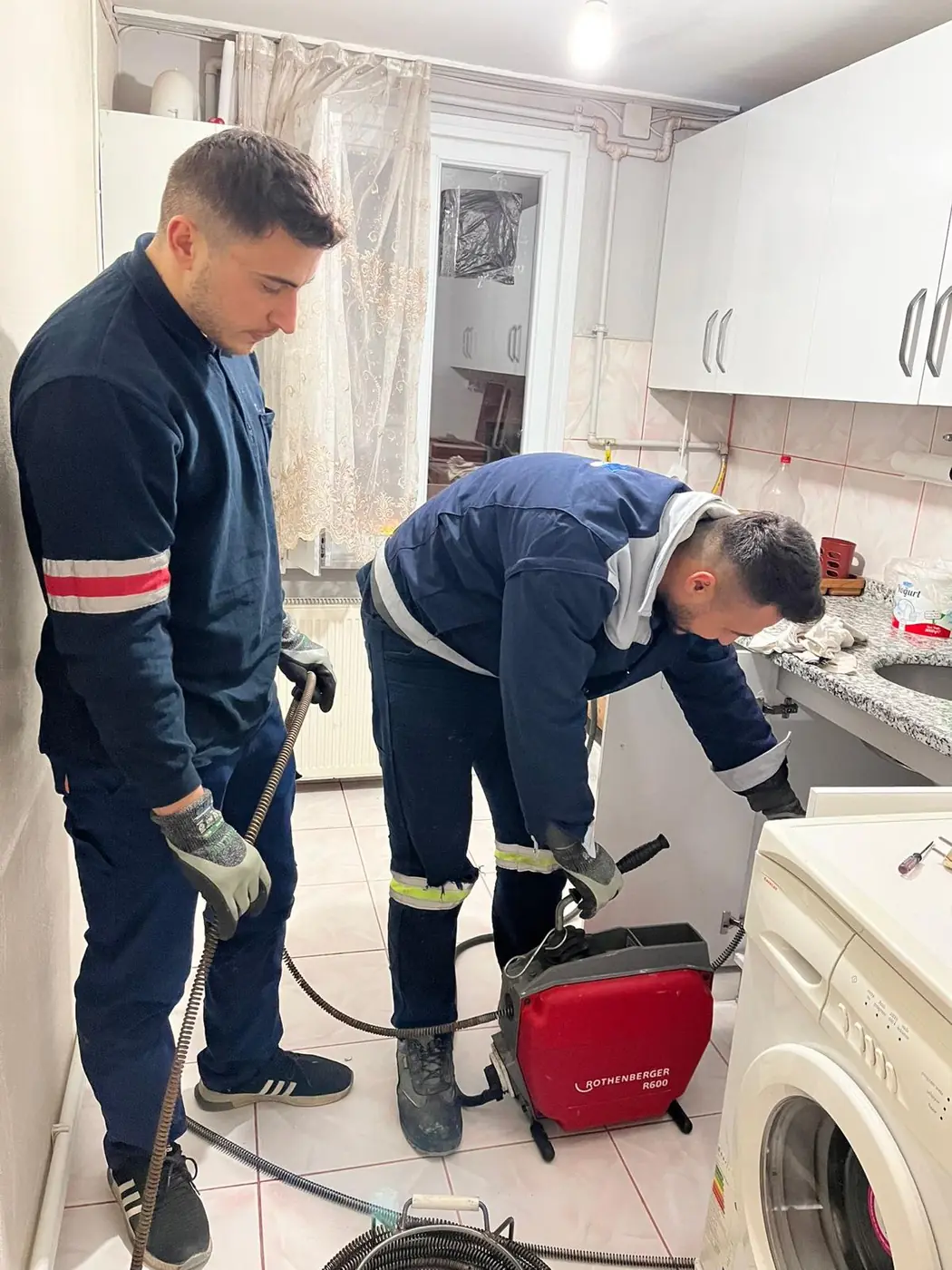
Once the chamber has been emptied, the pipe from the trap outlet onwards is checked as well. If escaped grease has formed a layer in the line, it is cleaned with water jetting, and if the blockage keeps coming back, the inside of the pipe is viewed with a camera to tell whether the problem is in the trap or further down the line.
- The grease layer on the surface is removed with a scoop or a skimmer.
- The sludge and food scraps that have settled on the bottom are taken out.
- The baffle plates and chamber walls are scraped to remove stuck-on grease.
- The inlet and outlet openings, and the baskets if there are any, are checked to make sure they are clear.
- The chamber is filled with clean water so that separation starts straight away when kitchen water arrives.
- The date, layer thickness and work carried out are written in the maintenance logbook.