Published: 17 October 2026
In short
- Do not step into water that has reached sockets or the fuse board. Cut the power from a dry spot.
- Cloudy water with no smell usually comes from the surface. Smelly water with bits of paper comes from the sewer.
- Before cleaning, photograph the water level, where it came in and the damaged items.
- If water keeps coming from a drain after the rain has stopped, there is a blockage in the building's line.
The order matters, because the source of the water decides what you need to clean, who you need to call and whether the same thing will happen in the next downpour. In the same storm, the basement next door may take in surface water while yours fills from the sewer. The remedy for each is different.
Electricity and gas before you step into the water
If the water has reached a socket, an extension lead, a washing machine or the electrical fuse board, do not step into it. If you can switch off the basement's circuit breaker from a dry spot at the top of the stairs, do so. If the board is under water, or you can only reach it by stepping into the water, keep away and ask the electricity distribution company's fault line or an electrician for help.
If there is a combi boiler, a boiler or a gas meter in the basement and they have been flooded, do not run them. If you smell gas, leave the area and call the natural gas emergency line. If water is filling the lift shaft, take the lift out of use and let the maintenance company know.
- Do not enter the water without rubber boots and thick gloves.
- Open the basement door and windows and ventilate the space.
- As you move through the water, probe the ground ahead with a stick. There may be a drain or manhole opening with the cover off that you cannot see.
Where is the water coming from?
Basement floods have three main sources, and each looks different. The colour and smell of the water, where it enters and how it behaves once the rain stops are usually enough to tell the source at first glance.
- Surface water: it comes in under the door, down the ramp, through the light well or around a window opening. It is muddy and cloudy but does not smell of sewage. It usually means the grated channel in front of the building or the light well drain is blocked, and it slowly stops once the rain eases.
- Water backing up from the sewer: it rises from a floor drain, a basement toilet or a shower tray. It is grey, smells sharp and has bits of paper in it. It appears when the street line fills up or the building's line is blocked.
- Water seeping up from the ground: it arrives slowly at the foot of the wall, through cracks in the floor slab or at the joints of columns and shear walls, and looks clean. It can go on for days even after the rain has stopped, and it is usually a waterproofing issue.
What should you record before cleaning?
Before you start wiping up and emptying, photograph everything as it is with your phone. These images help when you talk to building management or your insurer, and they help the crew who come to understand the source of the problem quickly. Once the water has gone, the marks usually disappear.
- The highest level the water reached on the wall, with an object placed next to it for scale.
- The point where the water came in: under the door, a drain opening, a wall crack or the light well.
- If a drain is overflowing, a short video of the water rising out of it.
- Damaged belongings, appliances and the condition of the electrical sockets.
- The grates in front of the building and the puddle in the street, at the same hours.
What to watch for while emptying and cleaning
If you have a submersible pump, discharge the water to a point where it cannot flow back into the building. Pumping it into the overflowing drain only sends it back to you. If the street line is still full, do not use the basement drains or the ground-floor toilets, and ask the neighbours upstairs not to run their washing machines and dishwashers for a while.
Treat everything the sewer water has touched as contaminated. Carpets, cardboard boxes, mattresses and fabric items usually cannot be saved. Plastic and metal items can be washed with detergent and water and wiped down with diluted bleach. Bleach must never go into the same bucket as hydrochloric acid or limescale remover, because the mixture releases a toxic gas. When cleaning is finished, ventilate the basement for days and keep an eye on the damp to prevent mould.
When should you call a crew?
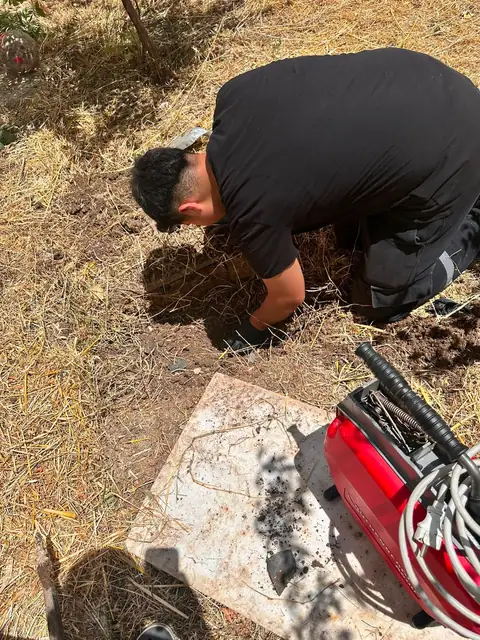
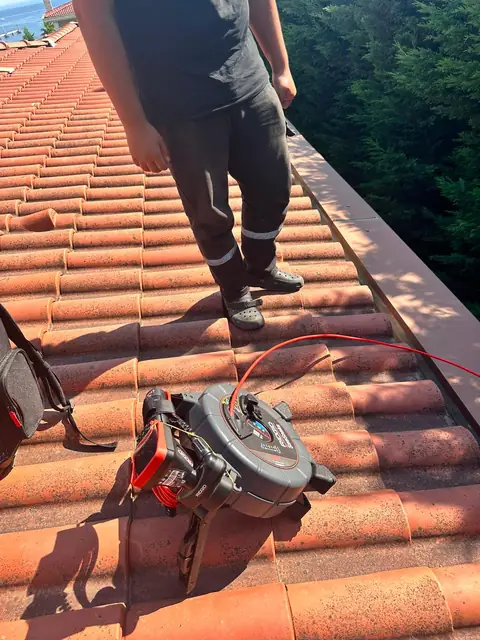
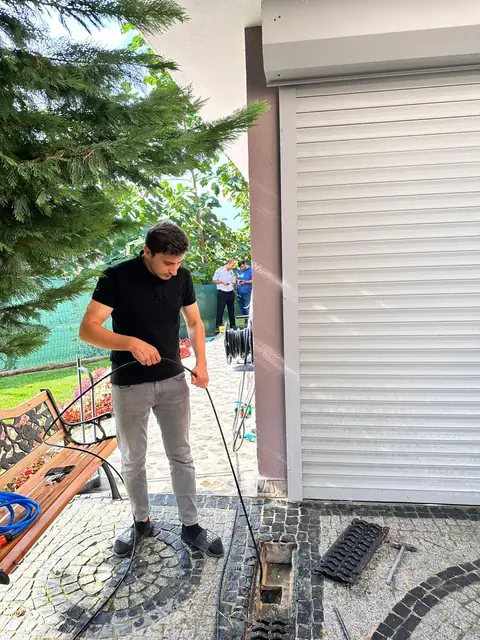
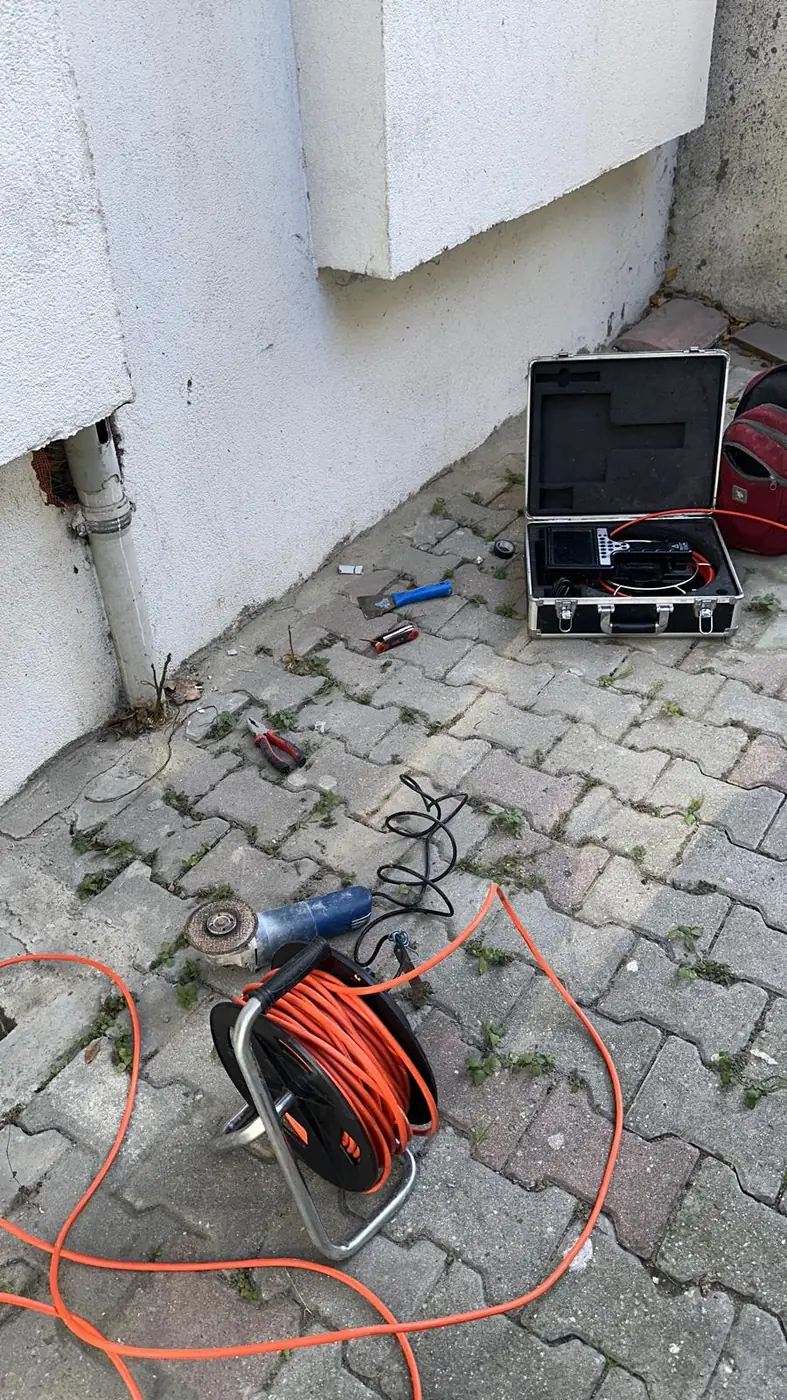
If too much water has built up to empty by hand, or if water keeps coming from a drain, waiting will not fix it. In particular, if water rises from the drain even though the rain has stopped, the problem is no longer the load in the street but a narrowing in the building's own line. Unless the line is cleared and inspected with a camera, the same flooding is likely to happen again.
- The rain has stopped but water keeps coming from the drain, toilet or shower drain.
- The grated channel or ramp channel in front of the building is not taking any water at all.
- Water is overflowing around the manhole cover in the garden or courtyard.
- The basement takes in water at the same spot in every heavy rain.
- The sewer smell in the basement does not go away even after cleaning.
Before the next downpour
Once the water has gone, you need to think about a lasting fix depending on the source. If surface water came in, having the grates in front of the building, the light well drains and the ramp channel cleaned in autumn is often enough. If the sewer backed up, the building's line should be inspected with a camera and, if needed, the lowest drains protected with a backflow valve. In the meantime, moving belongings in the basement onto shelves raised off the floor reduces the loss in the next flood. If water seeps up from the ground, this is not a drain problem, so you need to consult a waterproofing contractor about wall and floor waterproofing.