Published: 17 October 2026
In short
- The main clean should be done after the trees have dropped their leaves and before the winter downpours begin.
- Periods when snow melts and when building or landscaping work finishes call for an extra check.
- Water standing on the grate after rain shows that the floor of the channel has filled up.
- Hosing sand from the grate towards the drain only carries the blockage into the pipe.
The transverse grate at the foot of a ramp takes all the rainwater coming down from above on its own. The grated channels in the car park, the site roads and the vehicle entrances work on the same principle: water collected from the surface drops into the channel under the grate, then travels through a pipe to the manhole and on to the sewer network. When the channel or the pipe narrows, the water has nowhere to go and spreads to the lowest corner of the car park.
What builds up on the channel floor over time?
The load reaching car park channels is a little different from that of garden drains. Mud carried in on vehicle tyres runs to the grate with every rain and forms a thin but compact layer on the floor. Sand and salt spread on the ramp in winter wash into the channel as the snow melts. Cigarette butts, plastic bags, dust swept from the parking bays, and leaves and twigs from trees beside the ramp are added to this.
If vehicles or floors are washed in a covered car park, soapy water and oil dripping from cars end up in the same channel. When oil mixes with sand, it turns into a sticky sludge on the floor that ordinary sweeping will not remove. Over time this mixture narrows the mouth of the pipe the channel connects to, and the channel can no longer take water even if it looks clean from the surface.
Season-by-season check calendar
Every building's needs depend on its surroundings, but the year for a site or apartment block car park in Istanbul usually divides into the following periods. Adding the calendar to the management plan is the easiest way to avoid leaving the cleaning until after the first flood.
- Late autumn: once the leaf fall is over, the channels are emptied and the connected pipe is flushed. This is the most important clean of the year.
- Before the first big downpour: if the autumn clean was late, check the grates as soon as the forecast shows heavy rain.
- After snow and ice: the sand and salt residue that has washed into the channel with the melting snow is removed, and broken or loose grates are noted.
- Spring: leftover sand from winter and flower and seed debris are cleared, and any plants sprouting inside the channel are pulled out.
- End of summer: channels that have not seen water for a long time are checked for smells, and the surface is cleared ahead of summer storms.
- When work nearby finishes: if there is facade work, landscaping or construction on a neighbouring plot, an extra clean is needed once it is done.
Signs that a grate needs cleaning
Even if you follow the calendar, some signs tell you the cleaning should be brought forward. The staff and residents who use the car park every day are usually the first to notice them, and writing them in a notebook or the management group makes the job easier.
- Water standing on the grate or at the foot of the ramp after the rain has stopped.
- The floor not being visible when you look through the grate gaps, with a dark layer of sludge in its place.
- Streaks of mud and sand left by the water along the ramp.
- A sewer or rotting leaf smell coming from the grate in dry weather.
- The grate rattling, moving or lifting at one corner when a vehicle passes.
- Weeds or algae growing inside the channel.
Who organises this on sites?
Because the channels in the shared car park, ramps and site roads belong to the common areas, cleaning is usually taken on by the site or building management, or by the management company if there is one. Daily sweeping and keeping the top of the grate clear is generally the job of the caretaker or technical staff. Emptying the channel and flushing the connected pipe requires equipment, so it is given to an outside team.
On sites with several blocks, the water from a few ramps may join the same line, so it is more efficient to plan the cleaning for all the channels on the same day rather than piece by piece. When management records the cleaning date, which channels were opened and the problems seen, it shows what to look at the following year.
What happens in the car park on cleaning day?
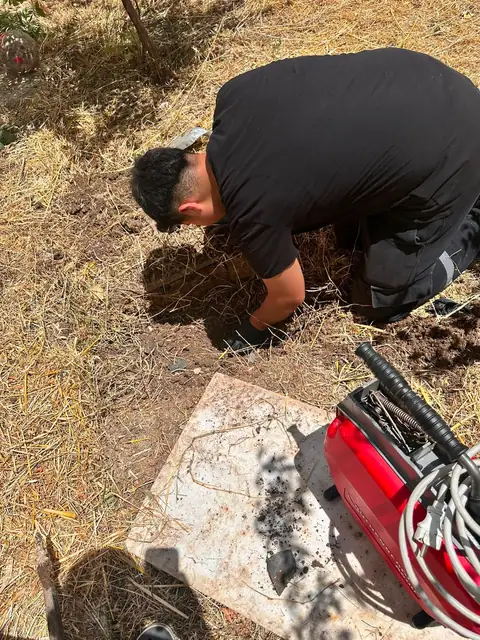
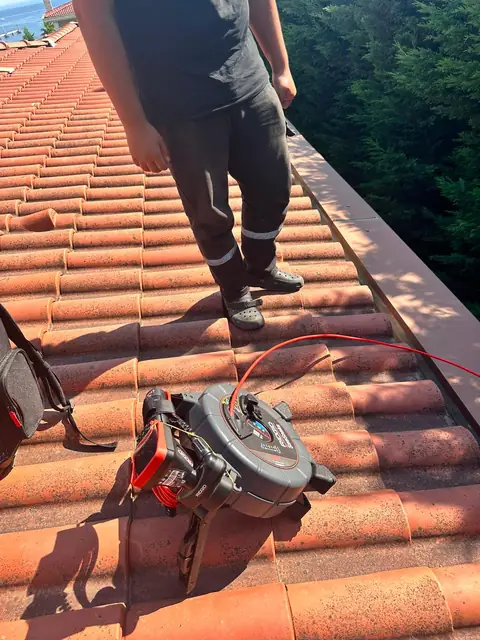
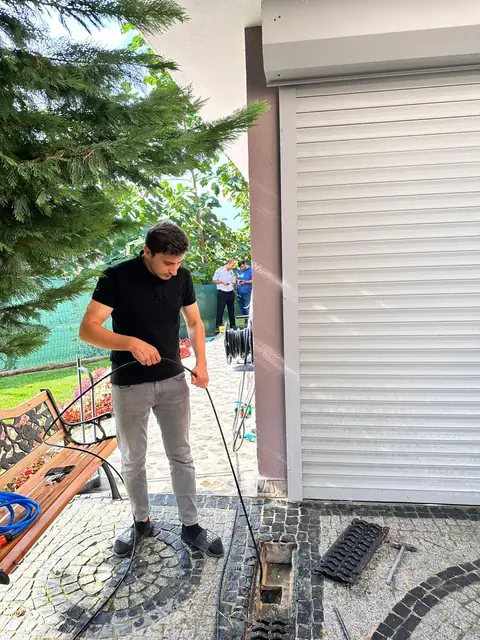
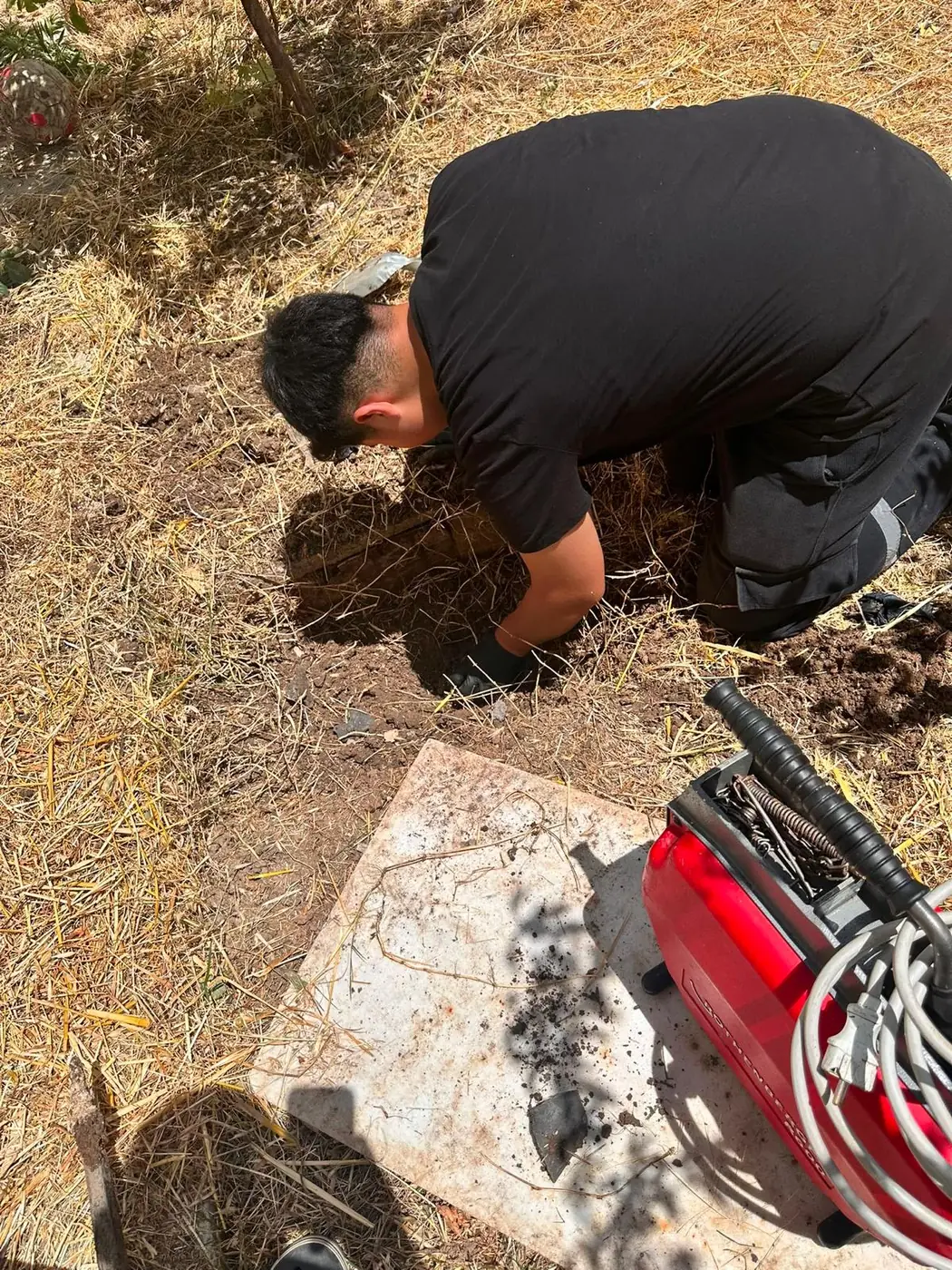
When the team arrives, vehicles parked over the channels first need to be moved, so announcing it to residents a day earlier speeds up the job. The grates are lifted one by one, and the mud and leaves in the channel are bagged. Then the pipe the channel connects to is flushed with pressurised water from the nearest manhole, and plenty of water is run into the channel while we watch together that it flows away without standing.
If the blockage keeps coming back or no water passes through the pipe mouth at all, the inside of the line is inspected with a camera. If there is a broken, collapsed or root-infested section, it is reported to management together with the footage. During this time one lane of the ramp may stay closed for a short while, and at two-lane entrances the work is done lane by lane.
What staff can do themselves and what they should avoid
Keeping the gaps between the grate bars clear is largely a matter of the surface, and when done regularly it noticeably slows how fast the channel fills. Even so, some habits damage the channel even when they are done with good intentions.
- Pick up leaves, bags and litter on the grate with gloves, and sweep the car park floor away from the channel, not towards it.
- Do not hose sand and mud towards the grate: sand that disappears from the surface settles in the channel and the pipe.
- Do not pour waste such as engine oil, paint or construction water into the channel, and tell management if something has been spilled.
- Cordon off a broken or dislodged grate with warning signs and stop vehicles driving over it.
- When a manhole cover is lifted, do not put your head inside, and never climb into the chamber: sewer gas that collects in an enclosed space is dangerous.